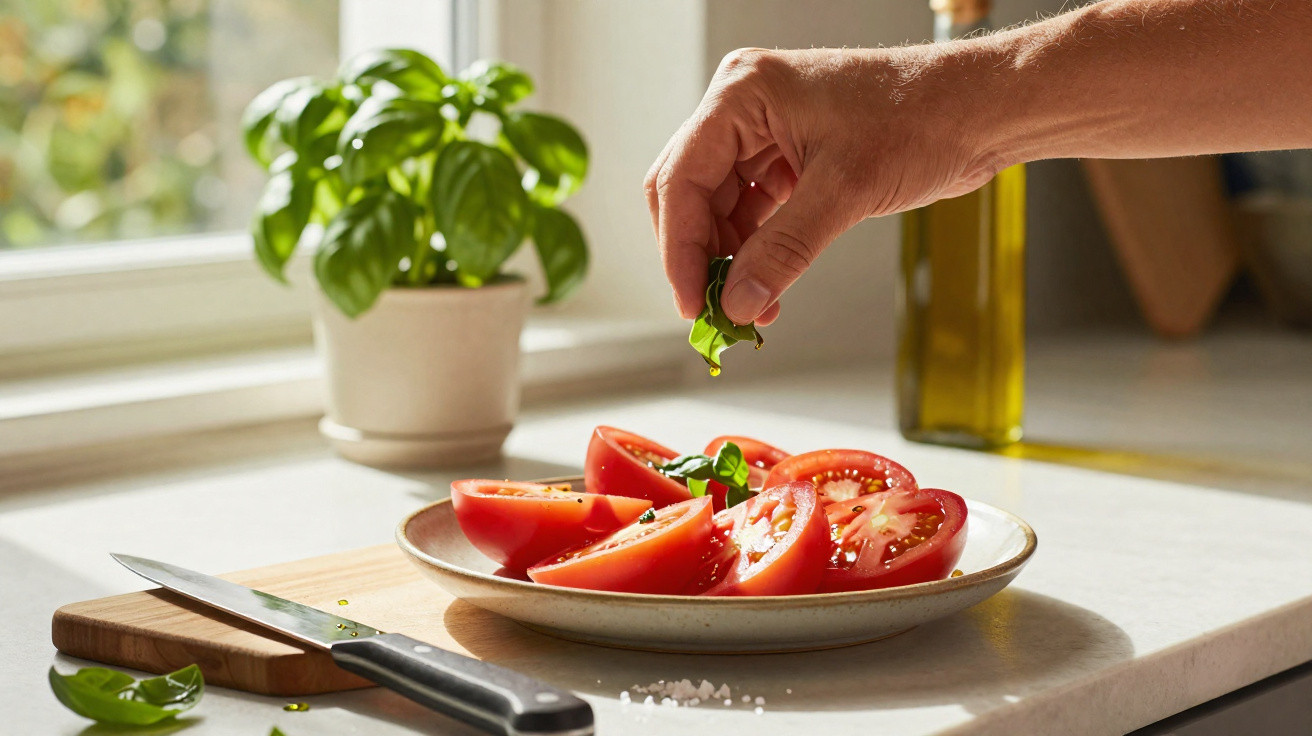
A simple culinary herb can make a surprising difference.
Watering cans, fertiliser and expensive varieties from the garden centre: anyone who loves tomatoes will try almost anything to help the fruit ripen sweet, juicy and full of flavour. Yet the results often fall short of expectations. The answer, however, is not specialist feed or high-tech irrigation, but a familiar herb found in almost every kitchen – one that can work wonders when planted right beside tomatoes.
Why a classic culinary herb really makes tomatoes more flavoursome
In both the vegetable garden and the kitchen, tomatoes and basil are a perfect match. Their compatibility is not just about how they taste on the plate. Gardeners deliberately grow this pairing as a form of companion planting. Plants are cultivated side by side so that they support one another and create a small, stable ecosystem.
“Anyone who plants basil directly beside their tomatoes can benefit twice over: the plants are often healthier, and many people report a noticeably more intense flavour.”
An experienced gardener puts it this way: basil’s strong scent unsettles pests such as whiteflies and aphids. These insects place tomato plants under considerable stress. When plants are constantly defending themselves, they direct energy into protection rather than producing sugars and flavour compounds in their fruit. If attackers stay away, tomatoes can ripen more calmly and evenly. That can be reflected directly in their taste.
Online gardening guides also mention an interesting additional benefit: in many beds, basil neighbours can increase yields by around 20 percent, and in some home gardens by as much as 30 percent. Science has not yet fully explained the precise reason, but several factors work together:
- slightly shaded soil beneath the leaves, which dries out less readily
- more consistent soil moisture because the ground does not heat up as quickly
- hardier plants that become ill less often
- tomatoes that fully ripen on the vine and therefore seem sweeter
Many home gardeners find that these tomatoes taste gentler and more rounded, with a less aggressive acidic sensation on the palate.
More than decoration: how basil protects the vegetable garden
Basil does more than add flavour to a Caprese salad; it also brings real life to a growing bed. Once the plant flowers, bees, bumblebees and other beneficial insects flock to its blooms. Tomatoes gain a direct advantage because they are better pollinated and produce more fruit.
At the same time, basil releases essential oils that can disturb certain sucking and chewing insects. Many gardeners consequently notice less pressure from common tomato diseases. When plants suffer fewer injuries and do not need continual treatment with plant protection products, the bed’s microclimate remains more stable. This may help keep fungal diseases such as the dreaded blight somewhat under control.
“A lively, mixed garden with plenty of flowering plants and scents is often the best insurance against pest infestations – without resorting to chemicals.”
The dream team in the bed: tomato, basil and a third helper
Some gardeners add a third companion: borage. Its blue, star-shaped flowers are extremely popular with pollinators. The plant’s deep roots loosen the soil, draw nutrients up from lower layers and, once they rot down, leave behind valuable organic matter.
Tomatoes, basil and borage therefore form a small network: the soil stays alive, beneficial insects remain constantly active, and pests find it harder to spread in large numbers. The tomatoes repay this with steady growth and a harvest that tastes of summer rather than sprays.
How to plant basil correctly alongside tomatoes
For the effect to be genuinely noticeable, a solitary pot on the patio is usually not enough. Basil should be planted close to tomatoes, whether in a bed or in a container on the balcony.
The right time to plant
Garden specialists recommend planting basil outside in spring in a warm, sheltered and very sunny position. Timing should follow the tomatoes: both crops should go outdoors once there is no further risk of overnight frost. In many parts of the UK, this is from May, while cooler locations may be better suited to early June.
Spacing and layout in the open ground
If tomatoes are planted conventionally in rows, basil can simply be mixed in between them. The following spacing has proved effective:
- Distance between two tomato plants: around 50 to 60 centimetres
- Basil: plant every 30 to 40 centimetres between the tomato rows
One straightforward arrangement along a planting row is:
- one tomato
- basil beside it
- then another tomato
- and so on for the full length of the bed
This creates a loosely mixed strip in which scents, flowers and foliage can spread well.
Balcony and patio: the flavoursome container duo
Anyone without a garden can easily use the same approach in a pot. A large container holding 40 to 60 litres is suitable for one tomato plant with basil. Several drainage holes are essential, along with a good drainage layer of expanded clay pellets or coarse gravel, so that the roots are not left standing in water.
Place the tomato in the main central position and set the basil around the edge. This ensures each plant receives enough light, while the leaves remain easy to reach at harvest time.
Care tips: keeping the herb duo healthy and flavoursome
Tomatoes prefer consistently moist conditions, but not wet soil. The same applies to basil. It is best to water in the morning, directly onto the soil rather than over the leaves. An airy site where plants dry quickly after a shower significantly reduces the risk of fungal disease.
Basil responds to pruning by growing more vigorously. Regularly pinching out the shoot tips produces bushier plants with plenty of fresh leaves. The removed tips can go straight into the kitchen, for example in:
- tomato salad with onions and olive oil
- bruschetta on toasted bread
- pasta sauces with fresh tomatoes
- homemade pesto
“The more often you take leaf tips from basil, the more aromatic leaves the plant produces – and the more closely it shares everyday life with your tomatoes.”
Ripeness, varieties and climate: other factors that affect flavour
Even the best planting duo offers little benefit if tomatoes are picked too early. Their full flavour develops only once the fruit is completely coloured and feels soft but not mushy. Picking tomatoes slightly warm from the sun makes the difference compared with chilled supermarket produce particularly clear.
Choosing the right variety also matters greatly. Small cocktail and cherry tomatoes often develop more intense sweetness than very large beef tomatoes. Combined with basil, they can become genuine flavour bombs, especially during warm, sunny summers.
In rainy years, basil companionship is particularly helpful for plant protection. Less stress from disease and pests means more stable plants – and therefore a better chance of a harvest that tastes not of mass production, but of your own work and plenty of sunshine.
What companion planting really means
Growing plants that support one another is a long-established practice. This is exactly what companion planting means: vegetables, herbs and flowers are arranged together so they can benefit each other. Some attract beneficial insects, while others deter pests or improve the soil.
The tomato-and-basil pairing is an easy example to put into practice. Those who have good results with it often go on to try other combinations, such as carrots with onions or lettuce between slowly growing cabbage varieties. Step by step, this creates a garden that regulates itself, with greater variety, fewer chemicals and, ideally, considerably more flavour on the plate.









Comments
No comments yet. Be the first to comment!
Leave a Comment