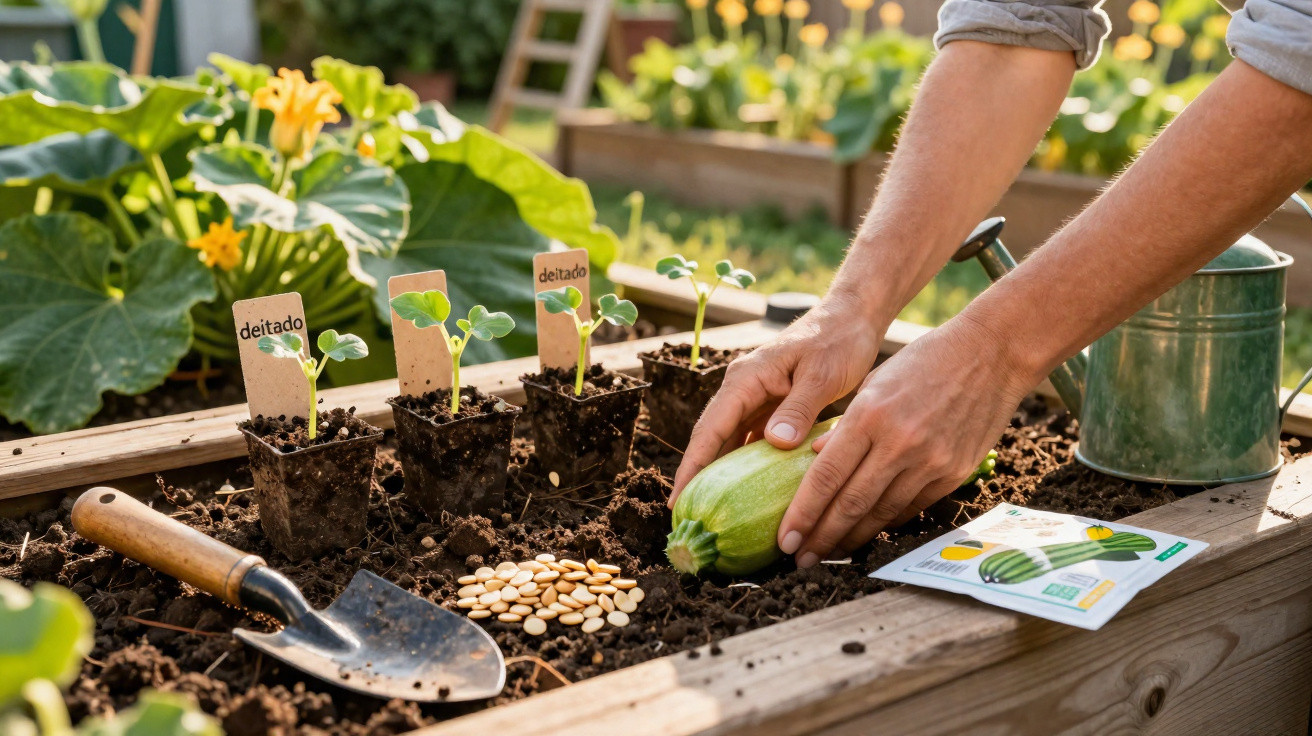
Many amateur gardeners are driven to despair by their zucchini seeds every spring – while overlooking a straightforward trick handed down from their grandparents’ generation.
Anyone planning to grow zucchini in the garden usually expects a plentiful summer crop. Yet beds often remain surprisingly bare in practice, even when good-quality seed has been used. The variety is frequently not the issue; instead, mistakes in the sowing details are to blame – especially one traditional technique that experienced gardeners have passed on for generations.
Why zucchini seeds so often fail
Zucchini are considered rewarding vegetables: they grow rapidly, produce plenty of fruit and cope with a range of soil types. However, they are also highly sensitive to cold and waterlogging. If the soil is too cold, seeds may rot or sit underground for weeks without doing anything. Insufficient light causes young plants to become leggy, thin and prone to toppling over.
In many gardens, the seed itself is not the problem. The cause lies in the growing conditions and sowing method:
- Soil temperature is too low
- The soil is too wet or too heavy
- Too little light is available after germination
- The seed is placed incorrectly in the soil
The final point may seem insignificant, but it can determine whether the whole summer brings success or disappointment.
The right time to sow zucchini
Sowing zucchini too early exposes plants to frost damage and stunted growth. Starting too late, on the other hand, costs valuable harvesting time. Getting the timing right is therefore crucial.
Raising zucchini plants indoors
For starting plants on a windowsill or in a greenhouse, the best period runs from late March to April. A steady temperature of around 18 to 22 degrees is ideal. Seeds germinate reliably and without stress within this range.
A fine, loose seed compost is the right choice for the growing medium. It retains moisture without becoming compacted. Once it has been thoroughly moistened, only a small amount of water is generally needed at first to encourage germination.
Sowing directly in the bed
Gardeners wishing to sow straight into the garden should remain patient. Before mid-May, late frosts are still possible in many areas. Zucchini are remarkably vulnerable to them, so it is better to wait until nights are consistently mild.
The soil should then be prepared carefully: dig it over loosely, break up clumps and enrich it with mature compost. For each sowing position, known as a planting mound or pocket, around 200 to 300 grams of compost is enough to give the young plant a good start.
The traditional trick: why zucchini seed should lie flat
“The crucial trick: do not push the seed into the soil upright; lay it down horizontally instead.”
Many gardeners instinctively press zucchini seeds vertically into the ground. Experienced home growers do it differently: they place each seed flat in the soil, laying it down rather than standing it up.
This minor adjustment changes several things at once:
- More of the seed surface touches the moist soil.
- The first roots gain purchase more easily and emerge sooner.
- The seed is less likely to stick to a dry crust at the surface.
- Germination is more even, and plants begin with more similar strength.
Many older gardeners have relied on this approach for decades – not out of nostalgia, but because it repeatedly works in practice.
Sowing zucchini in pots step by step
Raising zucchini in pots offers the greatest control over temperature and moisture. Follow these steps:
- Choose wide pots measuring 8 to 10 centimetres in diameter.
- Fill them with loose seed compost and press it down lightly.
- Moisten the compost without soaking it.
- Lay 2 to 3 seeds horizontally in each pot.
- Cover the seeds with soil to a depth of 2 to 3 centimetres.
- Water using a fine rose or a spray bottle.
- Keep them warm: 20 to 22 degrees is ideal.
Under these conditions, the first seedlings usually appear after three to five days. Once visible, one thing matters above all else: light. Put the pots in a very bright window, preferably without direct heat from a radiator beneath them, so the plants remain compact.
As soon as the young plants begin touching each other, it is worth removing weaker specimens or potting them on individually. This prevents their roots from becoming too tangled.
Direct sowing in the bed: spacing, depth and care
Zucchini need plenty of room outdoors. They spread vigorously, both through their leaves and their roots.
The following method has proved effective for direct sowing:
- Leave 80 to 100 centimetres between sowing positions.
- Dig a small hollow at each position.
- Work in 200 to 300 grams of mature compost.
- Place 2 to 3 seeds horizontally at a depth of 2 to 3 centimetres.
- Carefully close the hollow and water with a fine spray.
Once the plants have germinated, ideally only the strongest specimens should remain at each position. Remove the other seedlings so the most vigorous plant can develop without competition.
Care mistakes that can cost you the crop
Zucchini like consistently moist soil but cannot tolerate “wet feet”. Watering repeatedly from above over leaves and flowers encourages fungal diseases. Instead, water directly around the root zone and keep the foliage as dry as possible.
A light mulch of grass clippings or straw helps retain moisture in the soil and slows evaporation. It also suppresses weeds and reduces the number of times you need to water.
Slugs present another danger at night. Young zucchini plants can seem like a buffet to them. Without protection, they may be completely eaten in a single night. Slug fences, collecting slugs at dusk or barriers made from rough material can all greatly reduce the risk.
During cool nights, temporary protection from a polytunnel, cloche or horticultural fleece is worthwhile. Zucchini respond well to a few extra degrees of warmth overnight.
How much a healthy zucchini plant produces
Those who get the start right are usually rewarded generously. A well-developed zucchini plant produces five to eight fruits per season, and often more when harvesting is regular. That works out at roughly 2.5 to 5 kilograms per plant.
“Around six strong plants can supply a family of four throughout the summer.”
The key is neither expensive specialist fertiliser nor exotic varieties. What matters is a suitable temperature, loose soil, the correct sowing time – and simply laying the seed flat.
A small zucchini seed trick with a big effect
The idea that the position of a seed in the soil can decide success or failure may initially sound exaggerated. Yet gardening often comes down to exactly these small details. Even germination, strong roots and compact young plants provide the foundation for the rest of the summer.
When sowing next time, simply remember to lay the seeds horizontally in pots or beds. The difference is often apparent after only a few days: more seedlings, fewer losses and stronger plants.
What beginners should also know
Many questions only arise once the plants are already growing. A few points can help prevent common mistakes:
- Never plant zucchini too closely together – they need airflow, otherwise fungal diseases may develop.
- Harvest early and while fruits are small: young zucchini are more tender and encourage the plant to produce new flowers.
- Check regularly beneath large leaves to make sure oversized fruits are not hidden there.
Anyone who observes carefully during the first year will soon develop a sense of how much water and nutrients the plants genuinely need. Many problems are caused by too much care – namely watering and fertilising too often.
This old sowing trick fits that principle perfectly: less effort, more thought. A small action at sowing affects root development, the plant’s overall growth and, ultimately, how full the harvest basket will be.













Comments
No comments yet. Be the first to comment!
Leave a Comment