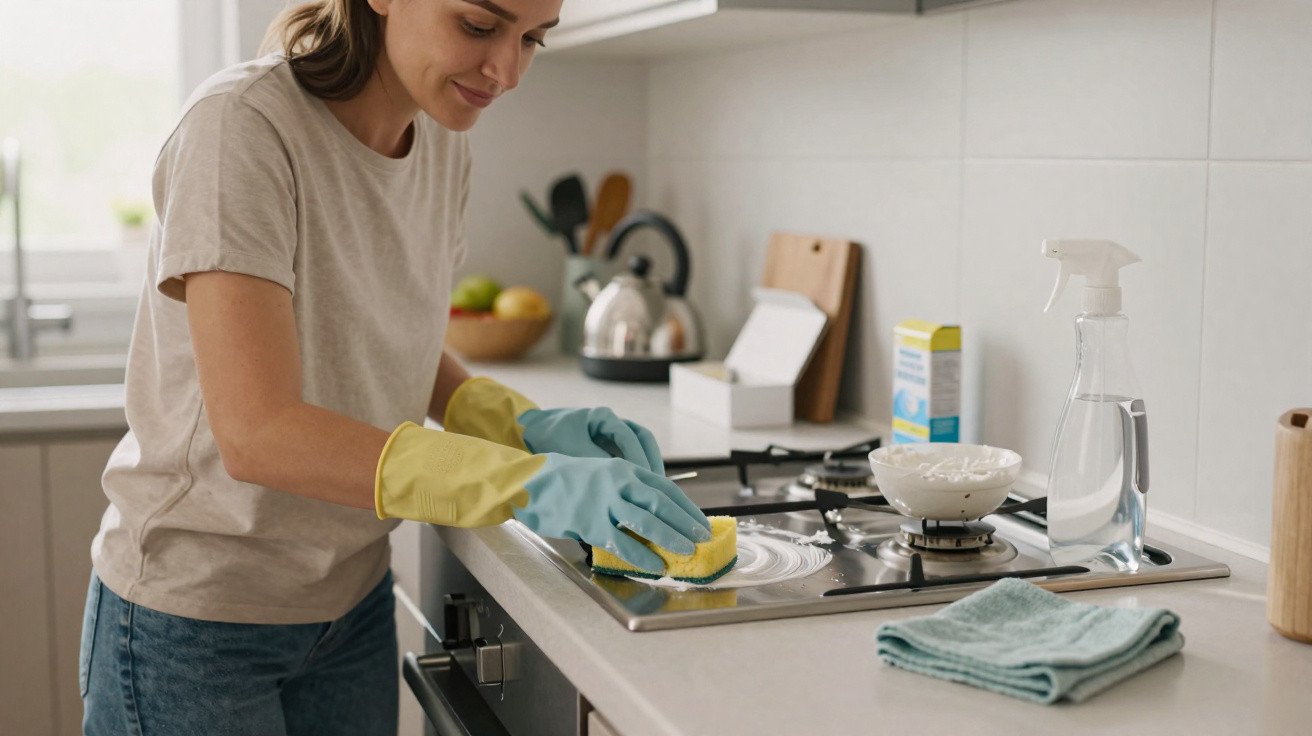
In Nantes, a mother has revived a long-running debate with a simple cupboard remedy. It takes two everyday ingredients, a sponge and a few minutes of patience. The outcome surprised those around her, and the technique is now spreading from neighbour to neighbour and through local community groups.
A cleaning tip that changes the routine
When baked-on grease and fingerprints become embedded, many people switch between all-purpose cleaners and expensive heavy-duty degreasers. This approach takes a more minimalist turn: bicarbonate of soda and white vinegar. Found in most kitchens, this basic pairing produces fizzing action that lifts grime and neutralises odours without leaving a lingering fragrance. Households that have adopted it report worktops with a dry finish again, cleaner stainless-steel sinks and cooker hoods that feel less sticky.
“Grease and limescale do not require the same solution: alkaline for grease, acidic for scale. Use them in turn; do not layer them.”
Preparing and using the mixture
There are two workable approaches, depending on the type of dirt involved and the time available.
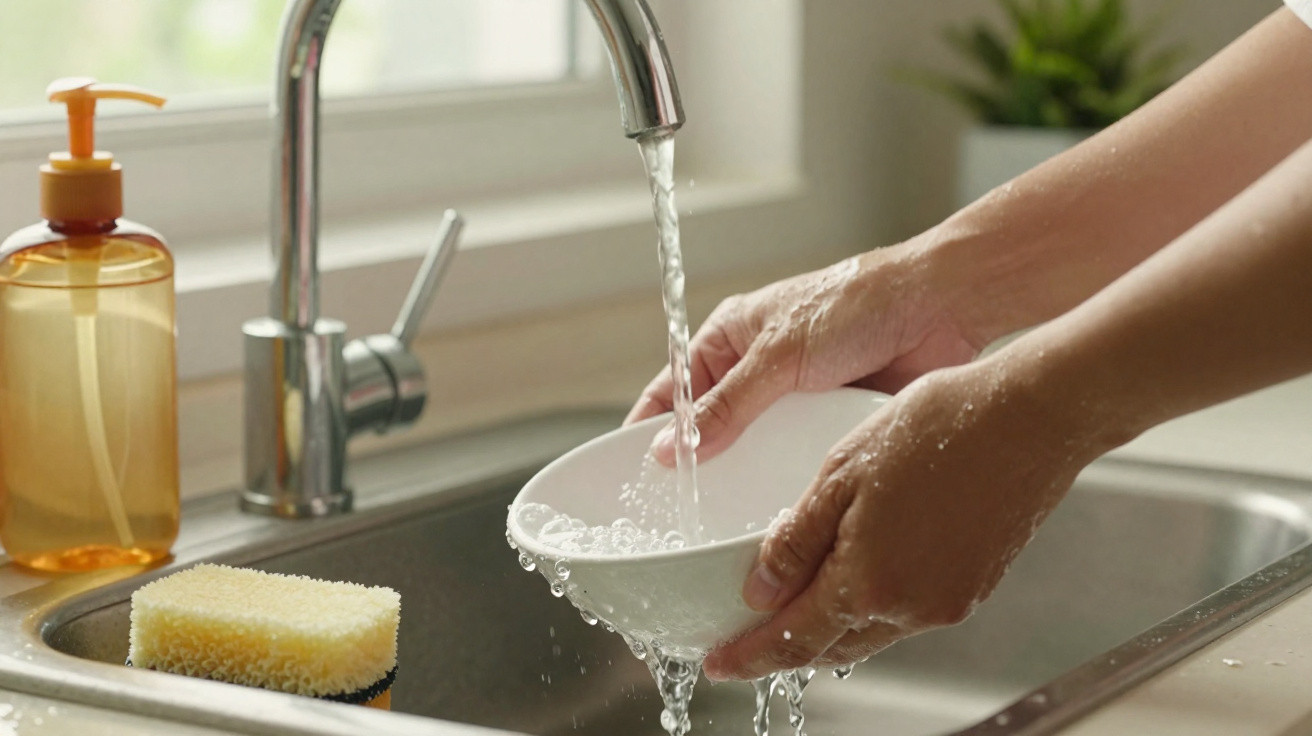
- For stubborn grease: combine 3 tablespoons of bicarbonate of soda with 1 tablespoon of hot water and 1 drop of washing-up liquid to make a paste. Spread it on, leave for 5 to 10 minutes, scrub with a non-abrasive sponge, then rinse.
- For mineral marks on taps or draining boards: spray with 8% white vinegar, leave for 5 minutes, scrub and rinse.
- For occasional fizzing action on hinges, drawer runners and seals: scatter a light layer of bicarbonate of soda, then add a small drizzle of vinegar. The fizzing loosens dirt mechanically. Wipe away before it dries.
This straightforward system reduces the need for vigorous scrubbing, eases the effort involved and avoids using several specialist products in succession.
“Never mix vinegar and bleach: together, they release irritating gases. Keep them well apart.”
Results seen in households
With weekly use, surfaces stay less tacky and require deep cleaning less often. Users notice that sinks retain fewer odours, hobs are quicker to clean, and handles collect less dust. The fizzing effect is particularly helpful in corners and tight spots: around the base of taps, sink strainers, drawer runners and cooker-hood edges. The method does not rely on a masking scent; the acidic smell disappears within a few minutes. The kitchen retains a neutral smell, which is valued when preparing meals.
Effectiveness and limitations
From a chemical perspective, bicarbonate of soda is alkaline and works on grease, while vinegar is acidic and dissolves limescale. When they are mixed directly, they create carbon dioxide and a mildly active salt: the fizz can lift dirt, but the acid and alkaline properties partly neutralise each other. For the best result, it is preferable to apply one and then the other according to the task, rather than automatically mixing them. The visual fizz is not proof of universal effectiveness: it is a mechanical aid that is useful in awkward recesses.
Economic and environmental impact
Households that adopt this routine can significantly cut their cleaning spend. In supermarkets, 1 litre of 8% white vinegar commonly costs between €0.50 and €1. A 500 g pack of bicarbonate of soda is available for between €1 and €3. Consumables for one kitchen-cleaning session rarely exceed €0.10. Bottles last for months, fewer plastic containers are used, and irritating products need to be handled less often.
Environmentally, these biodegradable ingredients reduce the release of persistent surfactants and limit the range of substances ending up in wastewater. Families also benefit from a clearer approach: two products cover most needs, without building up a collection of specialist sprays.
Precautions and materials to avoid
Although these products are simple to use, they are not suitable for every surface. Acid can damage calcareous stone, while abrasive alkaline products may dull certain soft metals.
| Surface | Recommendation | Recommended alternative |
|---|---|---|
| Brushed stainless steel, ceramic glass, tiles | Suitable (rinse and dry) | Hot water + microfibre cloth for day-to-day care |
| Marble, porous granite, calcareous stone | Avoid vinegar | Diluted black soap, pH-neutral cleaner |
| Bare aluminium, copper, brass | Limit alkaline and acidic products | Gentle clay paste, damp cloth |
| Oiled or waxed wood | No acid, minimal water | Very diluted black soap, dry immediately |
| Silicone seals, runners, sink strainers | Occasional fizzing action is useful | Soft brush + thorough rinsing |
Quick bicarbonate of soda and white vinegar guide
- Degrease the hob: use bicarbonate of soda paste + 1 drop of washing-up liquid, leave for 10 minutes, scrub, rinse and wipe dry.
- Descale the tap: apply vinegar to kitchen roll, leave for 15 minutes, use a toothbrush, then rinse.
- Tile grout: apply a light dusting of bicarbonate of soda, add vinegar drop by drop, brush and rinse.
- Sink odours: put 2 tablespoons of bicarbonate of soda into the plughole, add 1 glass of hot water and leave overnight.
Safety considerations
Never combine vinegar and bleach. Do not put vinegar and sodium percarbonate together in the same container either. Ventilate the room, wear gloves if your skin reacts, and test each technique on a concealed area first. Do not use abrasive sponges on delicate surfaces. Always rinse after use, then dry to prevent marks.
Other uses around the home
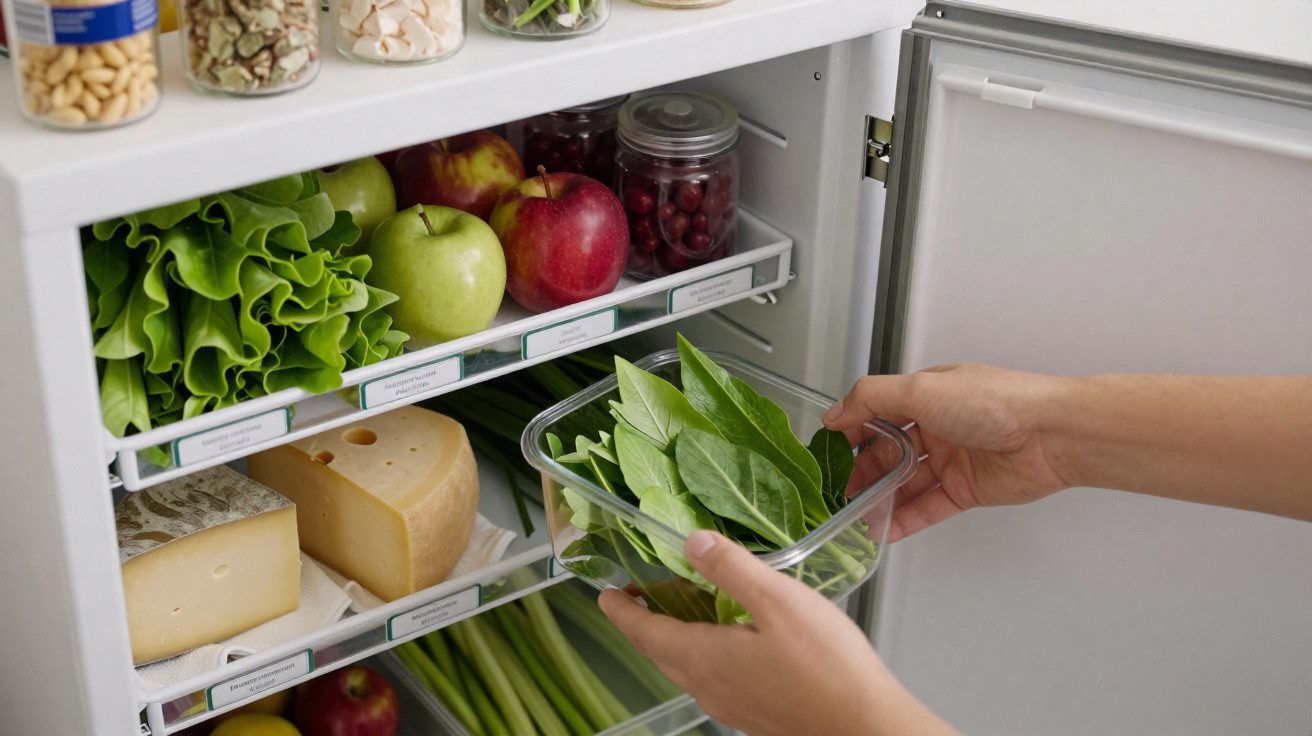
The same principle can be used beyond the kitchen. In the bathroom, vinegar tackles limescale deposits around the shower. Bicarbonate of soda, used as a powder, absorbs odours in a bin or a refrigerator vegetable drawer. Sliding patio-door runners move more freely after a fizzing treatment followed by careful rinsing. Iron soleplates can be brightened with a gentle bicarbonate of soda paste, without an acid soak.
“Two products, three steps: apply, scrub, rinse. Consistency matters more than quantity.”
What chemists say
The bicarbonate of soda–vinegar combination is not a miracle solution. It works because the reaction releases a gas that dislodges grime and biofilms. Used alone, vinegar retains its acidity for limescale, while bicarbonate of soda keeps its alkaline, mildly abrasive action for grease. Alternating the two offers the advantages of both. Households that organise their routine by type of dirt save time and reduce unnecessary effort.
Ways to go further
For bathroom mould, 3% hydrogen peroxide applied on its own and then rinsed can produce good results. To whiten textiles, sodium percarbonate works as a soaking treatment, away from any acid. For more persistent limescale, 6–10% citric acid is an alternative to vinegar with a less noticeable smell. Diluted black soap remains a gentle option for floors and cupboard fronts.
Finally, a simple rotation helps prevent intensive cleaning: wipe high-contact areas daily with a microfibre cloth, use a light alkaline treatment once a week for cooking surfaces, and carry out targeted acid descaling at the water point every two weeks. This schedule keeps surfaces in a stable condition and avoids harsh interventions that wear down materials.









Comments
No comments yet. Be the first to comment!
Leave a Comment