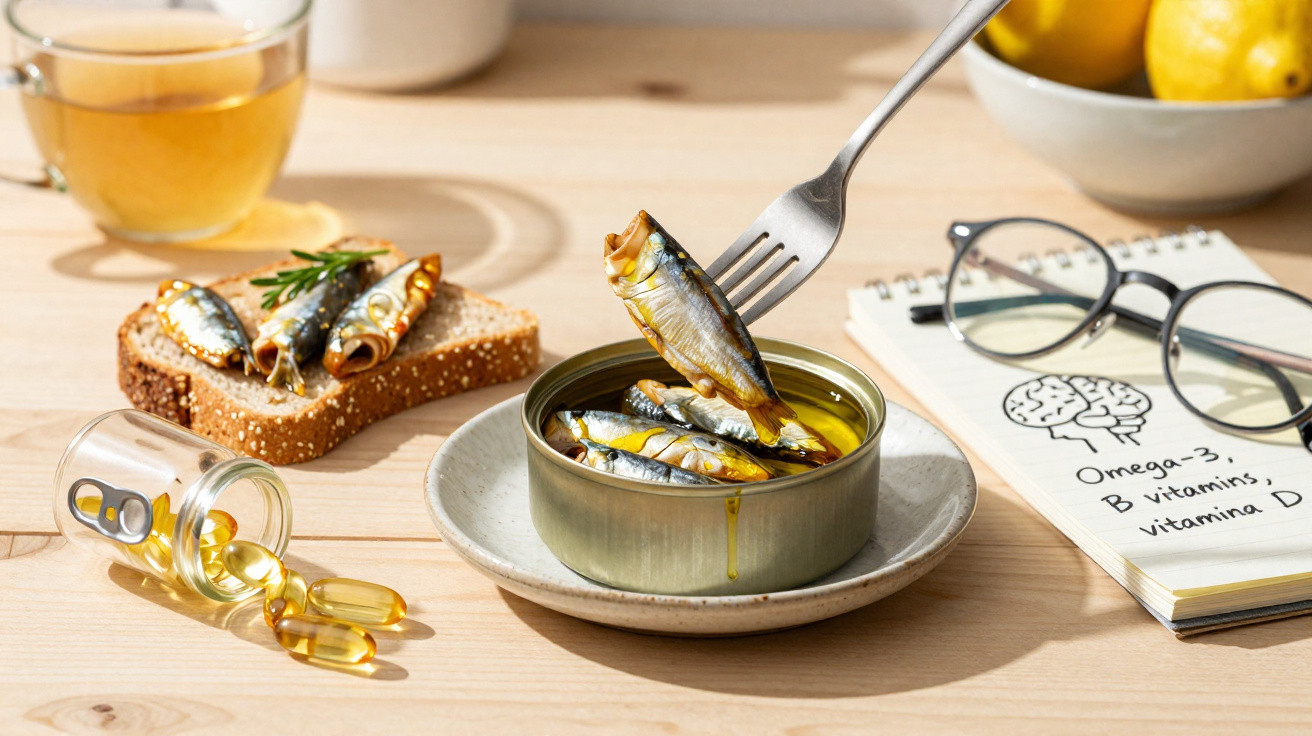
Many people reach for a tin of sardines only when they are stressed: open it quickly, warm it briefly, and it is ready. What may seem like an emergency snack turns out, on closer inspection, to be remarkably clever fuel for the brain. Behind its rather old-fashioned image is a food that can do a surprising amount for mental performance, the nervous system and long-term brain health.
Why tinned sardines are so interesting
Sardines are often seen as a typical “poor man’s fish”: small, strongly scented and frequently packed in oil. That is where the prejudices begin. Many people worry about excessive fat or an inferior-quality tinned product. In reality, the picture is far more positive.
Tinned sardines combine protein, healthy fats, vitamins and minerals in a small metal tin – almost like a natural multivitamin for the brain.
This small fish provides several key nutrients for the mind at once:
- Healthy fats: rich in omega-3 fatty acids (EPA and DHA)
- Substantial protein: around 22–24 grams of protein per 100 grams
- Vitamins: especially vitamin D and vitamin B12
- Minerals: high in calcium, selenium and other trace elements
- A short ingredient list: usually just fish, oil or water, salt and spices
This particular combination makes a tin especially appealing for anyone facing long working days, extensive screen time and constant mental pressure.
Omega-3: lubricant for nerve cells and thinking processes
One major advantage of sardines is their omega-3 fatty acids. These are among the fats from which the brain benefits particularly strongly. They form part of the cell membranes within the nervous system.
Researchers repeatedly associate a good omega-3 status with stronger cognitive performance. These fatty acids help cell membranes remain more flexible, allowing signals to pass more easily between nerve cells.
The better supplied nerve cells are with omega-3, the more smoothly information is transmitted – noticeable in concentration, reaction speed and memory.
Over the long term, another aspect is relevant: a consistent omega-3 intake may help to slow mental decline in later life. This is not about a miracle cure, but about one building block that can make the brain more resilient over years and decades.
Protein and B vitamins: building blocks for chemical messengers in the brain
Brain performance does not depend on fats alone. For nerve cells to “talk” to each other, they need chemical messengers – neurotransmitters such as serotonin, dopamine and noradrenaline. They influence mood, motivation, alertness and the ability to learn.
The body makes these messengers from amino acids, the building blocks of protein. Sardines supply plenty of them. At around 22 to 24 grams of protein per 100 grams, they are comparable with chicken or beef, yet considerably cheaper and longer-lasting.
Tinned sardines also provide vitamin B12. This vitamin supports the production of red blood cells and has a central role in the nervous system. People who eat little meat can quickly develop a deficiency, with tiredness, concentration difficulties and irritability among the typical consequences.
Vitamin D, calcium and selenium: added support for nerves and mood
The micronutrients found in sardines are also noteworthy:
- Vitamin D: supports the immune system, affects muscle function and is repeatedly linked with mood and drive.
- Calcium: essential for bones, but also involved in signalling processes in nerve cells.
- Selenium: protects cells from oxidative stress, which also plays a role in the brain.
This combination makes the small tin particularly attractive in winter or during stressful periods, when sunlight, exercise and freshly prepared meals often fall short.
How often sardines should be on the menu
There is no need to eat fish from a tin every day. Nutrition organisations recommend oily sea fish once or twice a week on average. Sardines fit perfectly into this pattern.
Just one portion of sardines a week can cover a large proportion of the need for omega-3 and important micronutrients.
Anyone who currently eats little fish can begin with a regular “sardine routine”, for example:
- Once a week, plan a tin as the main source of protein.
- Choose sardines in water or olive oil rather than heavy creamy sauces.
- Combine them with fibre-rich sides such as wholemeal bread, vegetables or salad.
This keeps the fat content within reasonable limits, increases fullness and helps blood sugar remain steadier – an advantage for concentration and performance throughout the day.
Practical ideas: everyday ways to serve sardines
Many people like the idea of sardines but struggle with the question of how to use them. The good news is that sardines from a tin can be prepared faster than many ready meals.
| Option | How to make it |
|---|---|
| Sardine toast | Mash sardines with a fork, mix with a little mustard, lemon juice and pepper, then spread generously over wholemeal bread. |
| Quick pasta dish | Cook wholewheat pasta and toss it with tinned tomatoes, sardines, garlic and a little olive oil. |
| Egg and sardine pan | Fry an onion, roughly break up the sardines, pour over beaten eggs and allow them to set, as for an omelette. |
| Sardine salad | Combine leaf salad, cucumber, tomato, beans and sardines with a simple lemon and olive-oil dressing. |
If the flavour initially feels too intense, start with smaller amounts and mix them into other dishes, such as a tomato sauce or vegetable ragout.
Health considerations: from heart protection to sustainability
The benefits of sardines do not stop with the brain. The same nutrients that support brain function also ease the burden on the cardiovascular system. Omega-3 fatty acids affect blood fats, blood pressure and inflammatory processes.
Compared with large predatory fish such as tuna or swordfish, sardines accumulate fewer heavy metals because they sit lower in the food chain and have shorter lifespans. This reduces the risk of high mercury exposure.
The environmental aspect matters to many people too. When fishing is managed responsibly, small shoaling fish can often be used more sustainably. Certifications on the tin can indicate how the fish was caught.
What to consider when buying and eating sardines
It is always worth checking the ingredient list. Ideally, it should contain only sardines, oil or water, salt and perhaps spices. Some products include sweet sauces or artificial additives – varieties that are more of a burden than a benefit.
People with high blood pressure should pay attention to the salt content. Products with reduced salt are becoming increasingly available. Anyone who is sensitive can briefly rinse sardines under water to remove excess salt.
People with allergies, especially a fish allergy, should of course avoid them completely. For everyone else, it is best to ease into them if fish rarely features in the diet. The digestive system benefits from a period of adjustment.
What many people do not know: tinned sardines beat the expensive “brain food” trend
While supermarkets promote costly snacks labelled “Focus”, “Brain Boost” or “Smart Performance”, an inconspicuous tin on the same shelf often provides more than the heavily marketed products beside it.
A simple supply of two to three tins of sardines per week replaces many expensive supplements and fits every budget.
Anyone who needs to study regularly, spends long hours working from home or feels mentally drained can experiment with reaching for a tin of fish: eat sardines once a week for four to six weeks, and pay attention to concentration, mood and fullness. Not every change can be measured precisely, but many people notice after a short time that their minds feel steadier.
Ultimately, tinned sardines remain a simple, old-fashioned product – and that is exactly what makes them so powerful. No superfood hype, no complicated recipes, just a small fish with a big effect on what happens in the mind.

















Comments
No comments yet. Be the first to comment!
Leave a Comment