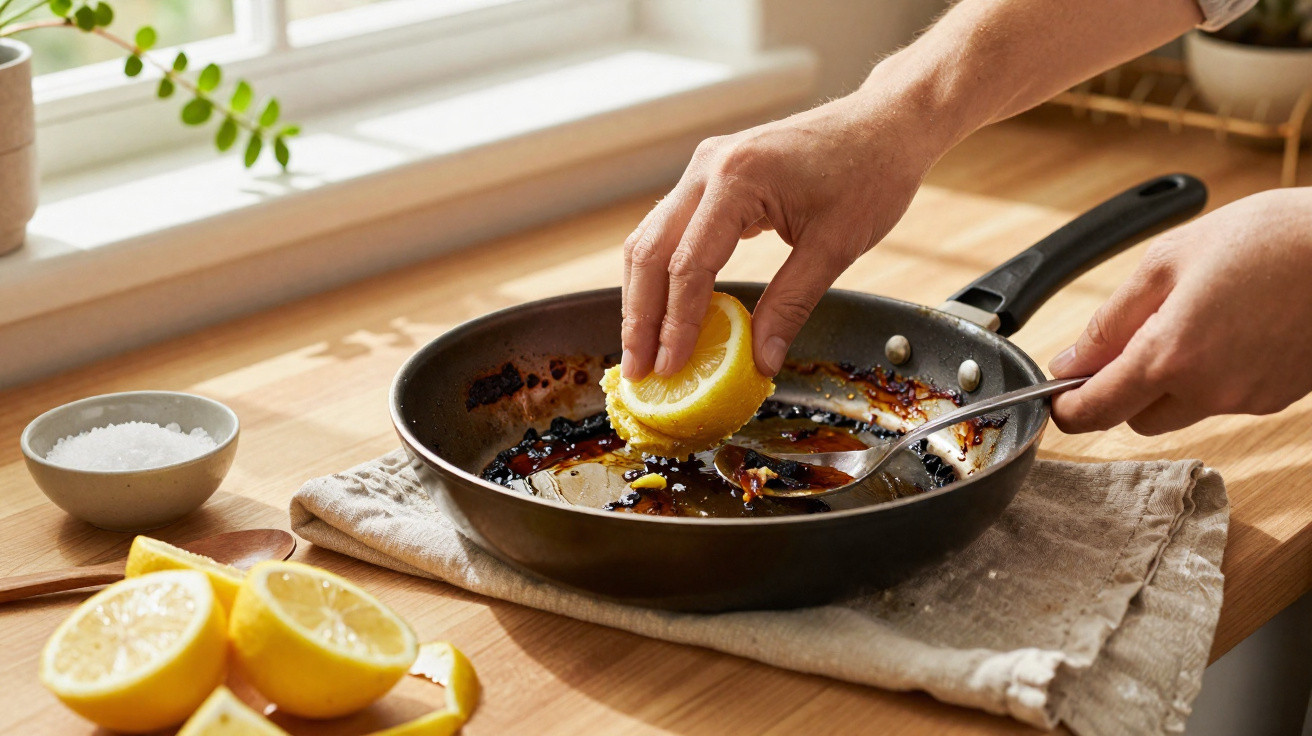
That black, sticky layer on a favourite pan does not build up in a day – but it can be removed more quickly than you might expect.
When burnt grease takes hold, home cooks often turn to aggressive sprays or the familiar baking-soda-and-vinegar mixture. However, another inexpensive yet effective everyday item is likely to be sitting in the fruit bowl, changing how people tackle kitchen cleaning.
Why burnt-on grease clings so firmly to pans
High temperatures, splashing oil and frequent searing gradually bake fat and food residue onto metal. Over time, these layers bond together, forming a dark coating that can seem almost enamelled onto the pan.
This crust affects more than the appearance of cookware. Whenever the pan is heated, carbonised residue may release unwanted compounds and give food an old, rancid taste. It can also interfere with heat distribution, meaning food cooks unevenly and is more likely to stick or burn.
A neglected pan is not just a cosmetic issue; it can change flavour, cooking performance and even how often you replace your cookware.
A few simple habits can stop this coating from accumulating. Wiping a pan while it is still warm will remove much of the fresh residue. Yet when the surface becomes uneven, brown and rough, many assume that only powerful cleaning products can help. This is where an ordinary citrus fruit proves useful.
Lemon: the everyday ingredient that tackles burnt grease
Lemon juice contains citric acid, a gentle organic acid that helps dissolve grease and loosen scorched deposits. It softens the carbonised coating, assists with emulsifying oil and makes residue easier to remove with a sponge or cloth.
When used properly, it does not leave behind a synthetic residue, artificial fragrance or chemical fumes. This is particularly useful in compact kitchens, shared households and for anyone who dislikes intense cleaning smells.
Lemon brings three things in one move: degreasing power, gentle descaling and a fresher indoor air than standard oven sprays.
Lemon is also practical for everyday use. It is low-cost, widely available, biodegradable and often already kept at home for cooking or drinks. For households aiming to reduce both spending and chemical use, it is increasingly becoming a regular cleaning helper rather than an emergency option.
How to use lemon on burnt grease: a straightforward method
A step-by-step routine that takes minutes
- Juice one or two lemons into roughly one litre of very hot water.
- Add several strips of zest to strengthen the degreasing action.
- Soak a soft, non-scratch sponge in the solution.
- Apply it generously to greasy sections, both inside and outside the pan.
- Leave it for 5–10 minutes; use less time on delicate coatings.
- Clean using small circular movements with a soft sponge or cloth.
- Rinse in hot water and dry immediately.
If grease has built up heavily, several brief applications are more effective than one long, forceful scrubbing session. The acid should do most of the work, rather than your arm.
When stubborn deposits will hardly shift
Some pans carry the evidence of years of Sunday roasts and stir-fries. In these cases, a mild abrasive can provide extra help without making the surface look dull.
With the pan still wet from the lemon mixture, scatter a light coating of coarse salt over the affected areas. The salt crystals create a gentle scrubbing effect. Use only the soft side of a sponge, then rinse thoroughly. This approach is suitable for stainless steel and many hard-wearing finishes, but not for polished non-stick coatings.
For a burnt pan base, brief heating can be especially effective. Add a shallow layer of water combined with lemon juice, warm it for a few minutes, turn off the hob and leave it to stand before wiping. Heat and acidity together can loosen stubborn rings and baked-on splatters.
Lemon cleaning for different pan materials
| Pan material | Lemon use | Precautions |
|---|---|---|
| Stainless steel | Highly effective on grease and light limescale. | Do not use steel wool; rinse with hot water and dry to avoid streaking. |
| Non-stick (PTFE, ceramic) | Use a warm solution rather than a boiling one. | Avoid abrasives and limit contact time. |
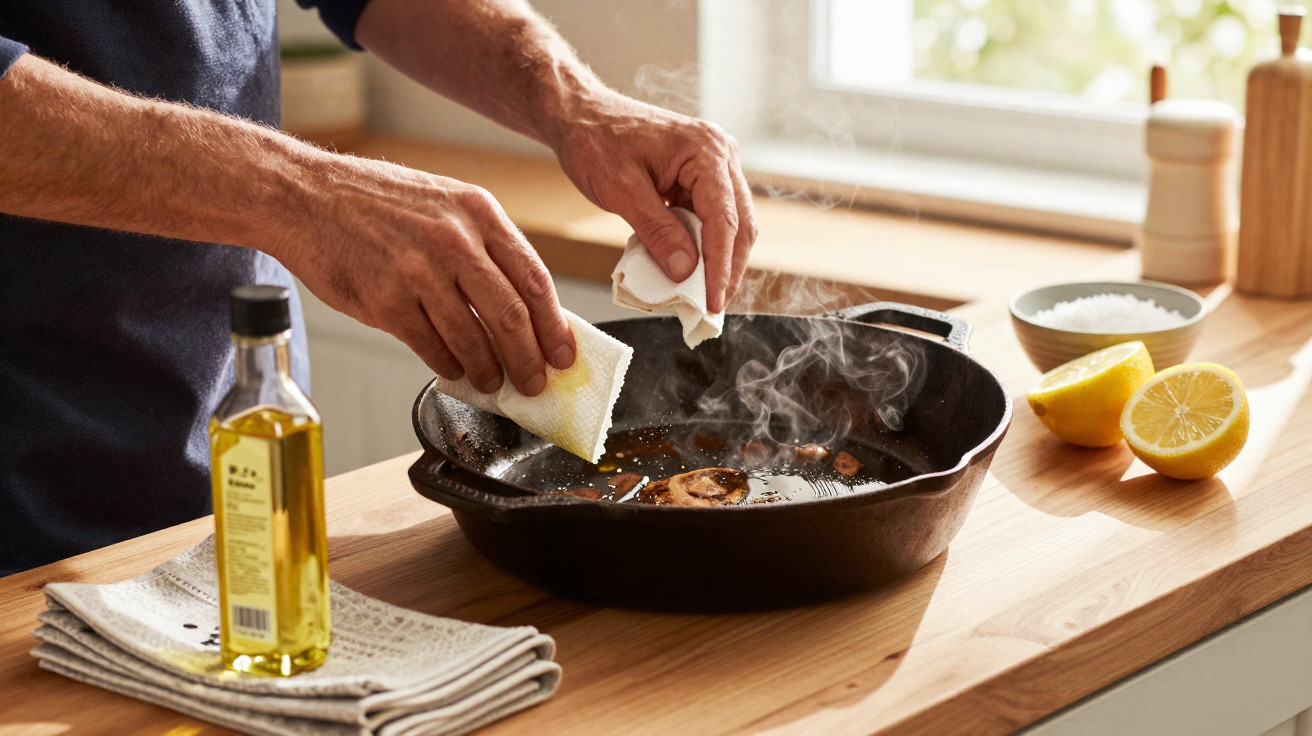
| Bare cast iron | Apply only to isolated marks. | Rinse promptly, then oil and heat again to restore the seasoning. |
| Raw aluminium | Test on an unseen section first. | Acid may dull the surface; use briefly and rinse thoroughly. |
Taking the material into account helps lengthen the life of pans, rather than simply cleaning them as aggressively as possible.
Lemon cleaning as a budget and climate choice
Shop-bought degreasers can be effective, but they also come with plastic bottles, synthetic surfactants and fragrance additives. In an average family kitchen, several bottles each year are thrown away or recycled, while some of their contents enter wastewater.
A small number of fresh lemons can replace a surprising amount of this cleaning work. One or two lemons can readily deal with several pans, a marked chopping board and a greasy glass dish in one cleaning session.
Swapping one chemical-heavy product for a piece of fruit may look symbolic, yet repeated every week it cuts costs and waste in a very direct way.
Lemon also works as a mild descaler and light disinfectant, making it useful for taps, stainless-steel sinks and cloudy glassware. It is not a substitute for a proper disinfectant where strict hygiene requirements apply, but it can handle a considerable range of everyday kitchen tasks.
Making use of every last part of a lemon
Using peel and “spent” lemon halves
After the juice has cleaned the pans, the lemon still has more to offer. The leftover halves retain fragrant peel oils and fibres that can gently scrub surfaces.
- Rub the cut surface over pot exteriors, pan rims and handles.
- Wipe it over stainless-steel taps to lift minor limescale marks.
- Use it with a pinch of salt on wooden chopping boards to neutralise smells.
Remaining zest can be placed in the sink strainer or in the dishwasher during a short cycle to freshen drains and remove the “closed cupboard” smell from appliances left shut between washes.
Other useful kitchen applications
Place lemon water in a microwave-safe bowl and heat it for two to three minutes. The resulting citrus steam loosens splashes from the inside walls, allowing softened marks to be removed with one wipe.
Greasy glass containers also respond well to a short soak in hot lemon water before normal washing. The acid helps break through the oily coating that can remain on food storage boxes after tomato sauces or roast meat.
Preventing burnt grease before it develops
Cleaning routines are important, but cooking practices matter too. Regularly turning burners up to maximum heat makes oil more likely to smoke and carbonise. Using oils with higher smoke points – including refined rapeseed, peanut or grapeseed oil – can reduce burnt deposits from the outset.
Once cooking is finished, wiping a warm pan with kitchen paper removes the light greasy coating that could otherwise bake on during its next use. This one small routine can protect non-stick surfaces and stainless-steel bases against long-term build-up.
Soaking pans overnight, particularly non-stick cookware, can often create further problems. Extended soaking may damage coatings and encourage rust around less protected rivets and edges. A brief wash in hot water with a little mild washing-up liquid, followed by immediate drying with a cloth, is generally enough to keep pans in good condition.
The base and exterior sides also need regular cleaning. These areas are exposed to gas flames or rest against electric elements. Once they become blackened, they can mark hobs, spread grime and make an entire cooker look worn even when the inside of the pan is spotless.
When lemon is not enough: using methods carefully together
In particularly severe situations – such as an inherited pan or a camping skillet left on a fire – one ingredient alone may not be enough, even one as useful as lemon. People may then combine methods, using baking soda in a controlled way, a specialist stainless-steel cleaner or, as a final measure, careful mechanical scraping with a plastic utensil.
The important point is to select the treatment according to the pan’s material and worth. A low-cost baking tray may tolerate a tougher approach better than a carefully seasoned cast-iron skillet. Lemon can then serve as a reliable maintenance tool rather than the sole cleaning solution in the cupboard.
This more considered approach to cleaning can also reduce the urge to discard cookware too soon. Once home cooks understand what adheres to pans and how ingredients such as lemon affect those deposits, they are more likely to keep each item in use for longer – with less frustration at the sink.











Comments
No comments yet. Be the first to comment!
Leave a Comment