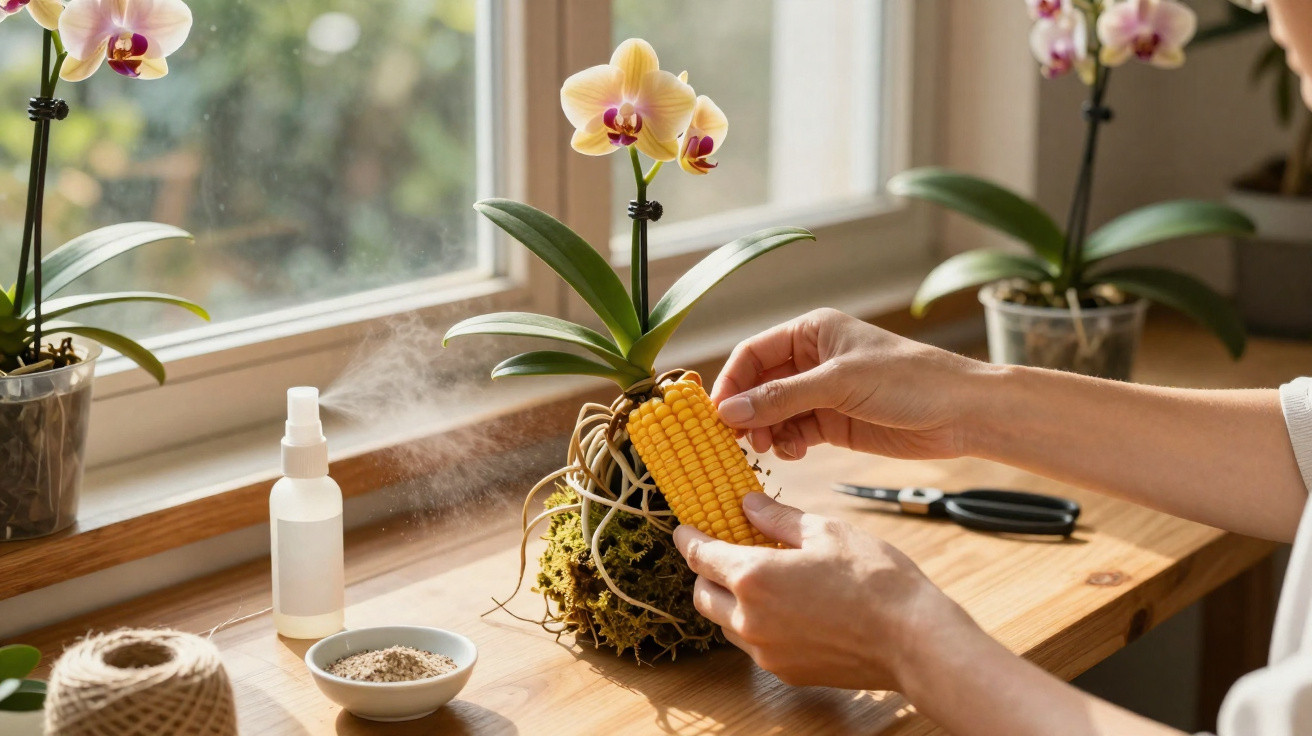
Creative growing makes it possible to turn discarded organic materials into effective supports for the garden. Using a plant’s fibrous structure creates an airy setting that encourages healthy rooting in small botanical species, without relying on heavy or costly plastic pots.
Why does a corn cob work for orchids?
Many epiphytic species live attached to tree trunks in nature, requiring constant airflow around their structures. The dry core of the corn cob has the ideal roughness for secure attachment, preventing the excessive build-up of liquid that often rots delicate foliage.
This biological option can elegantly replace enclosed artificial containers with a rustic appearance. When watered correctly, its porous base releases moisture gently, promoting vigorous shoots while reproducing conditions close to the tropical forests where these small jewels bloom freely.
Which plants need little maintenance indoors?
Some ornamental species thrive very well even without daily watering or continual fertilising… Read more
Which types of orchids are ideal for this structure?
Not every plant specimen tolerates the same hanging growing method. Large varieties need heavy pots, whereas micro-orchids adapt exceptionally well to the cylindrical shape, producing new nodes without adding unnecessary weight to the support.
Delicate genera such as Acianthera gain stability by gripping the outer grooves. The coarse surface holds beneficial particles and gives newly formed shoots the secure support they need throughout their first months of growth and environmental acclimatisation.
Below is a video from the Spagnhol Plantas YouTube channel, which explores guidance on this growing method in greater depth:
How do you prepare the arrangement step by step?
The first stage requires choosing pieces that are completely dry to prevent harmful contamination. Drilling a firm crosswise hole makes it possible to thread through sturdy wire, creating the hook needed to hang the arrangement in cool areas sheltered from direct sunlight.
Next, include a moderate layer of hydrated sphagnum moss to provide a temporary water reserve. This damp nest holds the exposed roots before they are carefully secured with fine nylon thread, preventing abrupt movement that could snap the tips.
Essential materials
Basic components for the support
Gather the components required for the handmade arrangement:
- Clean, dry corn cob;
- A portion of hydrated sphagnum moss;
- Fine wire and nylon thread.
What care keeps the roots healthy?
Maintaining consistent moisture is the key factor in the success of this distinctive growing method. As the substrate dries readily when exposed to continual air currents, frequently misting with water prevents the developing green tips from drying out over time.
Providing plentiful indirect light promotes photosynthesis without scorching the smaller leaves. Sheltered spaces with partial shade create the ideal microclimate for a balanced uptake of water and mineral compounds, both essential for sustained plant vigour.
Follow these recommended daily measures to keep the arrangement hydrated and protected:
- Mist with clean water every day during dry weather.
- Place the piece in a ventilated area with diffused light.
- Apply foliar fertiliser diluted in water every thirty days.
When should fertilising and maintenance be carried out?
After the initial adaptation period, which lasts around one month, the plant begins to produce new roots. This marks the right time to introduce properly diluted foliar fertilisers, nourishing the specimen without placing strain on its young structures.
Monthly nutrient replacement ensures abundant flowering and firm leaves in every season. This straightforward care demonstrates how ecological reuse enhances natural beauty, transforming organic waste into long-lasting supports for delightful home botanical collections.









Comments
No comments yet. Be the first to comment!
Leave a Comment