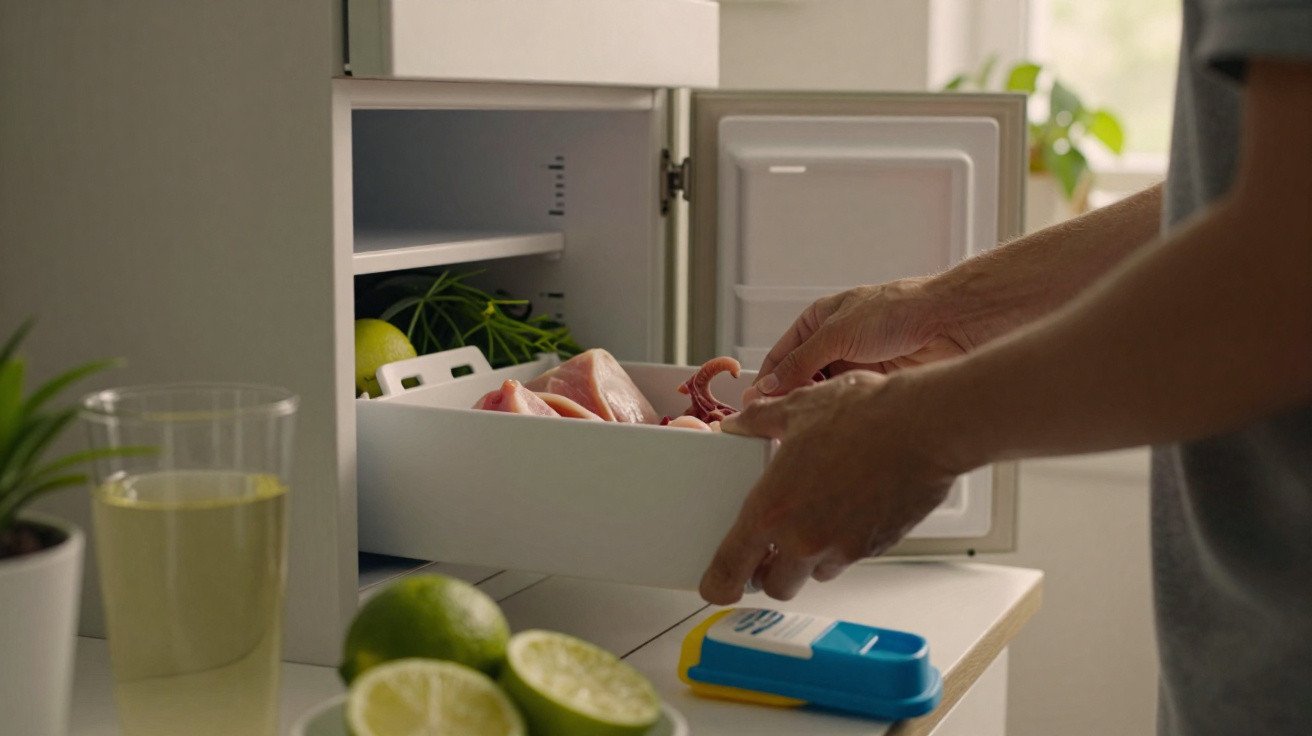
The smell reaches you before the light has even come on.
A dense, sour odour pours from the fridge and catches in your throat, as though someone had left cheese in a wet sock. You remove an out-of-date yoghurt, bin a leftover slice of pizza and give it a quick wipe. You might even set out a little bowl of “magic” bicarbonate of soda.
Yet by the following day, the smell has returned. It is slightly different and not quite as strong, but it is still there, lurking behind a jar, a drawer or a rubber seal. We have all had that moment when the fridge smells odd, but it is impossible to work out why.
It is not simply a matter of gone-off food. One commonplace habit, repeated in homes everywhere, turns each cleaning session into a battle you seem destined to lose. There is one detail that nearly everyone overlooks.
The silent mistake that keeps fridge odours trapped for months
The underlying issue often begins well before anything has actually spoiled. Most people pack their fridge too full, then clean only the areas they can see: the shelves, the door compartments and, on an especially ambitious day, perhaps the drawers. Everything else remains as it always was: out of sight… and smelly.
That routine conceals the real error: people clean around the odours rather than beneath them. Smells do not merely drift about at random. They attach themselves to plastic, rubber, small spills that dried weeks earlier and microscopic drops of meat juice that found their way behind a drawer runner. Unless the source is removed completely, the smell will always return.
A survey by a major appliance brand found that around 70% of people never completely empty their fridge before cleaning it. Instead, they shift food to one side and wipe “around” it. A woman I interviewed in London insisted that she scrubbed “all the time”, but her fridge still smelt of onion mixed with the sea after it had gone stale.
Once we took everything out, we discovered a cracked egg that had leaked behind a carton, fish marinade splashed into the vegetable-drawer runner and a sticky jam ring underneath a jar. At first glance, the fridge appeared clean. But its plastic surfaces had taken on weeks of odours. That is the trap: the smell is usually concealed precisely in the places your sponge never reaches.
Logically, a fridge is a sealed box fitted with a fan that moves cold air around. Leave even one source of smelly molecules in that box and they will be circulated all day long. Cold temperatures slow bacterial growth, but they do not eliminate smells. The same air therefore keeps travelling over the same dirty patches and carries that same “perfume” into every corner.
That is why so many people say, “I clean it and the smell comes back.” They are tackling the air rather than the surface holding the odour. Plastic and rubber are mildly porous materials. Grease, dairy residue and meat juices sink into them before gradually giving off smells like a dreadful organic diffuser. If you don’t remove absolutely every source, you’re just perfuming a crime scene.
The major, persistent mistake is dealing with the visible mess while the unseen mess remains comfortably in place.
How to properly reset a smelly fridge and end the cycle
The cycle can only be stopped with a genuine “fridge reset”. This means removing everything - not only the items at the front. Take out every jar, every bottle of sauce and that mustard you are saving “just in case”. Empty it until it resembles the day it arrived, or nearly does.
If possible, unplug it for an hour. Remove the shelves, drawers and door compartments, then wash them in hot, soapy water as you would your dishes. Heat and soaking time are crucial: leave them immersed for 10–15 minutes, then rinse them with a splash of vinegar. For the inside of the fridge, clean every wall and corner, paying particular attention to the rubber door seal, using water, white vinegar and a tiny amount of washing-up liquid.
The next essential task is finding the frequently neglected drainage hole. Most fridges have a small opening at the back, immediately above the bottom shelf or behind the vegetable drawers. If it becomes blocked with crumbs or slime, water gathers there, ferments and turns into a highly concentrated odour factory.
Let us be honest: nobody really does this every day. But this is the spot that undermines most cleaning attempts. Carefully clear the hole with a cotton bud or a wooden skewer wrapped in kitchen roll. Afterwards, pour a few tablespoons of hot water mixed with vinegar into it. Many people report that the smell “suddenly disappeared” immediately after doing this.
There is another, more subtle consideration: how you store food after the deep clean. Strong-smelling items such as cheese, onions, garlic, fish and leftovers in sauce need properly airtight containers, rather than partly open foil or worn plastic tubs with lids that no longer close fully.
As one professional cleaner told me:
“You can’t fight odors with good intentions and bad containers.”
She encounters the same habits in almost every home: sauces stored in uncovered jars, cut lemons left loose and takeaway boxes that slowly leak into drawers. To solve this, picture your fridge as a small shared wardrobe for odours. Anything capable of “perfuming” everything else needs to be shut behind a proper lid.
- Keep strongly scented leftovers in glass containers.
- Wrap cheese twice: in paper or cloth first, then place it in a box.
- Date-label containers so food does not remain there “just in case”.
Living with a fridge that does not betray you whenever you open it
After breaking the cycle once, kitchen life shifts quietly. You open the door and nothing assaults your nose, so you stop playing the guessing game: “Is it the fish? The salad? The mystery Tupperware at the back?” Instead, there is simply neutral, cold air. It almost feels luxurious.
The aim is not perfection. For most households, a short monthly routine will do: look for leaks, wipe the most-used shelves, inspect the drain hole and throw away that sad cucumber that has started a new life in the drawer. When done regularly, it takes ten minutes and prevents the three-hour “fridge detox” every six months.
Your fridge also becomes surprisingly more honest. If something smells, you know it is recent rather than a six-month-old ghost concealed behind a runner. That makes choices simpler: this belongs in the bin, that should be cooked tonight and this lunchbox can finally leave your life. You are no longer battling an old odour embedded in the surfaces, only managing ordinary food ageing.
People often post photographs of their fridge “afterwards”: less packed, more see-through and with fewer unidentified items swathed in foil like stray meteorites. There is greater mental calm, too. A fresh-smelling fridge quietly suggests that a home is functioning, even during chaotic weeks. Not flawlessly - simply under control.
| Key point | Details | Why it matters to readers |
|---|---|---|
| The mistake: cleaning around rather than underneath | Most people wipe visible shelves but overlook seals, the drain hole and concealed spills behind drawers or jars. | Smells return because the real source is never eliminated, wasting both time and cleaning effort. |
| The reset: an empty-fridge deep clean | Remove all food, soak shelves and drawers in hot soapy water, then clean the walls and seals with vinegar and a little washing-up liquid. | A complete reset removes odours embedded in plastic and rubber, preventing them from “releasing” smells for weeks. |
| The follow-up: storage habits | Use airtight containers for cheese, leftovers and cut onions, and regularly discard forgotten or out-of-date food. | Proper storage stops fresh smells from penetrating surfaces, keeping the fridge neutral for far longer. |
















Comments
No comments yet. Be the first to comment!
Leave a Comment