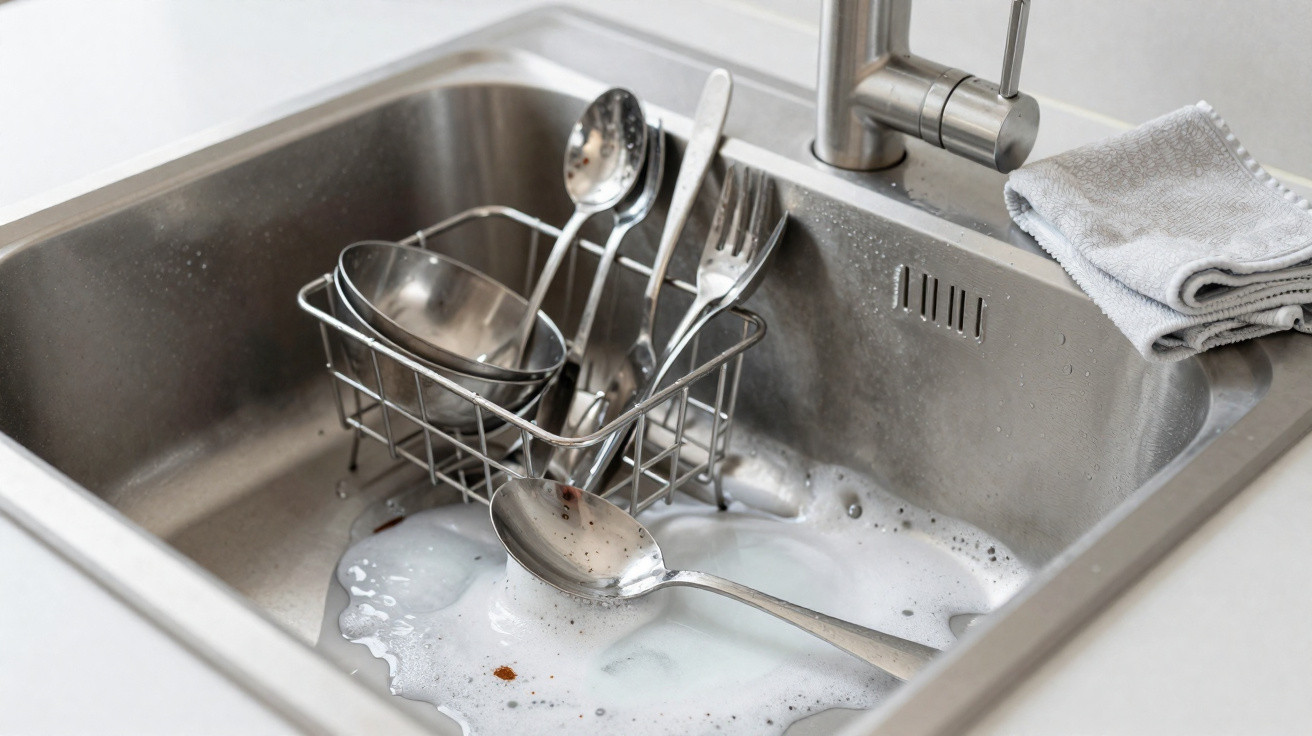
It makes no clatter, leaves no scratches and draws no attention. It simply remains in the sink or dishwasher, doing its damage while you assume the washing-up is finished.
I first spotted it at a friend’s flat on a drab London morning, with toast crumbs scattered across the table and tea going cold in a mug. His teaspoons had a dull, dusty film that polishing would not remove, while the butter knife had tiny brown specks around its handle. He insisted he had bought the set only last year. Yet the cutlery appeared older than his tenancy agreement.
The dishwasher was running, the sink was half full, and one spoon lay at the bottom in a cloudy pool of washing-up water. Beneath the tap, it gave away the answer. The dishwasher was not to blame.
The unnoticed habit that dulls your shine
The problem is soaking. This does not mean a quick rinse or leaving something for a minute while cheese softens. It is the long, forgotten soak in salty, motionless water - or cutlery left damp in a shut dishwasher all night - that slowly spoils the finish. The water becomes stale, detergent grows concentrated, food residue turns acidic, and stainless steel gradually loses its lustre.
I have seen this in family homes and rented flats alike, where the sink becomes a temporary storage area for plates and forks. A cousin’s knives became speckled after a week of late-night pasta and ketchup-covered plates “left to soak till morning”, followed by a weekend away. Another friend nested her spoons so closely that moisture remained hidden between them. Once she pulled them apart, grey half-moons appeared where the spoons had touched.
Stainless steel is not invincible. It depends on a fine, self-repairing chromium oxide layer, but trapped dampness and chlorides from salt, tomatoes, mayonnaise and strong dishwasher detergents can weaken that protection. In narrow spaces - beneath knife handles, between nested spoons or around stamped logos - oxygen cannot reach the metal to restore the layer, allowing micro-pitting to begin. It looks like rust, but it’s chemistry at work.
Rinse, separate and dry your stainless cutlery
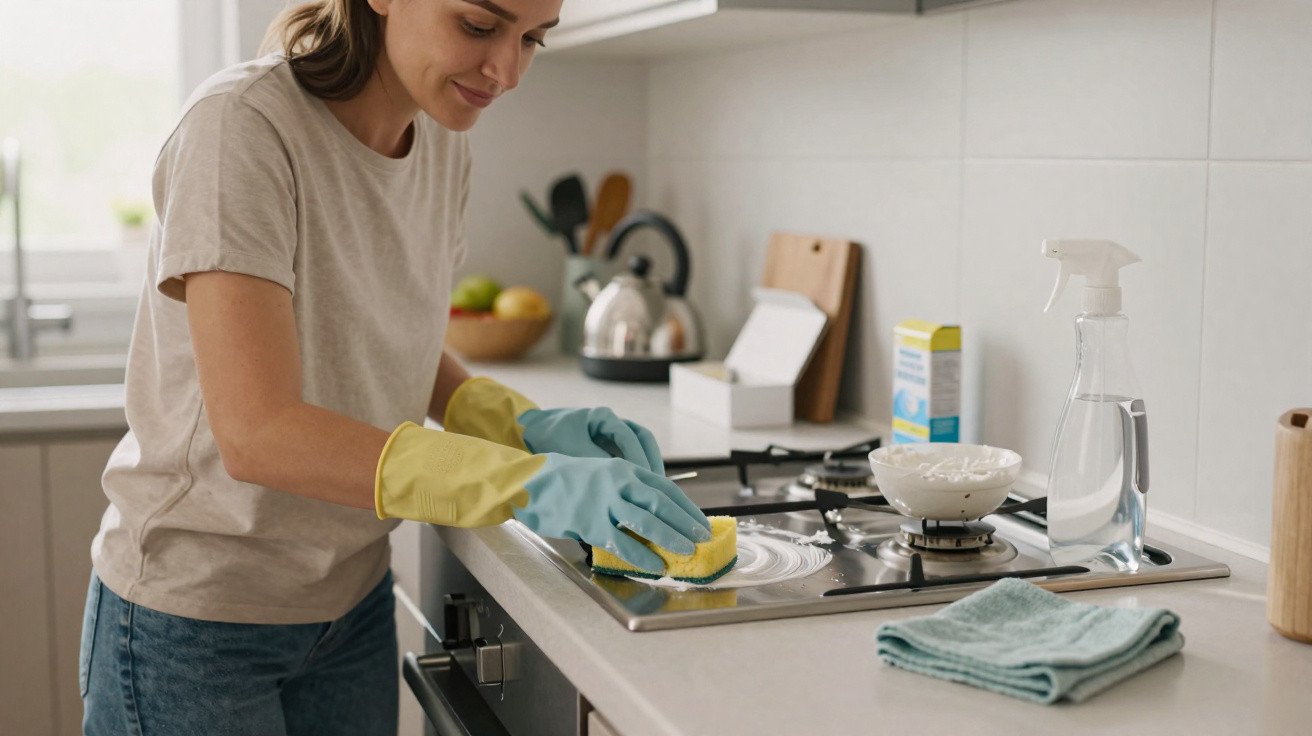
Prioritise brief contact with water, regular movement and prompt drying. Rinse cutlery as soon as you have eaten, particularly after acidic or salty meals, then wash it in warm, clean suds using a soft sponge. When soaking is necessary, limit it to five to ten minutes and shift the items about so water cannot sit still in confined areas. In the dishwasher, place spoons and forks in separate basket spaces, alternate handles facing up and down for improved spray access, and open the door as soon as the cycle finishes to release steam.
Once the water has stopped flowing, the danger begins. Dry immediately using a clean microfibre cloth, taking extra care around the joins between blades and handles and in decorative channels. Steer clear of bleach and abrasive scourers; a mild cream cleaner or bicarbonate paste can remove tea marks without damaging the finish. Realistically, nobody follows this routine every single day. Try to do it “most days”, and your cutlery can retain a hotel-like appearance without requiring hotel-level discipline.
We have all faced the point after a late meal when the sink turns into a still, murky pool. That is where finishes start to fail. Keep silver-plated items separate from stainless steel when washing or loading the basket - Keep metals apart to avoid galvanic marks - and do not leave knives and forks pressed against each other. Should brown, tea-coloured dots appear, powdered cleaner on a damp cloth can often remove them before they develop into pits.
“Stainless stays stainless when air, not soup, touches the surface. The quicker you break the wet, the longer the shine lasts.”
- Don’t soak overnight - brief rinses are better than prolonged baths.
- Open the dishwasher once it has finished so the steam can escape.
- Keep spoons apart to prevent them nesting and holding water.
- Dry in the direction of the grain to prevent micro-scratches.
What is happening to your knives and forks
Imagine an invisible, ultra-thin coating across your cutlery that renews itself whenever it is exposed to fresh air. Standing water and salt interrupt that repair process. Chloride ions enter small gaps and attack the protective layer, especially where items meet or manufacturer marks form tiny sheltered spots. After pitting begins, the surface can feel like sandpaper under a fingertip, and the indentations collect stains more easily. This is why the dull appearance tends to worsen over time.
Drying interrupts the process. Shifting pieces around during washing allows oxygen to help preserve the oxide layer. Milder detergents and avoiding bleach reduce the chemical strain that makes stainless steel look lifeless. If you live in a hard-water area, rinse aid helps water run away from the metal rather than form small corrosive droplets. These are minor decisions, but they make a substantial difference across a year.
There is also the subtle issue of mixed metals. Silver-plated spoons touching stainless steel may darken or become marked when soap, warmth and moisture create a small battery-like reaction. Nothing sparks; instead, the finish becomes smudged with grey marks. Store and wash the sets separately, position them on different sides of the dishwasher basket, and polish silver away from stainless steel so residue does not transfer. Small separations preserve major shine.
A simple change that keeps cutlery looking new
Cutlery contributes to the ritual of eating, even on an ordinary Tuesday. Maintain the routine - rinse, wash, separate, dry - and you can retain the reflective finish that makes even a bowl of soup seem slightly more inviting. Spending one minute at the end of a meal is preferable to spending ten trying to polish away cloudy patches that refuse to disappear.
The next time you pause over a partially filled sink, remember this: water is either actively cleaning or simply waiting. Once it is waiting, it is working against your forks. Pull the plug, swish the cutlery around, expose it to air, then place the tea towel over your shoulder and give everything a quick dry. Your future self, taking out a set that still looks new, will be grateful. Your guest may also notice the way a spoon catches the light, even if they never mention it.
| Key point | Detail | Benefit for the reader |
|---|---|---|
| Avoid long soaks | Salt, acids and standing water weaken stainless steel passivation | Prevents pitting and maintains the mirror finish |
| Separate and ventilate | Space out spoons and open the dishwasher after the cycle | Avoids water traps and rainbow spotting |
| Dry along the grain | Use a soft cloth and avoid abrasives and bleach | Limits micro-scratches and protects shine |







Comments
No comments yet. Be the first to comment!
Leave a Comment