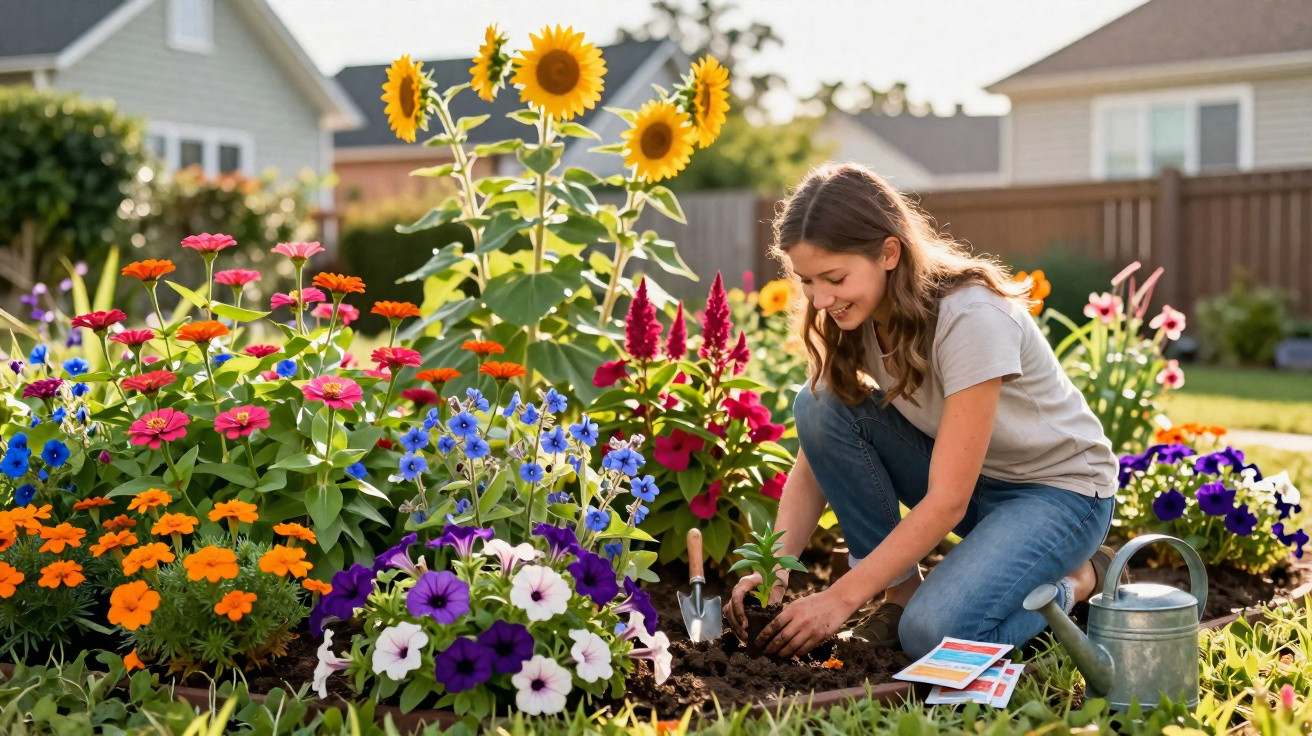
If you sow wisely in early spring, you could be looking at a lavish sea of flowers by the start of summer. Some annuals grow so rapidly that, within a few weeks, they can turn bare soil into a dense and colourful garden display. The good news is that you need neither expert knowledge nor a high-tech greenhouse – chiefly the right timing, sunshine and suitable varieties.
How to give spring sowings a turbo boost
The secret to a record-breaking garden lies in annual flowers that take only around 45 to 90 days from sowing to flowering. Start them indoors or in a greenhouse from March, then plant them out after the last frosts to make the most of the whole season.
- Sow only once the soil feels at least hand-warm
- Choose as sunny a position as possible, with free-draining soil that does not become waterlogged
- Keep the soil moist, but never continually saturated
- Thin seedlings out promptly once they emerge
Thinning is something many amateur gardeners overlook. When young plants are packed too closely together, they compete with one another, stay small and produce fewer flowers. Give them sufficient space, however, and you will usually be rewarded with much stronger blooms.
“Anyone reaching for a packet of seeds in March and April can enjoy abundant beds by June – without expensive ready-grown plants.”
Zinnias: fast-growing bursts of colour
Zinnias are among the classic choices for quick splashes of colour. Sown on a warm indoor windowsill, they grow at speed and can be moved into beds or containers after the last frosts. In mild areas, they can be sown directly into the ground from May.
Tall varieties make excellent cut flowers for a vase, while shorter types fill gaps in borders and window boxes. Regularly removing faded flower heads virtually forces the plant to form new buds, keeping it flowering for longer.
Gomphrena: globe flowers that take heat in their stride
Globe amaranth (Gomphrena) is ideal for summers that are dry and hot. These plants cope with sunshine and dry spells far better than many traditional bedding flowers. Once well rooted, they flower from high summer well into autumn.
Their rounded flower heads can even be dried for wreaths or bouquets. This species is an excellent choice for anyone with little time for maintenance.
Tagetes and nasturtiums: edging plants with added benefits
Tagetes: small, fragrant flowering powerhouses
French marigolds, botanically known as Tagetes, are a first choice for many gardeners planting the front of a bed. They germinate readily, grow quickly and provide rich yellows, oranges and reds for months. Fine, low-growing varieties create dense cushions of delicate foliage, often with a light citrus scent.
Some types of Tagetes are also regarded as useful companions in the vegetable plot. Chemicals released by their roots can reduce certain nematodes, which are soil pests. Flowering beauty and soil care in one – it could hardly be more practical.
Nasturtiums: climbers, ground cover and salad decoration
Nasturtiums can be sown directly outdoors from April. They climb fences and obelisks or trail loosely over wall tops and container edges. Their striking yellow, orange or red flowers begin to appear in early summer.
During very hot summers, flowering often slows a little, but they are all the more impressive in early summer. There is another benefit: both leaves and flowers are edible, adding a peppery flavour to salads and sandwiches.
Sunflowers, celosias and cleome for height and drama
Sunflowers: pillars of the summer border
For gardeners wanting quick structure, sunflowers are hard to beat. They shoot upwards at remarkable speed, forming either compact bushes or impressive giants that grow to more than two metres tall, depending on the variety.
It is worth checking the variety description before buying: choose dwarf forms for small gardens or balconies, and taller plants with large heads for a cottage garden. Birds will later enjoy the ripe seeds.
Celosias: glowing flames in the border
Celosias, often called cockscombs, bring an almost exotic texture to a border. Their flower heads resemble feathers or small flames, appearing almost like tissue paper in the sunshine. Just a few plants create bold accents, especially when paired with understated companions such as zinnias or Tagetes.
Cleome: an airy companion with character
Cleome, commonly known as spider flower, grows quickly from seed and produces long, airy flower spikes. Its see-through effect takes heaviness out of tall borders without obscuring other perennials.
It is particularly suited to the back of a border and looks especially effective when several plants are arranged in small groups. Its unusual shape makes it an eye-catching feature in both modern and traditional gardens.
Borage and petunias: gap-fillers loved by insects
Borage: a blue star for bees and bumblebees
Borage grows rapidly, flowers generously and attracts countless pollinators. Its blue, star-shaped blooms hover above soft, hairy foliage, offering nectar to bees, bumblebees and butterflies. It is equally at home in herb gardens and ornamental planting schemes.
The plants readily self-seed. If you do not want this, remove spent stems in good time. Fresh flowers are considered edible and are often used to decorate drinks and salads.
Petunias: long-flowering plants for balconies and patios
Petunias are classic summer flowers that respond well to attentive care. When grown from seed, they need an early start in warmth, but repay it with a long flowering season from early summer through to autumn.
Double or single, trailing or upright – the range of forms is enormous. Feeding regularly and removing faded blooms will keep the plants going strongly. Combined with zinnias and celosias, they create a real storm of colour in containers.
How to create lush beds from nine species in record time
The key to a genuinely dense look is not to plant a single variety in large blocks, but to mix the nine fast starters cleverly. Put tall sunflowers and cleome at the back, medium-height zinnias and celosias in the middle, and Tagetes, nasturtiums and petunias towards the front. Let borage weave through the gaps.
| Species | Sowing time | Particular benefit |
|---|---|---|
| Zinnia | March indoors / May outdoors | Strong colours, ideal as a cut flower |
| Gomphrena | Start indoors in warmth in March–April | Tolerant of heat and drought |
| Tagetes | Sow outdoors in April–May | Bed edging, helps in the vegetable plot |
| Sunflower | Sow directly in April–May | Rapid height, bird food in autumn |
| Borage | Sow directly in April | Magnet for pollinators |
| Nasturtium | Sow directly in April–May | Edible flowers, climbing or trailing |
| Celosia | Start indoors in March–April | Distinctive, vivid flower shapes |
| Petunia | Start indoors in February–March | Long-flowering for containers and balconies |
| Cleome | Start indoors in March–April | Airy structure, striking shape |
“By combining different plant heights, you can create an almost three-dimensional floral display in less than three months.”
Practical advice for beginners and impatient gardeners
If you have never grown plants from seed, begin modestly: choose fewer species, but sow them in several rows or pots. That makes any losses easier to manage. A simple approach is to sow in seed trays filled with low-nutrient compost, prick out into richer compost, then plant outdoors from mid-May.
In exposed, windy sites, it is worthwhile providing sunflowers and cleome with a support cane from the outset. Young plants then become accustomed to the support and are less likely to snap during summer thunderstorms.
Why quick-growing flowers are more than decoration
These rapid-flowering plants do more than add colour: they also support the garden's ecological balance. More flowers mean more insects, which in turn provide more food for birds and other beneficial wildlife. Borage, zinnia, nasturtium and Tagetes are considered particularly insect-friendly.
If you grow vegetables, you can use the nine species purposefully as companion plants. Planted between tomatoes, peppers or cabbage, they confuse pests, attract pollinators and visually soften the vegetable beds. Many gardeners describe the garden as noticeably more vibrant once annual flower mixes are included.
Another advantage is that these flowers forgive mistakes. Even if you miss a day of watering or sow a little too densely, you still have every chance of a respectable result. That makes them an ideal introduction for children or gardening newcomers – visible success in a short time is motivating and encourages more garden projects.













Comments
No comments yet. Be the first to comment!
Leave a Comment