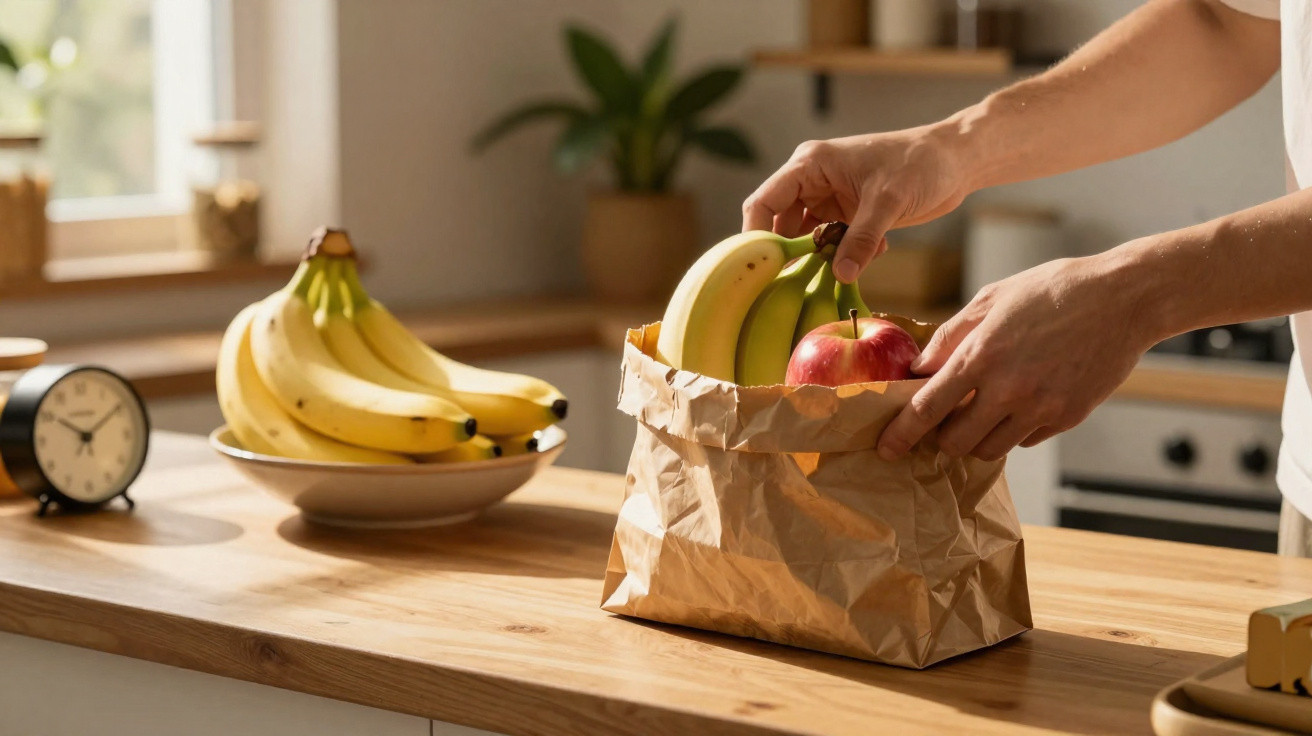
You bought a bunch of bananas for the weekend. By Monday, they are still resolutely green, putting your breakfast plans on hold. The answer requires neither gadgets nor a miraculous ripening chamber. All you need is a paper bag, a fruit that produces more ethylene than the rest, and a spoonful of ordinary cupboard staple to keep conditions dry and stable. Set it up in two minutes before going to bed, and wake up to bananas that are ready to cooperate.
She put in a small apple, folded the top over once and placed the parcel beside the espresso machine. The morning rush passed; when I looked again, the bananas were speckled and ready, as though the night had murmured, “Hurry up.”
It felt pleasantly old-fashioned and unexpectedly gentle. We tend to speed everything up with microwaves and clever tricks, yet this method relies on fruit simply doing what fruit naturally does. The bag stays still. The science gets to work. The result is sweet.
Here is the detail that makes the method work so well.
The quiet alchemy inside a brown paper bag
Fruit ripens by communicating with itself through a gas known as ethylene. Certain fruits produce only a little, while others release much more. A brown paper bag does something wonderfully straightforward: it concentrates that message in a space no bigger than your hand, while still allowing the fruit to breathe. Plastic holds in excessive heat and moisture. Paper maintains airflow while keeping the signal concentrated.
Imagine a ripe apple resting beside your green bananas. Apples are enthusiastic ethylene producers. Inside a bag, their exchange becomes more concentrated. The apple sends out its signal, the bananas respond, enzymes become active and the peel starts to shed its persistent green shade. It is almost possible to sense time moving more quickly on the kitchen worktop. Not in a frantic way, just efficiently.
Commercial growers use controlled spaces, mild warmth and carefully measured ethylene to bring fruit to the right stage at the right time. You are not trying to reproduce a warehouse in your kitchen. Instead, you are giving nature a gentle push on a smaller stage with a more practical plan. Starches turn into sugars, the flesh becomes softer and aromas develop. That is the overnight alchemy you are after.
How to do it tonight: bag, buddy fruit and a spoonful of “magic”
Choose two to four bananas that are mainly green, with a touch of yellow at their tips. Place them in a brown paper lunch bag with a ripe apple or a ripe banana peel. Add one spoonful of uncooked rice or plain flour to the bottom of the bag. Fold the top over once, then leave it in a mildly warm place, such as beside-not on-your cooker or coffee machine.
That spoonful is the “magic”. Rice or flour discreetly takes up stray moisture, keeping the skins dry so the ethylene can work without creating a clammy environment. It also helps the bag remain slightly warmer and more consistent. Do not seal the bag tightly, and do not use plastic. Check it before bed, then have another look in the morning. And yes, it works while you sleep.
We have all faced a breakfast when the banana is simply not ready for its role. Avoid a few common mistakes. Do not pile bananas on a hot appliance or put them in the fridge. For an added boost, include another ethylene-producing companion, such as a pear or tomato, although one is generally sufficient. Realistically, nobody does this every day. If your kitchen is cold, keep the bag close to a gently warm area or wrap it in a clean tea towel to create a milder microclimate.
Think of it as ripening with stabilisers: you are guiding the process rather than forcing it.
“A brown bag is the home cook’s ripening room. It’s simple, forgiving, and it respects the fruit,” said a produce manager who’s ripened more bananas than most of us will ever eat.
- Bag: Brown paper, lunch size or slightly larger.
- Buddy: One ripe apple, pear or banana peel.
- Spoonful: Rice or flour at the base to keep everything dry.
- Fold: Fold once only-secure, but not airtight.
- Wait: Leave overnight for a nudge, or 24–36 hours for deeper sweetness.
What changes overnight-and what does not
Ripening happens gradually rather than at the flick of a switch. By morning, you are looking for a softer texture, a more golden yellow colour and the first freckles. The flavour will become brighter, although maximum sweetness often takes 24–48 hours. When bananas begin very green, the bag gives them a substantial head start and offers more flexibility for the following day. If they are already pale yellow, overnight may move them into smoothie-and-pancake territory, along with a welcoming burst of aroma.
There is a modest compromise: quicker ripening may soften the texture earlier. That is ideal for baking. If you need bananas firm enough to slice into lunchboxes, stop sooner and remove them as soon as the first spots appear. The rice or flour is less a magic spell than a useful safeguard, helping the bag behave like a dry, cosy room rather than a sauna. Skip the oven, too. Heat alters flavour and may take the outside too far while the middle remains behind. The bag keeps the process more balanced.
Here is a small tale from the produce aisle. A baker I know chooses banana ripeness as if selecting paint samples: vivid yellow for tomorrow’s fruit bowls, speckled for bread, golden and freckled for muffins, and brown for ice cream. She bags whichever bunch needs to “catch up” with the week. The bag is not a boast; it is simply a nudge. That is its appeal: rather than imposing a deadline, you give the bananas an opportunity to meet one.
Pay attention to how they feel. Judge ripeness by touch as well as colour. A ripe banana should give under gentle pressure without collapsing. When its peel has a few small brown marks and the fruit carries a faint bakery-like scent, it is ready. Remove the apple, leave the bananas on the worktop and use them within a couple of days. If they go too far, peel them, slice them and freeze them for later smoothies. Nothing is wasted, only redirected.
Even in a kitchen with sharply changing temperatures, the bag helps by forming a microclimate. You have prepared the setting; the bananas will handle the rest. When time is limited, position the bag in a sunny windowsill spot for a slight rise in warmth without actually cooking anything. Sometimes the smallest adjustment delivers the sweetest result.
There is one more lesson learned through sticky fingers: patience has the better flavour. A banana hurried along with heat may look ripe but taste flat. A banana gently encouraged by ethylene sings. The bag is merely a humble backing chorus for that solo.
A wider look at speed, flavour and small rituals
There is a reason this technique endures. It makes waiting feel like a ritual instead of a nuisance. Set up the bag after dinner, and fruit progresses overnight without demanding another thought. If you prepare food on Sunday and snack on Monday, you can stagger a few bags containing bananas at different stages. This is not solely about tomorrow’s breakfast. It is a small system that makes the week a little easier. Choose the timing, fold the bag and let time make its quiet music. Share the trick with a flatmate or child, and it becomes a tiny piece of kitchen magic. These small victories can make a weekday feel more like one you selected yourself.
| Key point | Detail | Benefit for the reader |
|---|---|---|
| Brown bag + buddy fruit | Concentrates ethylene while retaining airflow with a ripe apple, pear or banana peel | Faster, more even ripening without gadgets |
| Spoonful of “magic” | Uncooked rice or flour in the bag absorbs moisture | A drier microclimate, fewer clammy skins and more consistent results |
| Timing and touch | Overnight for a nudge; 24–48 hours for deeper sweetness; test with a gentle press | Choose the ideal stage for eating, baking or freezing |






Comments
No comments yet. Be the first to comment!
Leave a Comment