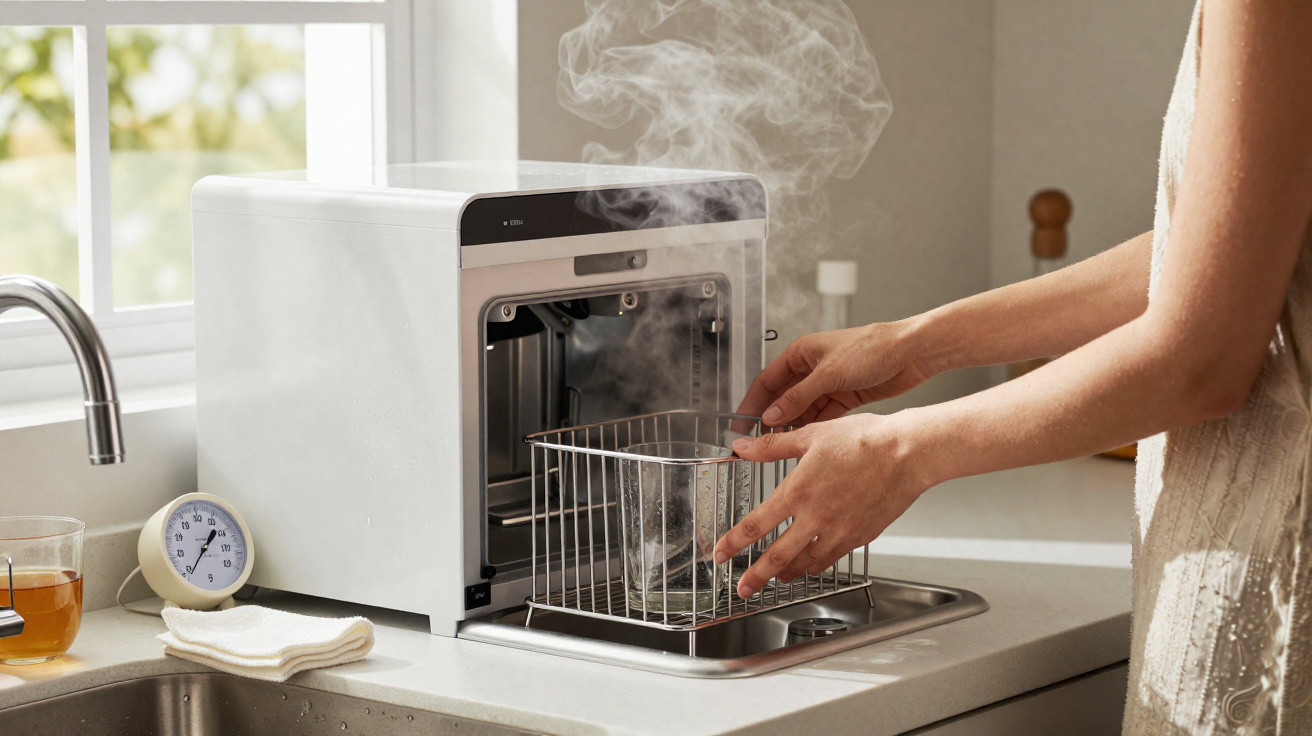
The dishwasher beeped, its door opened and a plume of scorching steam filled the kitchen.
Between the sparkling glasses and spotless plates, one item seemed distinctly out of place. A wooden spoon that had once been smooth and honey-coloured was now dull and faintly split, with a handle twisted as though a single wash had added ten years to its life. Its owner lifted it, frowned, then casually put it back in the drawer. The following evening, it went straight into the dishwasher once more. Then again.
It is a small, near-instinctive routine. Dirty wooden spoons, salad servers and chopping boards go into the rack, the door closes and the programme starts. It is quick, efficient and modern. But ask professional chefs about it and the response is usually identical: an immediate grimace, a measured shake of the head and sometimes an outright “nooope”. They know precisely what repeated dishwasher cycles do to wood, and it is about far more than appearance.
What really happens to wooden utensils in your dishwasher
Watch a chef clear down after a demanding service and one detail stands out. Metal pans may be sent to the pot wash, while wooden spoons and boards are almost always kept aside. They are carefully rinsed, towel-dried and left on a rack to air-dry like prized little tools. In commercial kitchens, wood is handled more like skin than steel. It is a natural material, packed with pores, fibres and invisible tiny channels. Subject it to a dishwasher’s intense heat, pressure and detergent, and it is not simply being “washed”. It is repeatedly put under strain.
Home cooks usually spot the effects after several weeks or months. Once-straight handles start to bend slightly. Edges that felt smooth become rough and fluffy. Dark marks emerge around joins, particularly where a spoon handle meets its bowl or along the end grain of a chopping board. That is only the visible damage. Beneath the surface, water has moved in and out of the wood, making it expand before it contracts as it dries too rapidly. Fine cracks develop along the grain. Small spaces form where food residue, soap and bacteria may collect. It is gradual damage, easy to overlook until a favourite spoon suddenly breaks while you are stirring soup.
Chefs describe wood in much the same way as joiners do. Extended contact with hot water causes its fibres to swell, while the fierce heat of a drying cycle makes them contract too quickly. Repeated dozens of times, that movement compromises the material’s strength. Powerful detergents also remove the wood’s natural oils, much as harsh shampoo can damage hair. Bare, thirsty wood absorbs even more moisture during the next wash, then dries more unevenly still. The result is utensils that look worn and are less hygienic. Cracks and warping create small openings for mould and persistent odours. Where food safety is concerned, that is unacceptable to most chefs.
How chefs clean and maintain wooden utensils
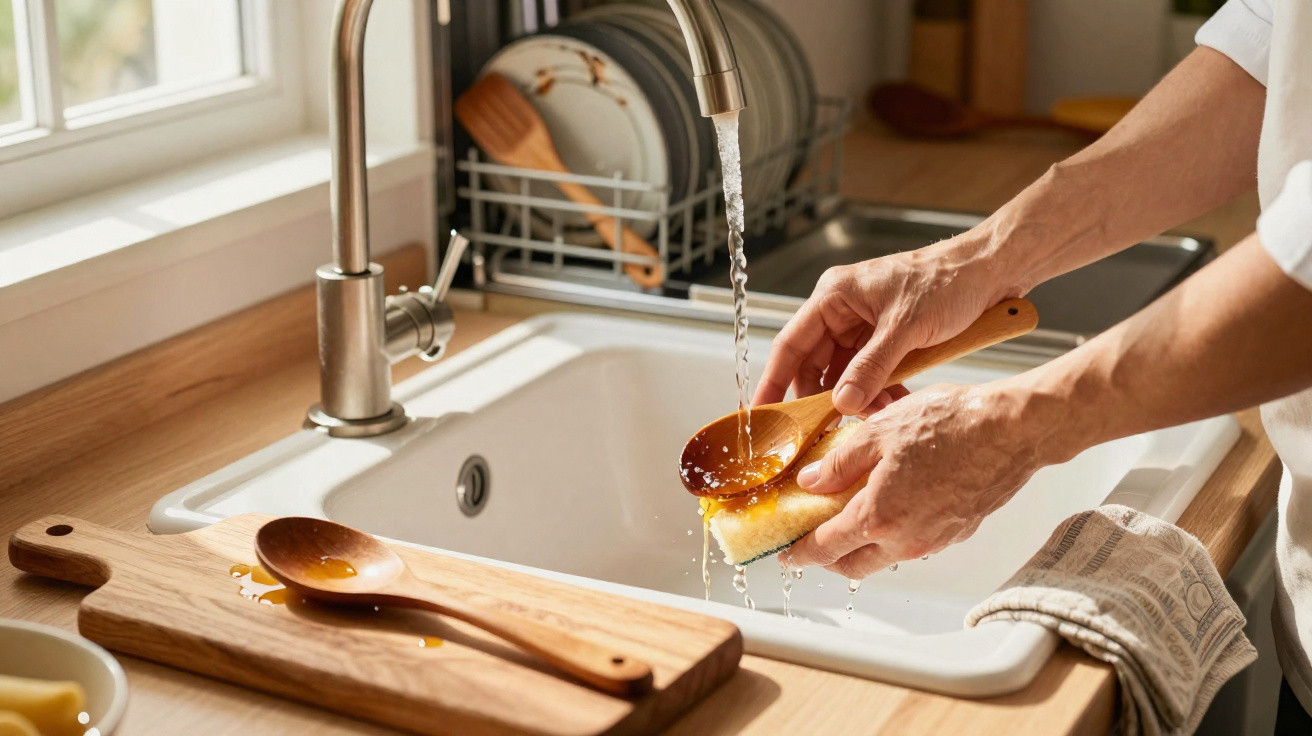
Ask a chef how a wooden spoon should be cleaned and the advice is remarkably straightforward: warm water, gentle washing-up liquid and your hands. No elaborate method is required. Rinse a spoon or board soon after using it, especially if it has touched raw meat, fish, eggs or highly acidic ingredients such as lemon or tomato. Wash it as you would a favourite mug, using firm but gentle strokes. Rinse thoroughly, dry it with a clean cloth and place it upright or on its side so air can circulate around it. The purpose is not to saturate the wood, but to clean the surface and allow it to dry undisturbed.
The same principle applies to chopping boards. Professional kitchens seldom leave a wooden board soaking in a sink of water, as soaking can be nearly as damaging as a dishwasher. Instead, they remove any stuck-on food, wash both sides quickly and stand the board upright so it dries evenly. Some cooks scatter coarse salt over the board and rub half a lemon across the surface to remove stains and odours. It takes two minutes, smells fresh and avoids harsh chemicals. Let’s be honest: hardly anyone truly does this every day. Even so, doing it regularly enough can greatly extend the life of your board.
Then there is the stage many home cooks overlook: conditioning the wood. Every few weeks, chefs apply mineral oil or a dedicated board conditioner to their wooden tools. Using a small cloth and a little oil, they work it in with slow circular motions, leave it to absorb and wipe away the surplus. It can feel oddly calming, rather like polishing shoes or winding a mechanical watch. The oil helps close the pores and slows the repeated swelling-and-shrinking process. It does not make wood waterproof, but it gives it a better chance against heat and humidity. This is one of the genuine reasons heirloom spoons can endure decades of daily cooking without breaking down.
What chefs say about wooden utensils and dishwashers
Professional cooks tend to be direct about wood and dishwashers. Many follow a firm kitchen rule: if it is wooden, it does not go anywhere near the machine. One chef compared it to putting leather shoes through a hot washing-machine cycle. They may emerge “clean”, but they will also emerge ruined. Wooden salad servers, rolling pins, spatulas, pestles, chopsticks and even the handles of some knives all suffer in the same manner. High temperatures, strong detergents and aggressive drying programmes combine to cause damage. It may be convenient on a Tuesday evening, but it gradually cuts short the life of anything made from wood.
At home, the boundary can be less rigid, and that is perfectly reasonable. There are exhausting weeknights, piles of washing-up, children to look after and a very real urge to put everything in the dishwasher. On such a day, one wooden spoon may not seem important. The problem is not one cycle but the repeated habit throughout the year. A single shortcut will not destroy a utensil; years of shortcuts can. Rather than pursuing perfection, many chefs recommend a practical compromise: identify the wooden items you would genuinely hate to lose and give them additional care. The inexpensive spare spoons are the ones to take a chance on, if you absolutely must.
“Every tool in my kitchen has a job,” explains London-based chef Marta Rossi. “If I respect it, it does that job better and for longer. Wood is alive. If you treat it like plastic, don’t be surprised when it behaves badly.”
Her approach can be reduced to several easy routines that need not turn every evening into a ceremony. Begin with a quick assessment: which wooden pieces are indispensable, which have sentimental value and which could easily be replaced? Keep the important items out of the dishwasher. Hand-wash them quickly, then dry them thoroughly. Occasionally oil your main board and favourite spoon. It takes around ten minutes, perhaps once a month.
- Keep wooden utensils out of the dishwasher whenever you can.
- Clean them with warm water and mild soap, then dry them immediately.
- Store boards upright so that both sides can dry at the same rate.
- Oil spoons and boards regularly to help prevent splits.
- For hygiene reasons, replace wood that is deeply cracked or mouldy.
A different way to view what is in your drawer
There is something quietly meaningful about using a wooden spoon that has been part of your kitchen for years. Its handle has darkened where your fingers naturally rest. Its edge has worn into the precise curve of your preferred pan. These imperfect little tools hold recipes, memories and sometimes entire chapters of life. They merit more than a punishing journey through steam and chemicals. When chefs advise, “don’t put wood in the dishwasher”, they are not merely being fussy. They are protecting the working life of tools they depend on every day.
We are surrounded by items designed to be discarded and rapidly replaced: inexpensive spoons, thin boards and flimsy utensils that flex under the slightest force. Treating wood differently is almost a form of resistance. It means choosing to keep something longer, learn its character and let it age rather than watching it deteriorate. The next time the dishwasher beeps while you are holding a damp wooden spatula, you may stop for a moment. One small choice: rack or sink.
That tiny decision reveals quite a lot about how we cook, shop and look after the things that quietly support everyday life. Perhaps you will begin with one spoon, or with a single chopping board you decide to save from the machine. Over the months, you will notice changes in its colour, feel and even scent. You may even find yourself telling a friend, almost as though sharing a secret: “Leave the wood out of the dishwasher. It’s worth it.”
| Key point | Detail | Why it matters to the reader |
|---|---|---|
| Heat and detergents damage wood | Fibres swell, contract, crack and warp | Understand why spoons split and lose their shape |
| Hand-washing extends its lifespan | Warm water, mild soap, immediate drying and air-drying | Keep favourite utensils in good condition for longer |
| Regular maintenance makes wood safer | Oiling, checking for cracks and replacing mouldy items | Reduce the risk of odours, bacteria and contamination |









Comments
No comments yet. Be the first to comment!
Leave a Comment