The odour reached her before she had even put the key in the lock. There was garlic from the night before, an obstinate trace of burnt toast and a vaguely refrigerator-like smell hanging behind it all. It was the sort of kitchen odour that settles into curtains, clothing and your state of mind. She put down her bag, opened a window that made very little difference, then looked at the disorder of plates and pans demanding to be dealt with.
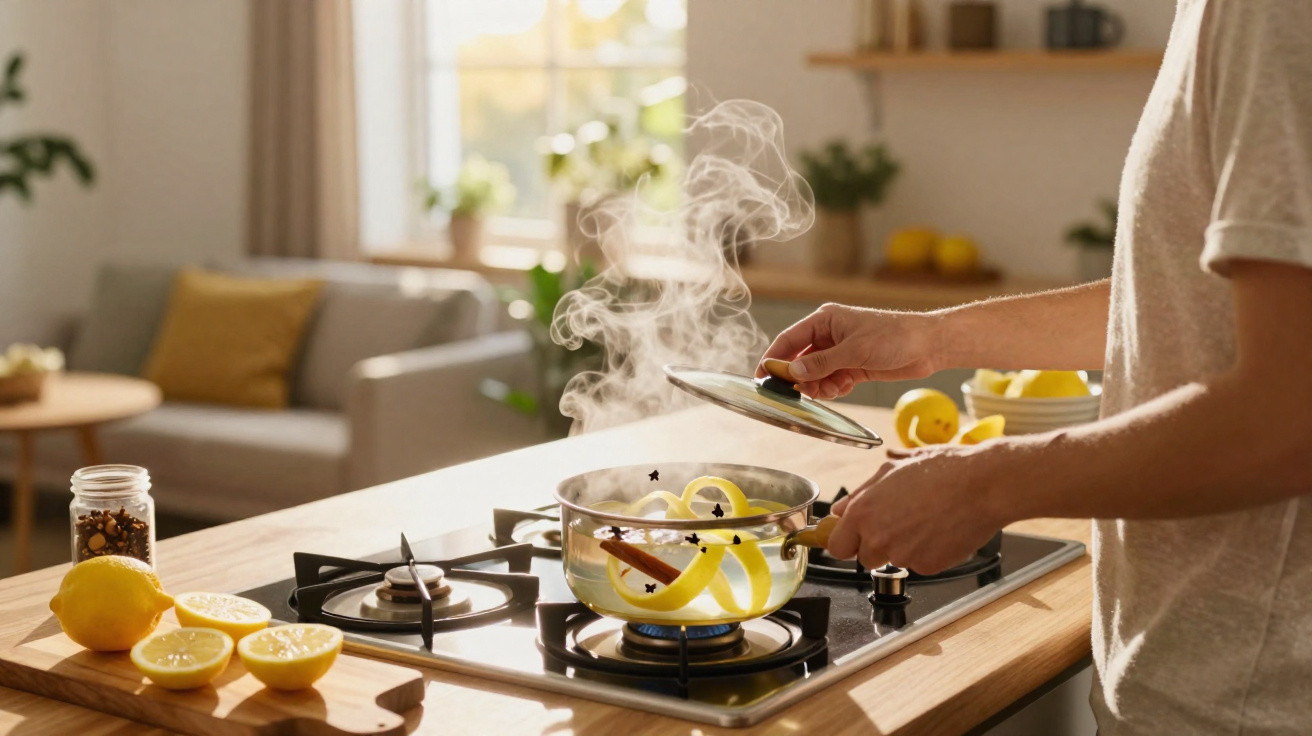
Then, in a small, almost unthinking gesture, she took the weary lemons from the fruit bowl. She peeled them, dropped the peel into a saucepan of water and brought it to the boil. There was no expensive diffuser or fragranced candle involved: only a pan and yellow peel that had been destined for the bin.
Ten minutes later, the room felt changed.
The difference, though, came from an unexpected place.
Why a simple lemon peel pot can reset your kitchen air
Around five minutes after the water begins boiling, a subtle shift takes place. The steam grows denser, the first citrus notes drift upwards, and the kitchen starts to feel less like a museum of old meals and more like somewhere you would genuinely want to cook. Lemon has a gentle fragrance rather than that harsh, artificial-cleaner smell, and it appears to find its way into every corner.
Open a drawer, and the scent inside seems milder. Stand by the bin, and the familiar wave of “ugh” is not quite so powerful. It is not magic, but it is unexpectedly reassuring.
One woman I spoke to is convinced that this method rescued her open-plan living room after a week of strongly spiced curry and fried food. Friends were due to visit, she had no time for a thorough clean, and scented candles had failed to tackle the smell that lingered. In desperation, she copied her grandmother’s approach: a saucepan of water, broad strips of lemon peel and a cinnamon stick found at the back of the cupboard.
She left it to simmer over a low heat for 30 minutes. When the doorbell sounded, her flat smelled as though somebody had baked a lemon pudding, rather than reheated the previous evening’s meal three times.
There is a straightforward explanation for why it works. Heated lemon peel releases essential oils rich in limonene, a compound recognised for its fresh, clean aroma and mild deodorising qualities. Steam transports those oils through the room, where they combine with existing odours and gently neutralise them instead of simply covering them up.
Heat can also help lift greasy particles left in the air after cooking, leaving the kitchen with a fresher starting point. You’re not only adding a nice smell, you’re quietly diluting the bad ones. This is why it feels less like spraying fragrance over a problem and more like resetting the room’s atmosphere.
How to actually do it so the whole kitchen smells new
The process could hardly be easier. Half-fill a medium saucepan with water, then add the peel from one or two lemons. Larger strips are more effective than small pieces, so use a knife or vegetable peeler and do not worry about making them neat.
Set the pan on the hob and bring the water to a gentle boil, then reduce the heat until it is simmering. Leave it bubbling gently for 15 to 30 minutes.
For particularly persistent kitchen odours, add a spoonful of bicarbonate of soda or a few cloves to give it a warmer note. What matters is steady, slow steam rather than a fierce rolling boil.
Many people abandon the idea too quickly, deciding that it “doesn’t work” because they expect an immediate hotel-lobby effect. Smells that have lingered for several days need a little time to shift. Allow at least ten full minutes for the lemon steam to travel around the kitchen.
Do not leave it unattended for an hour and let it boil dry, either. Honestly, hardly anyone does this every day. It is more of an emergency response for when your kitchen smells of old onions and regret than a strict daily habit.
If possible, first wipe down a few obvious offenders - the chopping board, sink drain and perhaps the bin lid - before allowing the lemon saucepan to provide the final soft-focus finish.
Sometimes the smallest rituals are the ones that make a home feel cared for, even when the sink is still full and the floor isn’t spotless.
Use what you already have
Save lemon peel left over from cooking or tea, freeze it in a bag and take out a handful whenever the kitchen air feels heavy.Experiment with combinations
Lemon + rosemary brings to mind a fresh garden. Lemon with a vanilla pod creates bakery-like warmth. Each option uses the same basic method.Go for genuine freshness, not too much fragrance
If the aroma becomes overpowering, turn off the heat and allow the remaining steam to complete the process. A light veil is preferable to a punch in the nose.
Beyond the peel: what this tiny ritual really changes
A saucepan of simmering lemon peel does more than address odour. It can make you feel as though you have reclaimed your space without buying a costly device or committing to a lengthy cleaning session. With one pan and fruit that was nearly in the bin, the room suddenly seems a little easier to breathe in.
There is also something surprisingly grounding about standing by the hob, watching steam curl into the air and allowing the scent to persuade your mind that the day can still be improved.
The simple reality is that scent influences our experience of home more than we may care to acknowledge. A fresh-smelling kitchen feels cleaner, even when the list of jobs remains long.
| Key point | Detail | Value for the reader |
|---|---|---|
| Reuse lemon peels | Simmer leftover peel in a saucepan of water for 15–30 minutes | Changes the kitchen air with almost no expense or waste |
| Boost the effect | Include bicarbonate of soda or spices such as cloves, cinnamon or rosemary | Helps tackle stubborn cooking odours while creating a cosy feel |
| Turn it into a ritual | Use the lemon steam after major cooking sessions or before visitors arrive | Quickly freshens the space and provides a sense of control over your surroundings |















Comments
No comments yet. Be the first to comment!
Leave a Comment