In the fruit aisle, apples gleam like Christmas baubles. We drop them into the bag without much thought, until a nagging question surfaces: after all those treatments, what invisible traces are left on the skin? Studies keep appearing, figures clash, and distrust grows. Yet one variety stands out. It holds firm where others struggle. This is no urban myth.
People say it crunches and sings, as though an apple had a heart. A father hesitates, weighs one up, puts it down, then picks it up again. We have all known that moment when the urge to take a bite meets a quiet worry about pesticides.
I look across the crates, labels and promises: “eco-responsible” here, “zero pesticide residue” there, and “organic” a little further along. Conversations turn to children, lunchbox snacks and hastily made apple purée. It all seems straightforward, then suddenly less so. One variety keeps coming up: Ariane.
A grower looks up and says: “Try Ariane; it manages without being drenched in products.” He is not pushing a sale. He simply explains that UFC-Que Choisir highlights the value of naturally resistant varieties. This apple copes better while still on the tree. That is intriguing.
Heavily treated apples - and one exception that stands up to the problem
An apple is more than a piece of fruit: it sits at the centre of an ongoing fight between the tree and fungi. Apple scab, as it is commonly known, forces orchardists to make repeated treatment passes. In wet years, the pressure increases dramatically.
Tests published by consumer organisations, including UFC-Que Choisir, regularly find several residues on conventionally grown apples. A single fruit can sometimes contain a cocktail of substances. Organic apples perform far better, although environmental traces may still occur. The reality is not black and white; it is practical and measurable.
While most treatments target apple scab, Ariane takes a different route. It was selected by INRAE for resistance to this fungus, substantially reducing the need for fungicides. Fewer sprays mean fewer potential residues and orchards that can breathe a little easier. It is not a magic wand. But it changes the calculation.
How to choose and wash apples while keeping the enjoyment intact
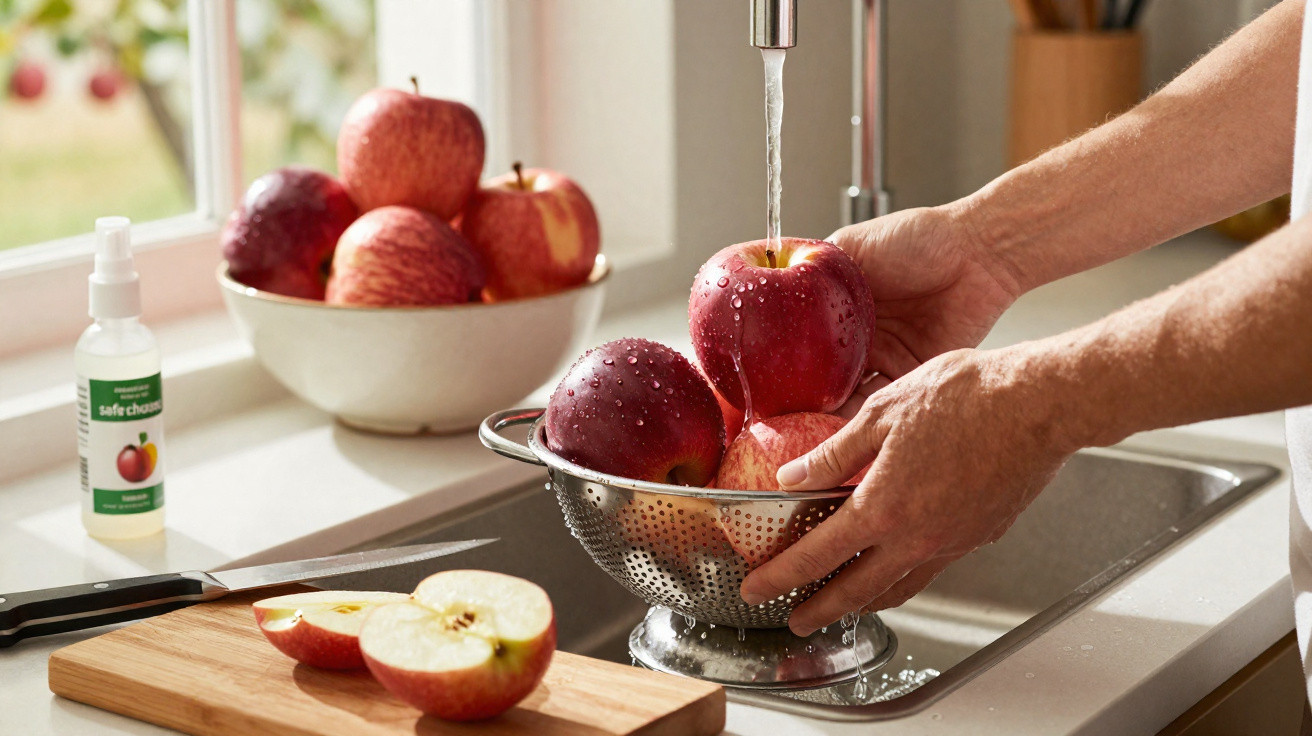
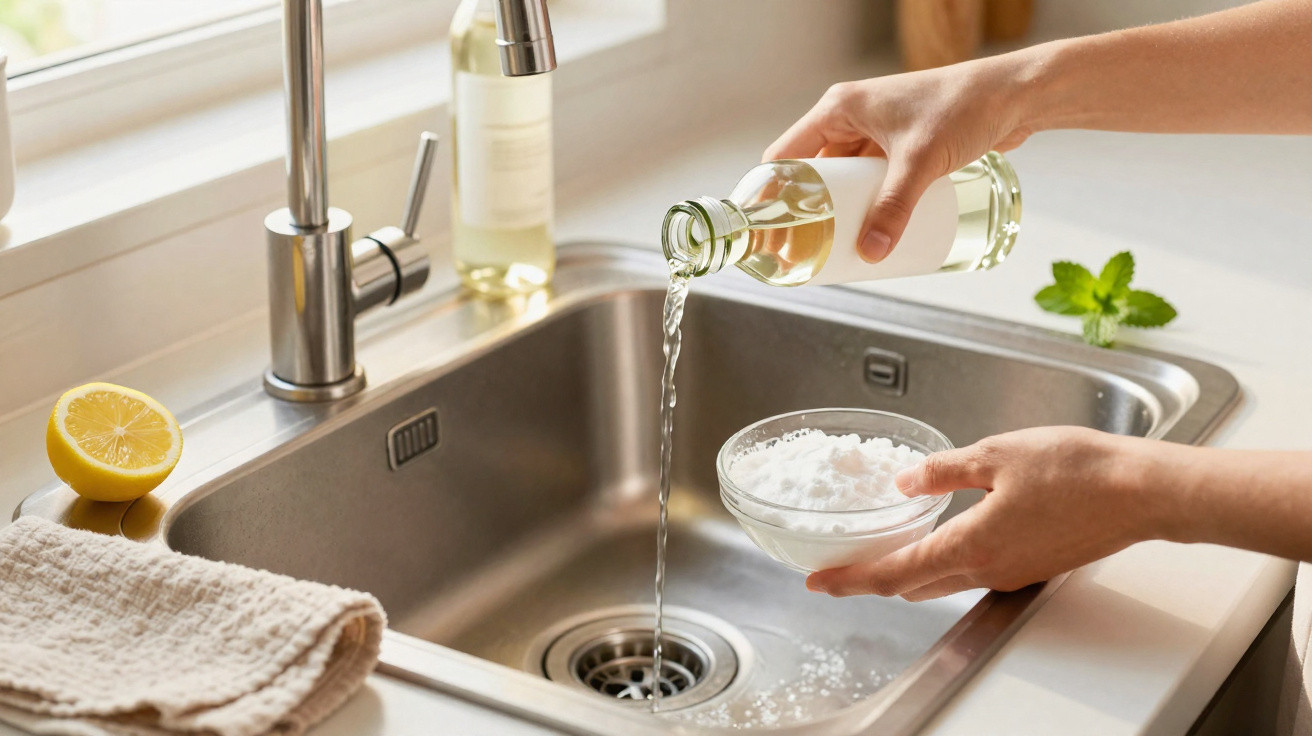
At home, the most effective step is straightforward: soak apples in lukewarm water with 1% bicarbonate of soda (10 g per litre) for 12 to 15 minutes, then rinse them. Laboratory research shows that this solution removes certain surface residues more effectively than water alone. It could hardly be simpler.
Peeling them? Yes, that lowers surface residues. But the skin is where much of the fibre and polyphenols are found. You lose some of the good along with the less desirable elements. Let us be honest: hardly anyone does this every day. The practical alternative is to wash the apple thoroughly, rub it with a microfibre cloth, dry it and take a bite.
Your choice in the aisle matters just as much as washing. Organic apples remain the most consistent option for reducing exposure. The other practical route, also recommended by UFC-Que Choisir, is to choose naturally resistant varieties such as Ariane, which are sometimes sold under dedicated brands.
“Varieties resistant to apple scab can significantly reduce fungicide treatments.” - a reminder shared by experts and relayed by UFC-Que Choisir
- Look for “Ariane” on the label, or ask the seller.
- Choose growers who state how many treatments they use.
- Do not mistake “High Environmental Value” or “eco-responsible orchards” for organic certification.
- “Zero pesticide residue” means below a threshold for a specified list, not “zero treatment”.
Why Ariane apples make a difference - and what this says about our choices
In a wet year, 40 to 70% of orchard treatment passes concern apple scab. A tree that can defend itself interrupts that cycle. Ariane does not remove every risk, but it tackles the central issue. The most striking aspect is its simplicity: resistance built into the variety instead of a chemical drip-feed.
Growers in the field report a clear reduction in fungicide treatments. The fruit reaches harvest with fewer blemishes and less stress. In years with rainy springs, the benefit is visible right down to the crate. Consumers, meanwhile, do not need a dictionary: they want an apple whose promise is clear.
For years, UFC-Que Choisir has stressed that labels do not all offer the same guarantees. Ariane is not a label; it is a varietal choice. That avoids the confusion created by acronyms and charters. The message fits in your hand: choose an apple that needs less help and therefore leaves fewer traces. Simple, almost old-fashioned.
Everyday practicalities: from the shopping basket to the tap
To reduce your footprint without making life difficult, adopt a simple routine. Buy small quantities, choose batches of resistant varieties - Ariane, as well as other resistant relatives sometimes available through short supply chains - and wash them once you get home. Store them somewhere cool, then take them out 15 minutes before biting into one. It is modest, but it works.
A common mistake is to believe that “zero residue” means “no treatment”. This label means residues are below a detection threshold at harvest, for a list of substances. Another pitfall is confusing High Environmental Value certification with organic production. The first rewards overall practices; the second follows a specific set of rules, notably without synthetic pesticides. They are two different approaches with two different aims.
Finally, speaking to your grower can change everything. Ask two questions, without turning it into an interrogation.
“The less I spray, the better I sleep, and my customers reward me for it.” - an orchard grower from Anjou
- Ask: which variety is it, and how many fungicide passes were made this season?
- Favour orchards that publish their field records.
- Keep the bicarbonate-of-soda soak as a habit at home.
- Avoid excessive polishing in shops: shine is no guarantee of cleanliness.
So what are we really biting into?
We cannot make the rain or apple scab disappear. But we can shift the burden towards smart varieties, simple habits and frank questions. Ariane represents that change without any heroic posturing: an apple that has learned to say no to fungus, allowing us to say yes to flavour without pulling a face.
Organic remains the best route when it is affordable and available. Short supply chains, conversation and traceability offer reassurance while making everyone more accountable. But accessible, realistic and repeatable options are needed too. Choosing a resistant variety already gives us more breathing space.
Ultimately, we are looking for an honest apple. Not a slogan. Not a glossy finish. Simply a fruit that resembles us a little: strong in a storm, tender when bitten, and able to tell a better story about how we farm the land and build trust.
| Key point | Detail | Benefit for the reader |
|---|---|---|
| Ariane, a resistant variety | Resistant to apple scab, requiring fewer fungicides | Reduces potential exposure to residues |
| Effective washing | Lukewarm-water soak with 1% bicarbonate of soda for 12–15 min | Reduces surface residues without peeling |
| Labels and claims | Organic certification ≠ High Environmental Value; “zero residue” ≠ “zero treatment” | Clearer choices and purchases without unpleasant surprises |








Comments
No comments yet. Be the first to comment!
Leave a Comment