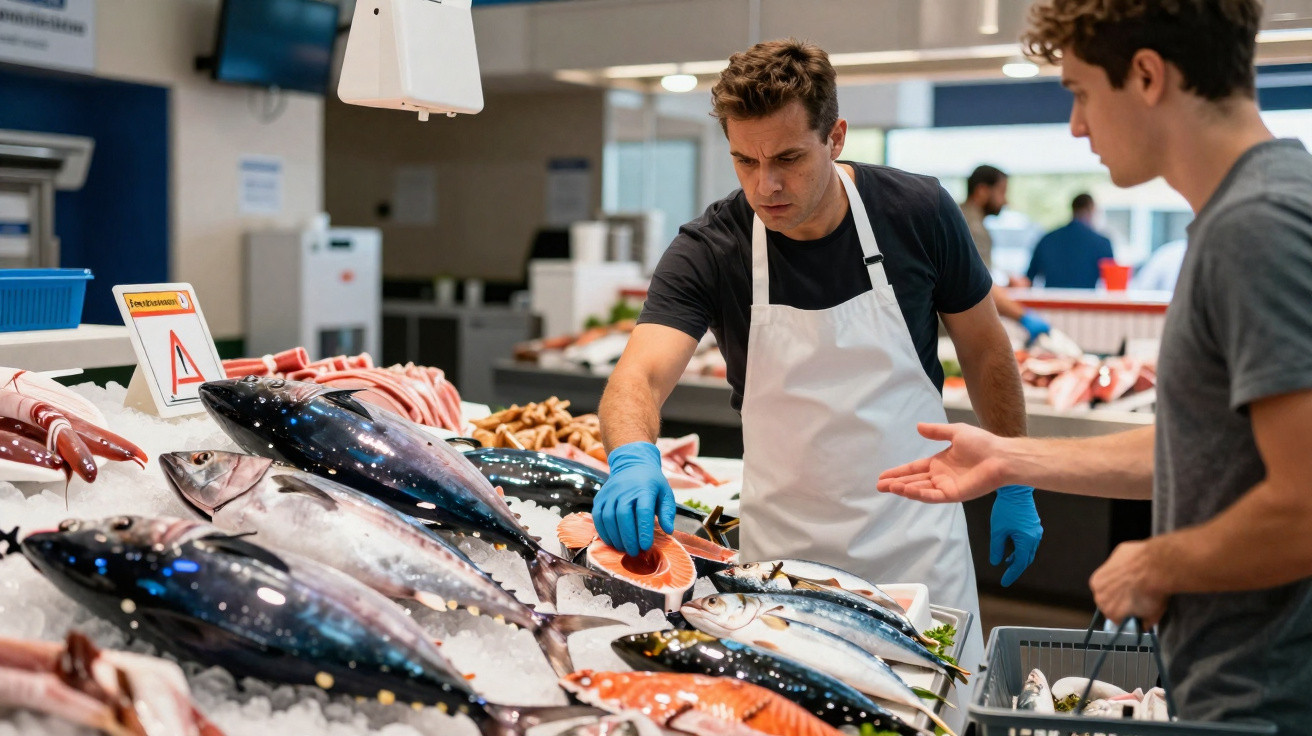
A seasoned fishmonger has called on shoppers to quickly reconsider one common seafood choice.
His warning was not about taste or cost. Instead, it concerned mercury: the unseen contaminant that accumulates in long-lived predatory fish and may damage the brain, heart and unborn babies.
The seafood-counter warning
The fishmonger singled out swordfish. Positioned high in the marine food chain, this fish grows to a substantial size, has a long lifespan and builds up mercury year after year. Within ocean food webs, that mercury becomes methylmercury. Human bodies readily absorb it, but eliminate it only gradually.
Health authorities advise pregnant people, people trying to conceive and young children not to eat swordfish at all. For otherwise healthy adults, the fishmonger gave even more specific advice: limit it to no more than two portions annually. Many customers find that figure startling, but a single swordfish steak can bring mercury consumption close to recommended limits.
Pregnant people and children should skip swordfish altogether. Healthy adults should keep it to rare occasions, if at all.
The effects of excessive methylmercury exposure are not usually immediate. Instead, they develop gradually. Neurological symptoms are among the main concerns, including numbness, tingling and difficulty concentrating. Prolonged high exposure is also associated with raised blood pressure and cardiovascular risks. One meal will not cause this, but a regular pattern might.
Why large predators contain more mercury
Tiny marine organisms absorb mercury from the water, then small fish eat those organisms. Larger fish consume the smaller fish, concentrating mercury at every stage. This process is known as biomagnification. Swordfish, king mackerel, marlin and certain tuna species occupy the upper end of this chain. Their bodies can bioaccumulate mercury at concentrations thousands of times greater than those in seawater.
Cooking, freezing, or marinating does not remove mercury. It is bound in the muscle tissue.
Which fish to avoid and which to choose instead
For many households, some fish are best avoided altogether. Others provide comparable protein and omega-3 fatty acids while containing far less mercury. Use this quick guide when choosing fish at the counter.
High-mercury fish to avoid or severely restrict
- Swordfish
- King mackerel (rather than the milder Atlantic mackerel)
- Bigeye and bluefin tuna steaks or sushi cuts
- Shark and marlin
- Tilefish caught in the Gulf of Mexico
- Monkfish has moderate readings in certain datasets; consult local advice and eat it only occasionally
Nutritious lower-mercury alternatives
- Salmon, whether wild or farmed, along with trout and Arctic char, for substantial fillets
- Sardines, anchovies and herring for omega-3 fatty acids and calcium
- Atlantic mackerel, which may also be sold as Boston or Norwegian mackerel, rather than king mackerel
- Pollock, cod, haddock and flounder for mild-tasting family meals
A practical rule: aim for two seafood meals a week, rotate low-mercury species, and vary what sits on the plate.
How much is too much? A straightforward frequency guide
Mercury concentrations differ according to both species and fish size. The following figures show typical average levels in parts per million (ppm), helping you judge how regularly each fish should appear on the menu.
| Species | Typical mercury | General frequency |
|---|---|---|
| Swordfish | ~1.00 ppm | Avoid if pregnant/child; healthy adults: very rare treat |
| King mackerel | ~0.73 ppm | Avoid; high risk of exceeding weekly limits |
| Bigeye/bluefin tuna (steaks, sushi) | ~0.60–0.80 ppm | Limit to infrequent servings; avoid if pregnant/child |
| Albacore/white tuna (can or steak) | ~0.35 ppm | Adults: up to 1 serving/week; pregnant/child: less |
| Light/skipjack canned tuna | ~0.13 ppm | 2–3 servings/week fit most plans |
| Salmon | ~0.02 ppm | 2–3 servings/week |
| Sardines/anchovies | ~0.01–0.02 ppm | 2–3+ servings/week |
| Trout (mostly farmed) | ~0.07 ppm | 2–3 servings/week |
| Monkfish | ~0.16 ppm | About 1 serving/week; rotate with lower-mercury fish |
Serving size also makes a difference. Most guidance defines a standard adult portion as 4–6 ounces cooked (115–170 g). Children should have around half this amount, as smaller bodies reach the same exposure level sooner.
Sensible seafood shopping and cooking habits
Read labels for the actual species rather than relying on marketing descriptions. A label that simply says “mackerel” may refer to king mackerel, so ask for clarification. Where possible, opt for smaller fish of any species, since younger fish generally contain less mercury.
Think of your weekly seafood choices as a playlist. Combine oily fish for omega-3 fatty acids with white fish to maintain variety. Include sardines or anchovies once or twice, add salmon or trout, and reserve tuna steaks or albacore for occasional meals.
Mercury is not removed by cooking. Whether fish is grilled, baked or poached, its mercury content remains unchanged. Removing fat will not reduce mercury either, because the contaminant is stored in muscle tissue rather than fat.
Less obvious health considerations
Developing brains are especially vulnerable to methylmercury, which explains the strictest recommendations for pregnancy and early childhood. Adults may also experience effects when high intake continues over time. Small changes in memory and coordination can occur first, while cardiovascular studies associate diets high in mercury-rich fish with increased blood pressure.
Certain fish provide selenium too, a nutrient involved in antioxidant protection. Researchers continue to debate the relationship between selenium and mercury. Consider selenium an added benefit rather than protection against mercury. The simplest safer option is still to select fish with low mercury levels from the outset.
The environmental link
Air pollution and mining release mercury into the oceans. Microbes convert it into methylmercury, which then travels through food webs to apex predators. Reducing demand for large, long-lived fish can therefore benefit both human health and fish populations.
Choosing well-managed, low-mercury species helps steer the market in a better direction. Smaller, rapidly growing fish can recover more quickly from fishing pressure, while also offering excellent nutrition with lower contaminant exposure.
What about canned tuna?
Light or skipjack tuna belongs in the lower-mercury category and is suitable for regular sandwiches and salads. Albacore, sold as “white tuna”, contains more mercury. If you want to include it in your rotation, keep it to roughly once a week. For children and during pregnancy, select light tuna in smaller portions, or choose salmon pouches, sardines or trout spreads instead.
Additional ways to make seafood safer and easier
If you fish in your spare time, check local advisories for freshwater catches. Lakes and rivers may have separate mercury warnings, and recommendations vary between locations. A single fillet from a local lake can contain as much mercury as several shop-bought meals.
Create a four-week seafood schedule to maintain variety while minimising risk. For example: Week 1 salmon and sardines; Week 2 trout and cod; Week 3 light tuna and pollock; Week 4 herring and flounder. This approach controls mercury exposure while supplying DHA and EPA, which support heart and brain health.
Keep what you love about seafood. Just shift toward species that love you back.

















Comments
No comments yet. Be the first to comment!
Leave a Comment