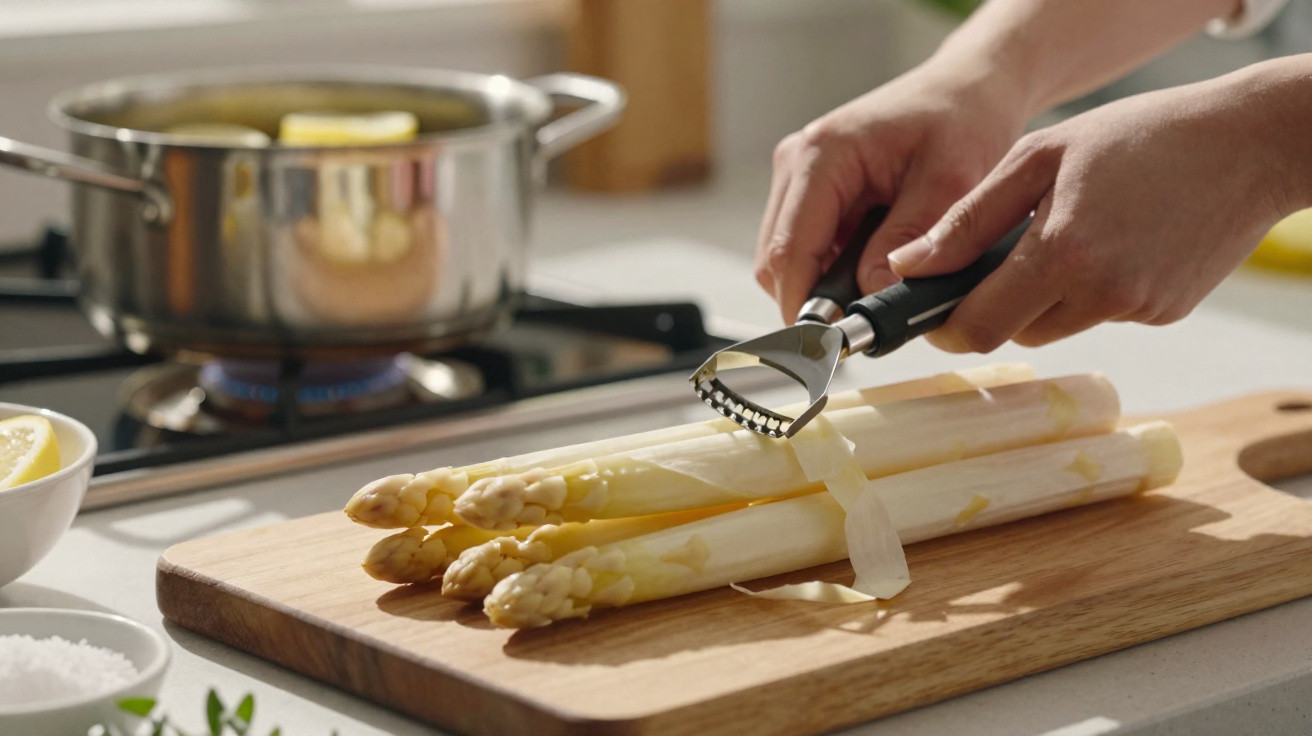
White asparagus spears, melted butter and a few boiled potatoes: little else is needed for a perfect spring meal. Yet after the first bite, many people wonder why their asparagus tastes so astringent, sometimes genuinely bitter, even though the spears were fresh and expensive. The cause is often not the produce itself, but an apparently minor mistake made while peeling.
How peeling asparagus the wrong way makes it bitter
White asparagus has a firm, fibrous outer skin. Although this layer protects the delicate flesh, it also contains a high concentration of bitter compounds. If it is not removed properly during peeling, that bitterness ends up in the pan and, ultimately, on the plate.
Many people begin with the vegetable peeler at the thick lower end and pull it towards the tip. It may seem intuitive, but this is precisely where the mistake lies.
“Anyone who peels white spears from the base towards the tip presses the fibres into the tender flesh instead of removing them cleanly – leaving the bitter compounds on the asparagus.”
When asparagus is peeled from bottom to top, the fibres catch, tear away unevenly and can partly be pressed against the spear. Some of the tough skin remains attached, even if there is little visible evidence of it. During cooking, these remnants transfer bitter notes to the vegetable.
There is another drawback: peeling in this direction can easily damage the delicate tip. Small nicks make it soften more quickly and break apart in the pan, while the lower section remains tough. The result is mushy at the top, firm at the bottom and unbalanced in flavour.
The right direction: peel asparagus for a milder, more tender result
The solution is straightforward: simply reverse the peeling motion.
This is how experienced cooks do it:
- Lay the spear flat on a board.
- Hold the asparagus firmly at its lower end.
- Position the peeler just below the tip.
- Use even strokes, working from the tip down towards the base.
In this direction, the fibres come away in long strips. The skin is pulled away from the flesh rather than forced into it. The tip remains untouched and intact, while the rest of the spear is peeled evenly.
“The rule for white spears: always peel from the fine tip towards the sturdy base – never the other way round.”
Finish with a quick pressure test: if the spear bends slightly and feels evenly smooth, enough skin has been removed. If any rough patches remain, give those areas another two or three passes with the peeler.
The issue with the lower end of the spear
Whatever peeling direction you use, one section always needs particular attention: the base. This part is much firmer and contains especially large amounts of fibre. Peeling too sparingly will leave woody mouthfuls when eating.
A rule of thumb used in professional kitchens:
- Cut off at least 2 to 3 centimetres from the lower end.
- With particularly thick spears, be slightly more generous.
- Peel the remaining lower section thoroughly, making sure no lengthwise strips are missed.
With green asparagus, lightly peeling the bottom third is often sufficient because its skin is generally thinner. White asparagus benefits from much more thorough preparation – rewarding the effort with a buttery-tender bite.
Cooking asparagus to reduce bitterness: what to add to the pan
For many people, correct peeling alone is not quite enough. A few additions to the cooking water can further soften bitterness and round out the flavour.
| Ingredient | Effect |
|---|---|
| Salt | Enhances flavour and provides basic seasoning |
| Pinch of sugar | Slightly counters bitter compounds and rounds off the taste |
| Knob of butter | Makes the flavour smoother and fuller |
| A few lemon slices | Adds freshness and may reduce the perception of bitterness |
Cook the spears only until a fork can pierce them easily, while they still hold their shape. Overcooking not only leaches out flavour, but also heightens the impression of dull bitterness.
Do not throw away asparagus peelings: useful ways to use them
Anyone who eats asparagus regularly soon accumulates a substantial pile of peelings. Many people put them straight in the bin, wasting a valuable source of flavour.
“The peelings and trimmed ends can be simmered into an aromatic stock, which makes an excellent base for soups and sauces.”
Wash the peelings thoroughly, place them loosely in a pan, cover with water and simmer with salt, a little sugar and, if desired, a piece of onion or leek. After 20 to 30 minutes, strain everything through a fine sieve or cloth. The resulting stock will keep in the fridge for two to three days, or it can be frozen.
Bring it to the boil with cream or crème fraîche and season with a little nutmeg to create a richly flavoured asparagus soup. It is ideal if you have a few cooked spears left over from the previous day.
Common preparation mistakes – and how to avoid them
Peeling in the wrong direction is not the only pitfall that can spoil the meal:
- Removing too little skin: No large strips may be visible, but even small remnants can create noticeable bitterness.
- Storing for too long: Asparagus loses moisture, becomes fibrous and develops more bitter notes, so it is best prepared as fresh as possible.
- Incorrect storage: Without a damp cloth in the fridge, the spears dry out and become woody more quickly.
- Using very ripe lemons: Too much acidity can intensify the perception of bitterness when skin remnants are already present.
Why asparagus tastes bitter in the first place
The bitterness comes from naturally occurring compounds in the vegetable. They are found mainly in the skin and at the lower end of the spear. The older and thicker the asparagus, the more pronounced their effect can be.
During cooking, some of these compounds pass into the water. This explains why the cooking liquid itself often tastes slightly astringent. If you plan to use the liquid afterwards, proper peeling technique matters even more, otherwise the bitter impression becomes stronger in soups and sauces.
How to pair asparagus effectively
A few accompaniments can help balance the flavour harmoniously. Mild, rich ingredients almost coat any remaining bitter compounds, giving the vegetable a rounder taste:
- classic hollandaise sauce or a light butter sauce
- boiled potatoes or mashed potato
- gently pan-fried salmon or ham
- scrambled eggs or a poached egg
Herbs such as chives, chervil and flat-leaf parsley are also well suited, as they add freshness without overwhelming the delicate flavour of the spears.
When all the steps are combined – peeling correctly from tip to base, preparing the lower section generously, seasoning the cooking water thoughtfully and choosing suitable accompaniments – the difference quickly becomes clear. A disappointingly astringent plate is transformed into a mild, nutty spring dish that will leave you looking forward to the next serving of asparagus.













Comments
No comments yet. Be the first to comment!
Leave a Comment