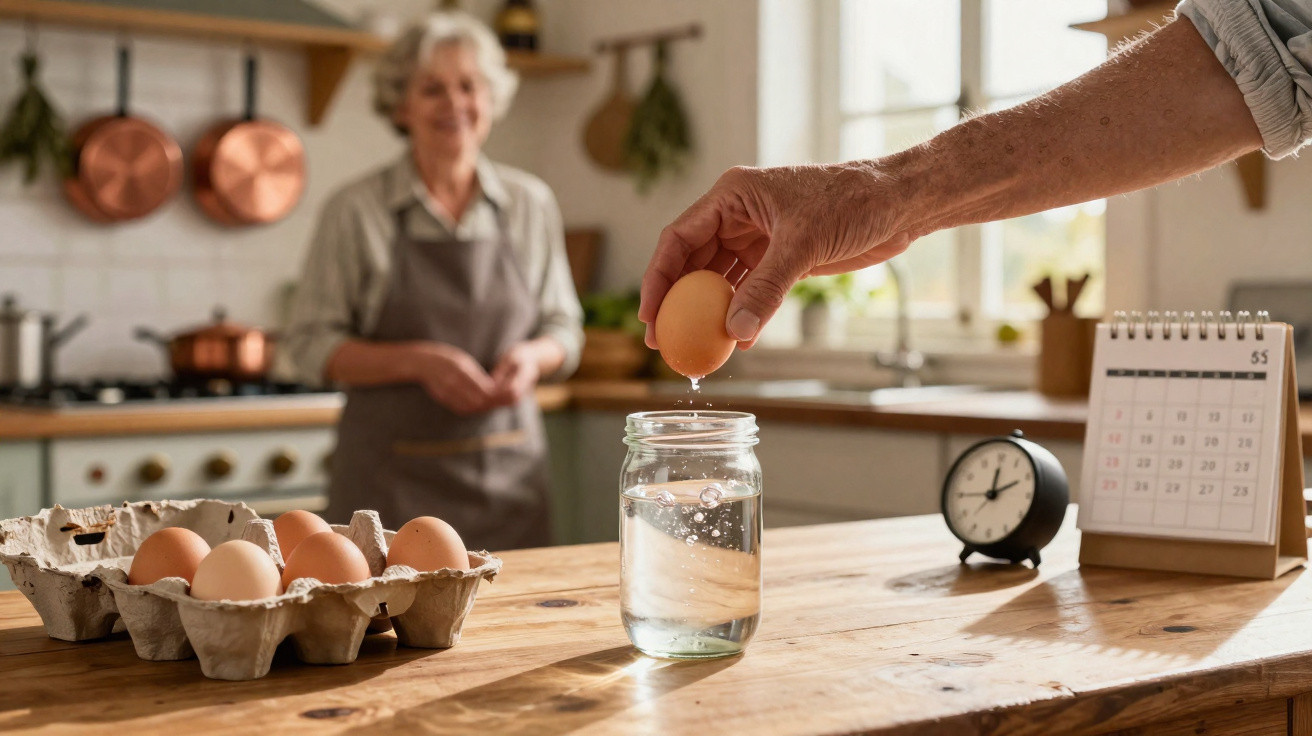
In many households, every egg matters. Between avoidable waste and food-safety awareness, a farm-inspired method is gaining favour again: it is quick, inexpensive and can be done with nothing more than a bowl of water.
Why the egg water test works
A newly laid egg has a very small air cell. As the days pass, moisture evaporates through its porous shell, with air taking the place of that lost volume. The egg therefore gradually becomes less dense. This changes how it sits in water: a dense egg sinks, it then begins to stand upright, and eventually floats once the air cell has grown too large. This consistent physical process provides a straightforward indication of freshness.
The method does not assess microbiological cleanliness. Above all, it indicates the egg’s relative age and helps you choose a suitable use or decide whether it should be discarded.
How to do the egg water test at home
Quick steps
- Fill a transparent container with cold tap water.
- Lower the egg in carefully rather than dropping it from a height.
- Once it has settled, look at its position without shaking the water.
- Record the result, then decide whether to use or reject the egg.
Key indicator: egg on the bottom and lying flat = very fresh; egg on the bottom but standing upright = cook without delay; floating egg = discard.
What the results reveal
| Position in the water | Likely condition | Recommended uses | Precautions |
|---|---|---|---|
| On the bottom, lying flat | Very fresh | Soft-boiled eggs, poached eggs, mayonnaise made with very fresh eggs, delicate bakes | Use promptly for uncooked preparations |
| On the bottom, standing upright | Less fresh but still sound | Omelettes, quiches, cakes, hard-boiled eggs (easy to peel) | Cook both the white and yolk thoroughly |
| Floating at the surface | Old | None | Do not eat it; discard without opening |
Storing eggs correctly
Temperature and storage
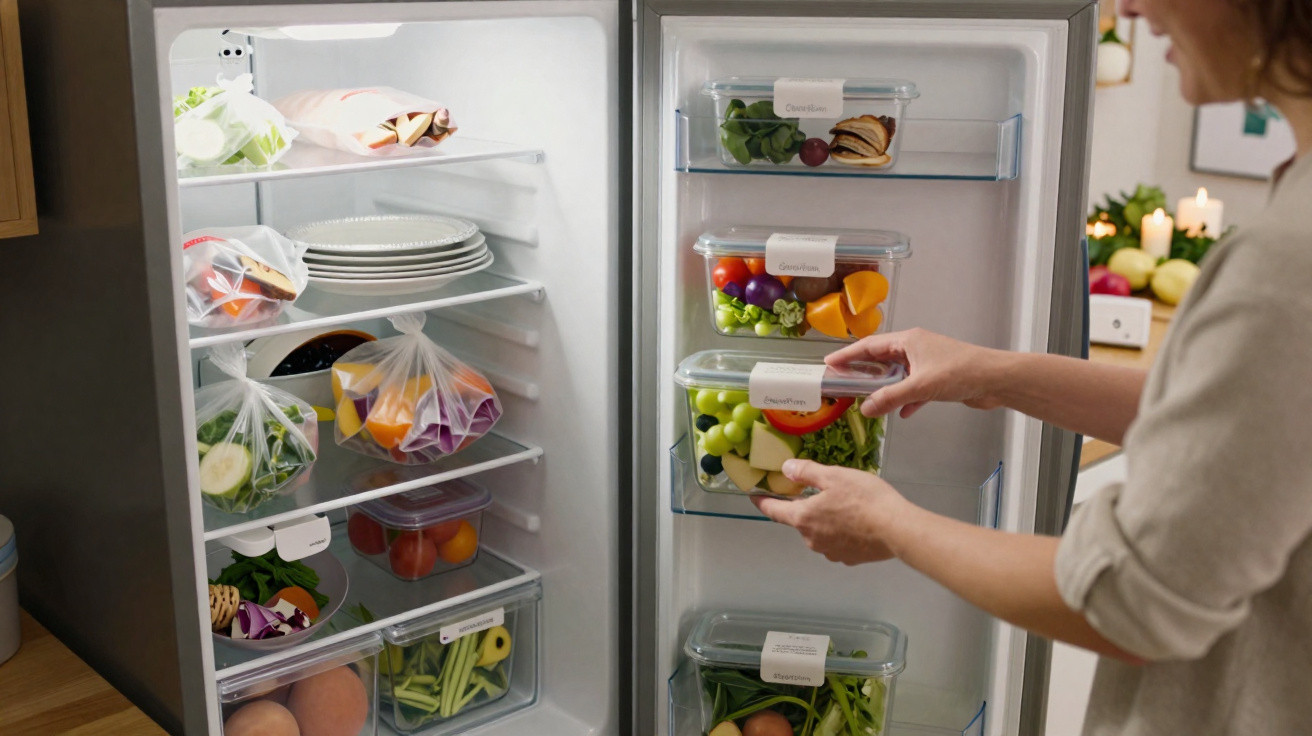
- Keep eggs in their original carton to reduce odours and protect them from knocks.
- Store them in the refrigerator, on the middle shelf, with the pointed end facing down to keep the air cell stable.
- Do not keep them in the fridge door, where temperatures fluctuate too much.
- Avoid washing eggs. If a shell is dirty, rub it dry with kitchen roll.
- Write the purchase date on the shell in pencil to make stock rotation easier.
Useful dates and labels
The label “extra fresh” applies during the first 9 days after laying. The best-before date is set at 28 days after laying. Beyond that point, an egg is not automatically unsafe, but its quality deteriorates quickly and the water test becomes particularly useful. For raw or lightly cooked dishes, use only very recent eggs.
Safety first: even an egg that sinks should be removed from the kitchen if it has an unusual smell, a cracked shell or slimy marks.
Beyond the glass of water: other useful checks
- Smell after cracking: a sulphurous or mouldy odour means it should go straight in the bin.
- Appearance once opened: a firm white, with a rounded and centred yolk, indicates freshness; a very runny white and flattened yolk suggest an older egg.
- Torch test: shining a light behind the egg lets you assess the size of the air cell and the consistency of its contents.
- Spin test: a hard-boiled egg spins quickly, whereas a raw egg wobbles. This is useful when distinguishing a cooked egg forgotten in the fridge from a raw one.
Practical cooking: match the use to the egg’s age
- Very fresh (lying-flat test): poached or soft-boiled eggs, meringues made with whites that still have good structure, and raw sauces prepared and eaten on the same day.
- Fresh to moderately fresh (upright test): baking, pancakes, quiches, scrambled eggs and hard-boiled eggs that are easy to peel.
- Old (floating test): do not use. Choose other protein sources and rotate your egg supply more often.
At-risk groups and cooking rules
Pregnant women, young children, older people and those with weakened immune systems should avoid dishes containing raw eggs. To make a dish safe, cook both yolk and white until fully set. Cooking through to around 70 °C neutralises common bacteria. At home, aim for a firm texture for fried eggs, and boil eggs for 9 to 11 minutes for hard-boiled eggs, depending on their size and how vigorously the water is boiling.
Why this simple egg test is returning to the forefront
Egg recalls, fluctuating prices and the wish to cut food waste have brought this traditional technique back into focus. It costs nothing, requires no equipment and helps prevent costly mistakes: throwing away an egg that is still usable or keeping one that is too old. For families buying trays of 30 eggs, the savings can amount to tens of pounds per quarter.
Frequently asked kitchen questions
What should you do if an egg has spilled in the carton over the other shells?
Wipe each egg dry, place them in a clean carton and use them soon in thoroughly cooked dishes. If an egg has cracked in the fridge, throw it away.
Can eggs be frozen?
Yes, provided they are removed from their shells. Freeze whites and yolks separately. Lightly salt yolks or add sugar to them to limit gel formation. Label them with the date and intended use.
Does the test work with washed eggs?
The principle remains valid. Washing can sometimes speed up gas exchange, so take even greater care to keep them chilled and use them quickly.
Waste-reducing tips and safe habits
- Plan meals around the oldest eggs in the carton.
- Group eggs that tested “upright” together and hard-boil them in one batch; they can then be kept in the refrigerator for 3 to 4 days.
- For baking, separate eggs in advance, weigh ingredients to the nearest gram and note how many whites remain for a future meringue.
- Never crack an egg straight into a dish. Use a small bowl first to check its smell and appearance before adding it to the mixture.
This straightforward habit provides a dependable guide for everyday cooking. Combining the water test with careful storage, clear stock rotation and suitable cooking methods reduces risk, saves money and helps you select the right texture for every recipe.
For anyone wanting to take the approach further, keep a kitchen log: purchase date, test result, chosen use and final outcome. Within a few weeks, this record shows how long your stock really lasts, when eggs age faster and which recipes benefit from a very fresh or older egg. Careful observation turns a farm-inherited tip into a precise household management tool.






Comments
No comments yet. Be the first to comment!
Leave a Comment