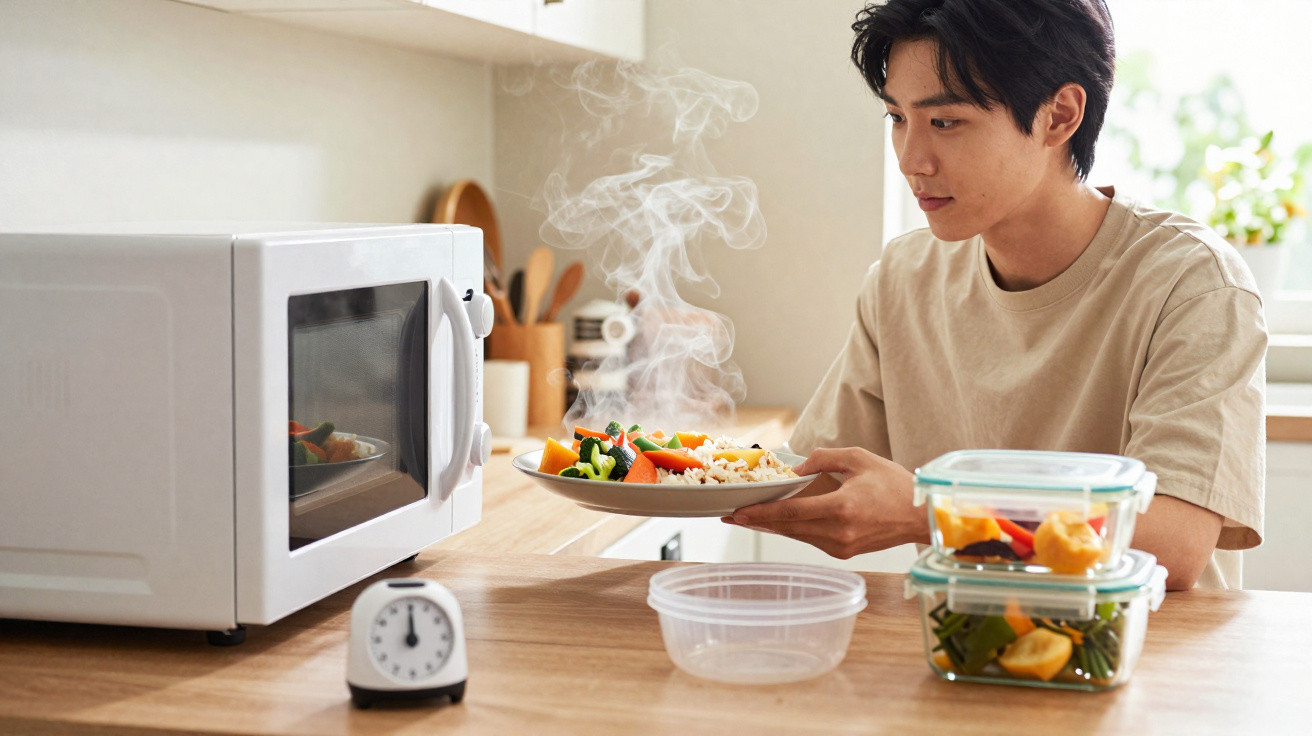
It was 8.43pm on a Tuesday, and I was barefoot in the kitchen, looking down at the forlorn broccoli in my bowl. I had made the “healthy” choice: steamed the broccoli, grilled salmon and felt mildly pleased with myself. Then the baby started crying, an email appeared, my phone vibrated, and before I knew it, the meal had gone cold. So I did what everyone does. I put it in the microwave, pressed a few arbitrary buttons with one finger and left it there. A minute later, the broccoli was like a soggy sponge and carried a faint aroma of school dinners. Somewhere between good intentions and eating, I had messed it up.
That evening brought a quiet, rather dispiriting thought: perhaps I was carefully choosing nutritious food, only to destroy much of its value without giving it a second thought. Worse still, the “microwave mistake” responsible is so commonplace that most of us never realise we are doing it.
Microwaves’ poor reputation – and the reality
Microwaves occupy an odd position in our kitchens. They are practical, often essential on busy weeknights, yet can feel faintly embarrassing when you are trying to eat “healthy”. We have all encountered the late-night Facebook-aunt myths claiming microwaves “zap away all the nutrients” or “radiate your food”. They are the sort of alarming warnings that stick in your mind despite never including a credible source. They linger, partly accepted and partly dismissed, much like that turmeric jar you bought in 2017.
Speak to nutrition scientists, however, and the story looks very different. The microwave itself is not the bad guy. Its waves do not somehow wipe out vitamins; they stimulate water molecules in food, causing it to heat from within. Microwave cooking can often retain more nutrients than boiling because it needs less water and takes less time. That detail rarely makes it into a frightening WhatsApp message.
The real issue is not the appliance but how we operate it when exhausted, hurried or half-looking at Instagram. It is the careless habits: the “that’ll do” reheating job and the complete disregard for time, water and temperature. That is where the quiet nutrient massacre occurs. It is far less theatrical than the myths, which perhaps makes it more frustrating.
The microwave mistake that quietly damages your food
Let us be specific. The main microwave mistake is straightforward: heating food for too long, commonly with excessive water or steam, until its nutrients have almost waved a little white flag. This is not the brisk 45-second warm-up. It is the five-minute, volcanic, edge-bubbling blast given to leftovers because you cannot face returning for another round. Those unnecessary additional minutes are where delicate nutrients, including vitamin C and certain B vitamins, begin to break down.
Imagine a bowl of vegetables. The longer they remain in a hot, steamy environment, the more water-soluble vitamins seep into the cooking liquid and deteriorate. This can occur particularly quickly in a microwave, where small areas can become extremely hot. Add too much water, seal the bowl tightly and leave it heating until it is nearly whistling, and you have created a miniature sauna for nutrient loss.
We may not regard reheating as “cooking”, but the food certainly does. Leftover soup taken from fridge-cold to fiercely boiling in the centre of the bowl receives another dose of heat damage. The same applies to pasta bake that becomes molten lava on top. One nutritionist described it to me as “slowly fading colour in a photograph”: with every additional blast, a little more detail vanishes.
When the plate is too hot to hold
Everyone knows the moment when a plate comes out so hot that you have to pass it rapidly between your hands, hissing quietly. Treat that as a warning: the food is probably hotter than necessary. We have been trained to assume hotter means safer, better and more “properly cooked”. Yet once food has reached a safe temperature, further heating simply damages nutrients and spoils texture without offering any benefit.
Uneven heating adds another complication. Microwave hot spots can take particular sections of food to much higher temperatures than the rest, meaning some vitamins are being scorched while other areas remain lukewarm. Then, to be safe, we put it back in and do it all again. We do not consciously decide to lose nutrients; it happens because we want dinner immediately and do not wish to think about it for longer than eight seconds.
Microwave science without the jargon
Fear around microwaves has existed for decades, and much of it sounds persuasive until you examine it closely. Radiation! Waves! Signals! It can all sound like a Cold War documentary. In truth, the explanation is much duller. Microwave “radiation” is non-ionising, so it lacks the power to alter DNA or turn food radioactive. It is more comparable with the radio in your car than an X-ray.
Research comparing cooking methods generally reveals a familiar pattern. Boiling often causes the greatest nutrient losses because water-soluble vitamins wash out into the water that is then tipped down the sink. Extended oven roasting can be tough on sensitive compounds because it combines high temperatures with prolonged cooking. By contrast, gentle and brief microwaving can be among the more protective methods, especially for vegetables. Less time, less water and less fuss.
One researcher I spoke to laughed when I asked whether microwaves “kill nutrients”. “Heat kills nutrients,” she said. “Whether it comes from a flame, an oven, or a wave.” Temperature and cooking time matter, as does the quantity of water used. The appliance is simply a tool; harm results when we turn it up high and walk away. That is strangely reassuring. We are not doomed – we just need to stop treating the microwave as a punishment box for leftovers.
The real origin of the “destroyed nutrients” claim
Some of the alarm comes from dimly remembered headlines. An older, small study records a fall in vitamin C under certain circumstances, someone retells it poorly, and it soon becomes “Microwaves destroy all vitamin C”. There is often some truth at the centre: if you nuke vegetables in lots of water until they become grey and floppy, you will indeed lose much of their goodness. But microwaves are not unique in doing that. You could create the same nutritional tragedy on a hob using a large saucepan and one distracting phone call.
The more sobering reality is not as sensational: many of us do not eat enough fruit and veg in the first place, cook them excessively, then reheat them excessively once more. The microwave is merely the final stage in a sequence of minor choices that gradually remove the qualities that made the food worth buying. It may not make a viral scare story, but it gives you something practical to alter.
Simple microwave changes that protect nutrients
Be realistic: after a 10-hour day and a commute, nobody is weighing broccoli, calculating vitamin C losses or timing every reheating job perfectly. Advice that cannot survive ordinary life is worthless. Fortunately, avoiding the major microwave sin does not require a lab coat or food thermometer. It takes only a little restraint and a willingness to press the “power” button for once.
The basic principle is this: aim for gentle, brief heating that gets food just hot enough. It should not be miserably lukewarm, but neither should it be scorching. For most leftovers, this means heating in short intervals of 30 to 60 seconds, stirring between each one. Stirring distributes the heat, so there is no need for an aggressive blast to eliminate cold areas. Rather than one lengthy nutrient-bleaching sauna, you get two or three smaller, controllable warm-ups.
The power setting is a particularly useful tool. Most of us keep the microwave at full power indefinitely, rather like the default setting in our heads. Reducing it to 50–70% and heating for a little longer creates gentler, more even warmth that is kinder to both nutrients and texture. Food will not explode around the edges while staying cold in the centre, reducing the temptation to add those “just in case” minutes. It may feel slower, but it seldom adds more than a minute or two.
Vegetables and leftovers: the main danger areas
Vegetables are the fragile poets of the plate. They dislike intense heat, and they particularly dislike sitting in water. When microwaving veg from raw, use the least water you can manage – a tablespoon or two rather than a pool. Cover them loosely, allowing steam to circulate while letting some escape. Cook in brief bursts and check when they are tender rather than falling apart. Bright colour is a useful guide; once it begins to dull, you have probably pushed things too far.
Leftovers form the other nutrient risk area because they are commonly being heated for a second, or even third, time. One important rule is to warm only the amount you intend to eat, rather than the entire pot. Smaller portions heat faster and more evenly, making it less likely that you will boil the life out of them. With saucy foods such as curry or stew, stir midway through and add a splash of water if it appears dry. The objective is to coax it back to life, not interrogate it under a hot lamp.
Why containers and covers matter more than you think
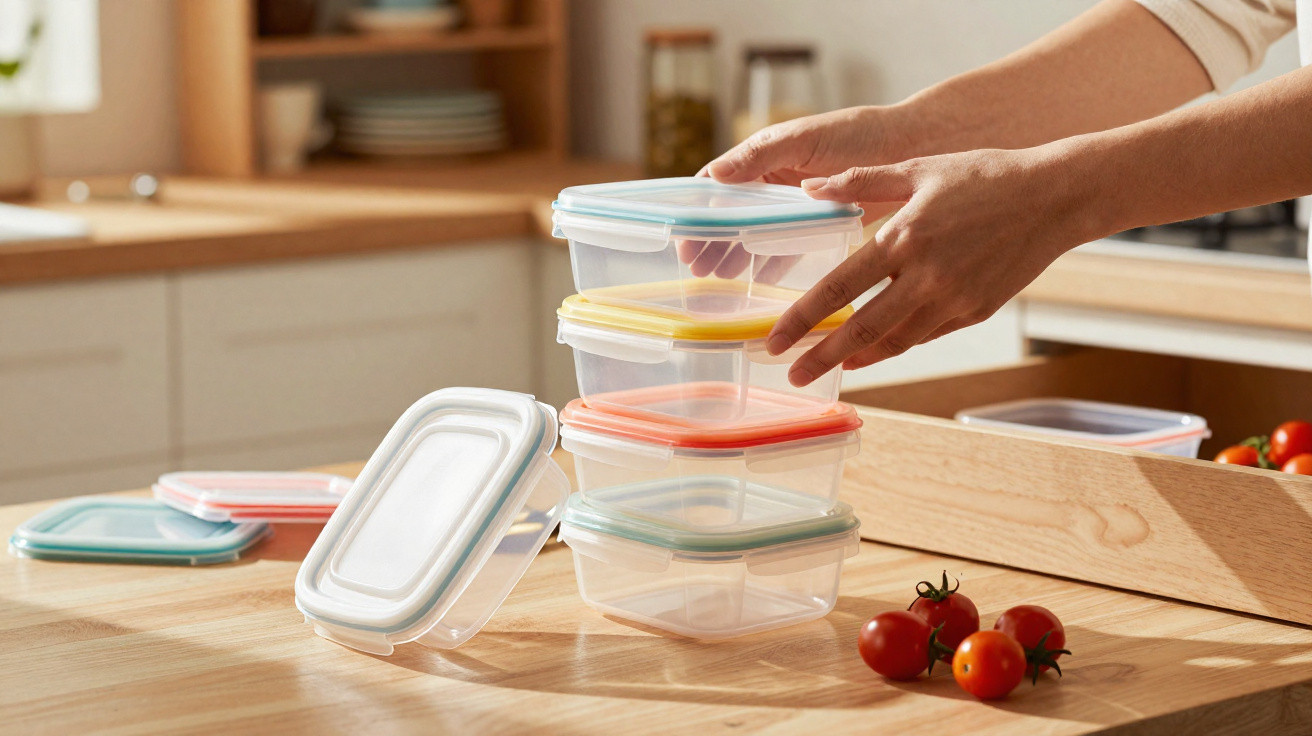
There is one quiet little routine that makes more difference than people expect: choosing what to put food in before pressing start. An unsuitable container can hold in too much steam, intensify hot spots or even release chemicals into the meal. Microwaveable glass or properly microwave-safe plastic are the safer choices. That old takeaway tub with a warped, cloudy lid is probably not helping you.
A loose cover – a vented lid, a small opening or even a plate placed slightly off-centre – retains moisture without producing a pressure-cooker effect. If the lid is rattling like a train window, it is too much. For vegetables and rice, a light cover prevents drying while allowing a little steam to escape, helping preserve both texture and nutrients. Think of it as a breathable raincoat for your food, not a rubber suit.
Then there is the habit few people confess to: reheating food in the plastic takeaway container it came in because washing up feels like the enemy. Some containers are entirely suitable, but others were never made for high temperatures. Although research into how much material actually transfers to food is still developing, switching containers is an easy change that seems worthwhile. If your shortcut to saving time might be coating your carefully chosen veg in microplastics, it’s not really a win.
When your microwave can support better nutrition
Here is the surprising part: used properly, a microwave can make it easier to eat well rather than badly. Frozen vegetables are an ideal illustration. Peas and spinach are often frozen within hours of being picked, preserving vitamins that “fresh” supermarket produce may already have begun losing during transport and storage. A fast, careful microwave steam using minimal water can produce a meal that is easier and, in some instances, more nutritious than carrots lovingly boiled to death.
For anyone short of time, energy or both, the microwave can be the difference between having some vegetables and having none. Put a bag of frozen mixed veg in a bowl with a splash of water and a loose cover, then heat it for three minutes on medium, and you are most of the way there. It may not be picture-perfect, but it is colourful, hot and nourishing. That is not failure; it is survival with benefits.
Even with fresh food, microwaving quickly limits the opportunity for gradual heat damage. Long, high-temperature oven roasts can taste wonderful, but they are not invariably nutritionally superior. Humble microwave broccoli, handled gently, can quietly outperform an Instagrammable tray bake. It may never look glamorous, but it does not deserve to be cast as the villain.
The unexciting adjustment that makes a difference
Ultimately, the “microwave mistake” is not a horror story. It is neither a hidden conspiracy nor a health emergency lurking in plain sight. It is simply us using autopilot, selecting maximum power and leaving. It is adding that extra minute “for luck” until vibrant green veg becomes khaki mush. It is reheating an entire lasagne rather than the slice you will eat, then blasting it again tomorrow after it has gone cold.
The solution is not remotely heroic. It means adjusting the power level, pausing midway to stir, using less water and heating smaller portions. It means opting for a glass bowl rather than the tired plastic tub that once contained supermarket coleslaw. It means recognising when the plate is too hot to hold and deciding, next time, I’ll dial it back. Not perfection every day – just slightly less carelessness and slightly more awareness.
The uncomfortable truth is that we spend money, time and guilt trying to eat “better”, then allow a few lazy habits inside a humming metal box to undo more than we realise. The microwave is not taking nutrients from you in the night. You give some of them away with every overheated, boiling, overly wet reheat. Once you understand that, it is difficult not to make one small adjustment the next time you hear that familiar gentle ding in the kitchen and approach it with a plate in your hand.







Comments
No comments yet. Be the first to comment!
Leave a Comment