It has been used for everything: wiping the worktop, clearing up sauce splashes and drying the children’s hands. Then night falls, the house cools and the heating hums quietly. By the following morning, the cloth is cold, slightly stiff and carries that faintly rancid smell we would rather overlook.
We pick it up again almost automatically, as though nothing has happened. One wipe across the table, another over the hob, and the day begins again. Yet, during those hours, something has been happening inside the damp fibres as they sit undisturbed. The cloth we consider “clean enough” is no longer quite the helpful ally we imagine.
The habit seems harmless and is almost universal. However, once temperatures drop, it can become an ideal breeding ground for bacteria. And there is nothing especially appetising about what follows.
That “harmless” habit that quietly feeds bacteria
After a quick clean-up, most cleaning cloths do not end up in the washing machine or soaking in disinfectant. Instead, they are hung over the tap, left crumpled in the sink or scrunched into a damp bundle at the back of the worktop. It seems innocent, and it is certainly familiar. Usually, the cloth remains wet, a little soiled and caught in that mild zone between household heating and cooler indoor air.
That combination suits bacteria perfectly. Dampness, food residue and moderate temperatures can turn an ordinary dishcloth into a tiny Petri dish. The colder season does not stop this process; it merely slows it enough for us not to spot it. We see a cloth that “will do for one more wipe”. In reality, an unseen population of microbes is growing and ready for another trip around the kitchen.
A small 2018 study of domestic kitchens found that used dishcloths commonly contained coliform bacteria, as well as traces of E. coli. These were not restaurants or hospitals, but everyday homes with everyday routines. Picture a winter evening: you wipe up a splash from raw chicken, briefly rinse the cloth under lukewarm water, wring it out and drape it over the tap. Hours later, the heating is on, the kitchen feels warm and the cloth is still damp. Every tiny droplet caught in the fabric provides a snug refuge where bacteria can persist rather than dry out and die.
Then, in the morning, you use that same cloth to wipe the chopping board before preparing fruit for a child’s snack. That does not make you unhygienic or careless. You are simply repeating an action you have seen throughout your life. Without any visible sign, the cloth can carry yesterday’s microbes on to today’s food.
The colder months can create a misleading sense of safety. We often link bacteria with heat, perspiration and summer. The reality is less reassuring. Many household bacteria cope very well at room temperature, particularly when there is moisture available. Winter homes often provide precisely those conditions: generally dry air, but small areas that remain damp for hours. Cloths that are folded or bunched up while wet need even longer to dry, and because they do not immediately smell unpleasant, we tend to trust them.
Heat from radiators can rise around sinks, pipes and draining racks, forming discreet warmer areas where bacteria are less stressed and more active. This is why the same cloth can look harmless and still carry a microbiological history of the last three days. The principle is straightforward: bacteria require moisture, nutrients and time. A grubby, damp cloth left overnight in a heated home conveniently supplies all three.
How to store cleaning cloths so they stop feeding bacteria
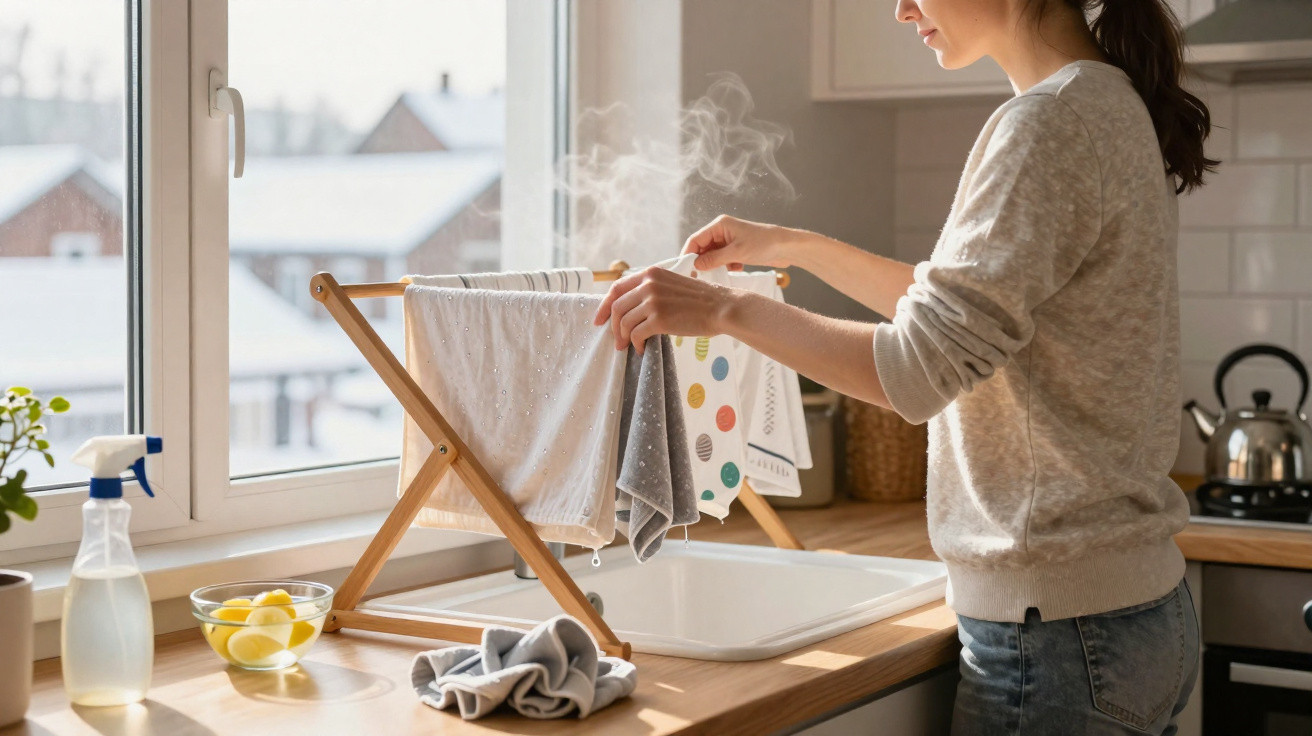
The most effective change does not involve a specialist product or an expensive gadget. It is simply storing cleaning cloths so they dry properly between uses. Open them out fully, hang them somewhere air can move around them and avoid confined places such as behind the tap or scrunched inside the sink. Think of a miniature washing line rather than a sad wet rag. Even an ordinary hook or rail above a radiator can transform the life of a cloth.
Following each use, rinse the cloth thoroughly in hot water, wring it out well and either lay it flat or hang it from a corner. Allow air and time to work. On colder days, keeping it near - rather than directly on - a heat source will help it dry sooner. The aim is simple: the cloth should be dry for more hours than it is wet. Once it begins to smell, it is not suitable for “one last day”. That odour is a clear indication that bacteria have already moved in.
Let us be honest: hardly anyone does this every day. Most of us reach for the nearest cloth, give it a quick rinse and carry on. Life is hectic, dinners get burnt, children cry, and nobody puts “cloth hygiene” in their diary. That is exactly why manageable, small habits are more valuable than ambitious cleaning marathons.
Set up a straightforward system that works on autopilot. For instance, keep a small pile of cloths in a dedicated drawer and decide that, during winter, each cloth spends only one full day on the worktop. In the evening, it goes either into the laundry basket or into a disinfectant soak. If it is useful, rotate colours by day: blue on Monday, green on Tuesday and so forth. The less mental effort the system requires, the more likely it is to survive the days when you are tired.
One microbiologist I spoke to summed it up in a single sentence:
“A cleaning cloth should either be drying fast or being washed; anything in between is bacteria’s favourite holiday.”
To put this into practice, create small visual prompts near the sink. Fit a little hook to the cupboard door. Keep a shallow bowl for disinfectant soaking when you have wiped up raw meat juices. Place a laundry basket somewhere accessible rather than hidden at the far end of the house. These modest details can quietly remind you to change the cloth when your mind is already focused on tomorrow’s meeting.
- Hang cloths fully open rather than leaving them bunched up.
- Replace them daily during colder months, and more frequently after handling raw meat or eggs.
- Use hot washes (60°C / 140°F) at least once a week.
- Maintain a simple rotation system so that you never “run out”.
Rethinking what “clean” means in winter
Winter homes contain a subtle contradiction. We clean more often to tackle mud, colds and the realities of spending time indoors, yet we depend heavily on a few overused cloths that receive little thought. A gleaming worktop creates a feeling of control, while a damp cloth used repeatedly can quietly undo some of that effort. Once you notice it, it is difficult to ignore. This does not mean fearing every microbe; it means adjusting what we mean by “clean”.
Rather than looking only at visible grime, ask yourself: what am I transferring each time I wipe? A fresh cloth that has been stored to dry correctly makes cleaning what we expect it to be again: a way to reset the room, rather than redistribute yesterday’s germs. It is a small change, but an oddly empowering one. It requires almost no additional time, only a little more awareness.
It is also something people mention once they feel comfortable admitting it. There is the relief of throwing away a grey, sour-smelling sponge, and the unexpected satisfaction of having dry, folded cloths ready to use. During the first winter when you stop leaving a wet rag in the sink, you may notice that your kitchen smells different in the morning: less like stale water and more neutral. The difference is subtle, but it alters the atmosphere of the entire room.
Perhaps that is the real point. It is not a frightening catalogue of invisible dangers, but a quiet improvement in how we live in our homes when the days become cold and short. How we store a basic cleaning cloth becomes a small daily decision: allow bacteria to linger or gently encourage them to leave. Once the subject comes up, other people often share their own “cloth confessions”. That conversation alone may change habits more quickly than any warning label.
| Key point | Detail | Why it matters to the reader |
|---|---|---|
| Where you leave cloths | Leaving them scrunched in the sink or over the tap keeps them damp for hours. | It shows how a routine habit can quietly encourage bacterial growth. |
| How quickly they dry | Hanging them fully open where air circulates limits bacterial survival. | It offers a straightforward, practical step that fits everyday life. |
| Winter routines | Daily rotation and hot washes reduce contamination risks. | It helps protect your kitchen when colds and bugs are already circulating. |









Comments
No comments yet. Be the first to comment!
Leave a Comment