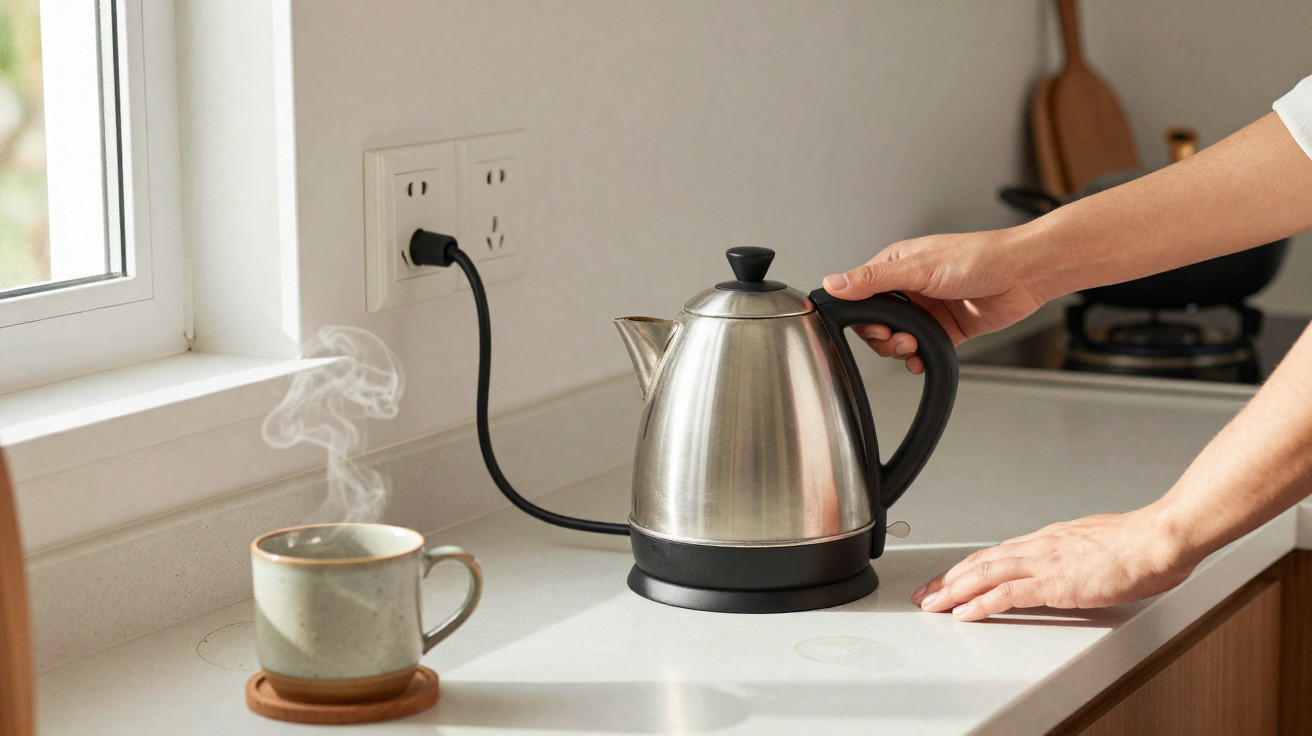
In many modern kitchens, one feature stands out to more observant users: the power cords on electric kettles are noticeably shorter than those fitted to other household appliances. This is common across different brands and price ranges, showing that it is not simply a matter of appearance or saving material, but rather a balance of electrical safety, convenience and everyday tidiness.
Why are electric kettle cords usually so short?
The main purpose of a short cord is to control the area around the electric kettle. A longer lead is more likely to hang over the edge of a worktop or run through walkways, increasing the risk of an accidental tug and a spill of near-boiling water.
There is an electrical consideration too: an electric kettle operates at high power and therefore draws a substantial current. If excessively long leads are not correctly rated, they can overheat, particularly when coiled up or trapped behind other items, compromising both safety and the appliance's service life.
Watch a video on the YouTube channel FC Marido de Aluguel Online covering practical electrical safety checks and minor repairs to kitchen electric jugs and kettles:
How does a short cord affect safety, heat and organisation?
A shorter lead helps keep the kettle away from heat sources such as hob burners, hot pans and oven vents, preventing damage to its plastic insulation. It also reduces the number of loose cables across the worktop, making their route easier to see and more orderly, which lowers the likelihood of trips and unintended pulling.
Many electric kettle bases include a space for winding away the lead, leaving out only the length required and preventing sharp bends that could harm the internal conductor. Overall, this arrangement offers clear practical advantages:
- Less exposed cable means a smaller risk area for accidental pulling by children and pets.
- Keeping the lead farther from burners and hot pans reduces the chance of the cable melting.
- Fewer knots and bends protect the conductor's integrity and improve the kettle's durability.
Is it safe to use an extension lead with an electric kettle?
When a socket is some distance away, many households use extension leads or power strips. However, an electric kettle is a high-power appliance and can overload basic or older models. This raises the risk of a hot socket, a burning smell and even a short circuit, especially when other high-power appliances are connected to the same extension block.
For this reason, it is best to give priority to a fixed wall socket installed in line with applicable standards, keeping the cable route as short and direct as possible. If using an extension lead is genuinely necessary, several precautions can help reduce the risk of problems:
- Check the kettle's power rating and the extension lead's maximum capacity before connecting it.
- Avoid plugging other high-power appliances into the same extension block or adaptor.
- Do not run cables beneath rugs, furniture or through tight spaces that restrict ventilation.
- Regularly inspect plugs, sockets and cables for overheating or unusual smells.
How should you position an electric kettle for greater safety and convenience?
Correct positioning offsets the short cord by keeping the kettle on a level, stable and dry surface, away from the edges of the sink or worktop. In smaller kitchens, setting aside a corner near a dedicated socket helps keep the cable tidy and away from busy routes.
In homes with children or pets, take extra care to point the spout towards the centre of the worktop and keep the cable fully visible, without routing it behind objects that could pull on it. This makes everyday use of hot water more predictable, with fewer incidents and a longer service life for the electric kettle.








Comments
No comments yet. Be the first to comment!
Leave a Comment