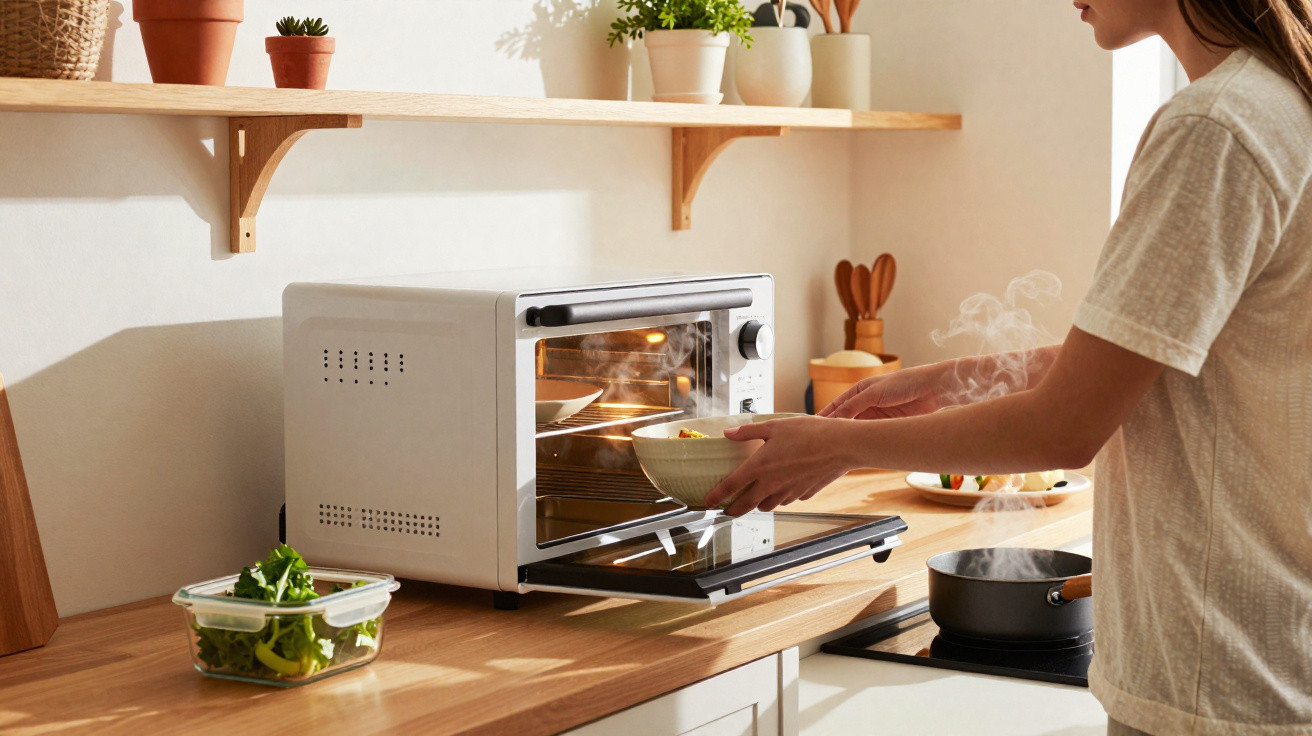
It has become part of the kitchen backdrop, much like the fridge or the bin. You press “30 seconds” almost without thinking, then get on with something else. Yet a subdued change is under way in professional kitchens, design studios and food-tech laboratories. An uncomfortable question is being raised: has this noisy little appliance reached the end of its lifespan? Some food specialists are already designing what could take its place. Others are simply… pulling the plug. The reasons may make you view your own microwave rather differently.
It begins on a typical Tuesday evening in an entirely typical flat. A student arrives home, drops their backpack and takes a chilled box of takeaway noodles from the fridge. Their hand reaches for the microwave door, then stops. It faintly smells of the previous week’s fish, and its turntable sits at an angle. They hesitate for a moment before noticing the sleek air fryer on the worktop, still gleaming after Christmas.
Instead, they put the noodles in a pan, switch on the hob and drift away to look at their phone. The microwave remains silent: an unused cube in the corner. Missing it once means little on its own, but versions of this moment are playing out in millions of kitchens. Some chefs and appliance designers believe it signals the beginning of a wider change.
Why food experts believe the microwave’s golden age is fading
Ask chefs for their honest view of microwaves and many will grimace before replying. They will acknowledge their speed, but also their reputation for spoiling texture. Reheated pizza becomes floppy. Pasta turns dry at the edges while remaining cold at the centre. Vegetables end up limp and squeaky. The technology has altered little since the 1980s, whereas our expectations of food have changed entirely.
Today’s home cooks want crisp, caramelised, photogenic dishes that could belong on Instagram rather than a canteen tray. Microwaves heat food unevenly from within and create no browning. That is useful when defrosting soup at midnight, but poorly suited to much of what we now consider “good food”.
Consider what shoppers are choosing. Air fryer sales surged again across Europe and the US in 2023, while certain microwave categories scarcely shifted. Retailers say younger customers are combining a small oven with a multi-cooker or air fryer, and leaving out the microwave altogether. On TikTok and YouTube, recipe videos increasingly advertise themselves as “no microwave needed”, as though this has become a benefit in itself.
In compact urban kitchens, every square centimetre matters. Designers privately concede that, when space must be freed up in a polished studio flat, the microwave is usually the first appliance to go. They retain the induction hob, a compact oven and a versatile device such as an air fryer or combi-steam oven. The old box, whose main role is reheating leftovers, begins to seem bulky and limited.
Food scientists offer an additional explanation. Microwaves excite water molecules deep within food, so dishes tend to steam instead of crisp. This works against the elements that create flavour and enjoyment: browning, sizzling and a little crackle at the surface. As plant-based food, fermented dishes and high-hydration breads become more popular, people are asking for ingredients to be treated more delicately.
One nutritionist told me that clients privately say their microwave makes “diet food feel like hospital food”. The appliance has become linked with ultra-processed frozen meals, dispiriting diet suppers and office leftovers eaten beneath fluorescent lighting. That is hardly the emotional space modern food brands hope to occupy.
Technology innovators identify another issue: the microwave is unintelligent. It applies broadly the same form of energy whatever the food’s shape or composition. More recent appliances use sensors, airflow and algorithms to adjust to what is inside them. When you can touch a screen, view an image of your dish and allow the machine to make decisions, a clunky plastic keypad covered in obscure symbols can seem like a relic from a different age.
The quiet growth of “microwave-free” kitchens
If the microwave is genuinely declining, what takes over in daily life? In plenty of homes, the answer is sitting beside it: the air fryer. Food experts mention it so frequently that appliance firms joke about calling it the new microwave. It heats quickly, occupies little space and provides what the old box never could: a crisp finish.
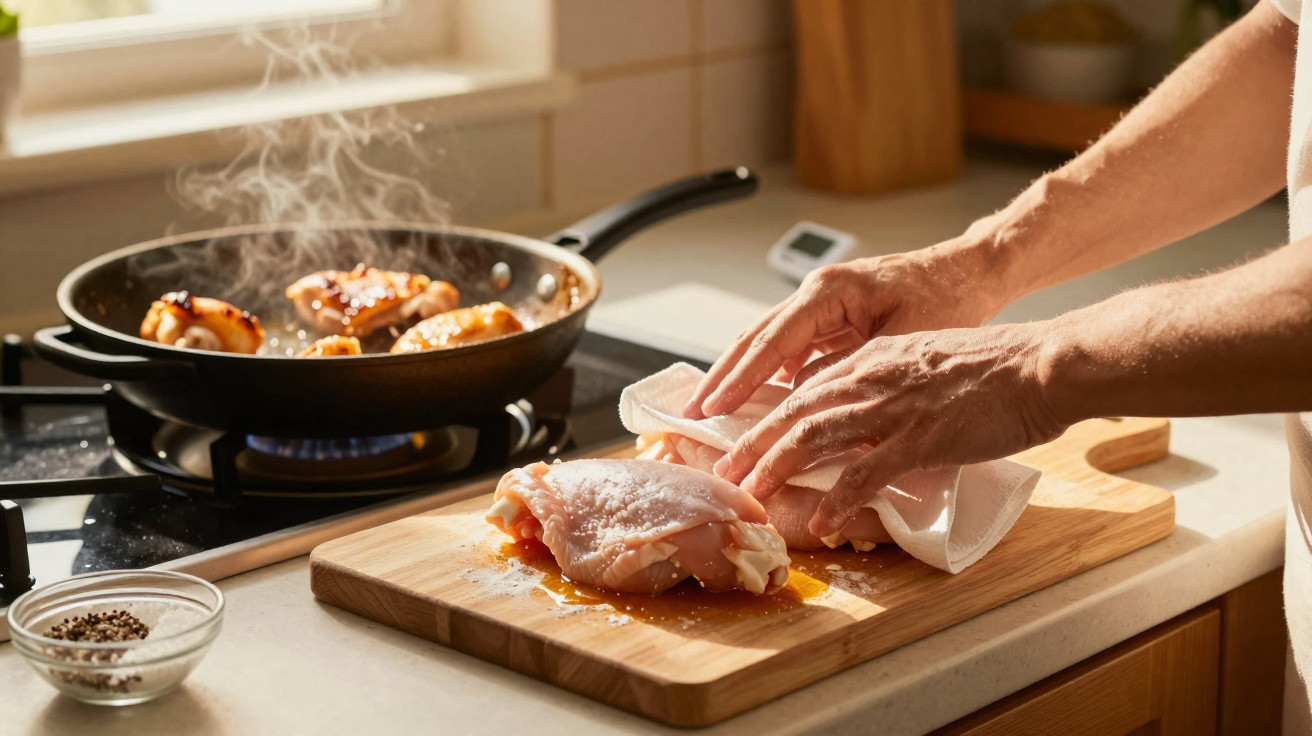
The emerging approach is straightforward. Rather than zapping leftovers, people are “re-cooking” them. Cold roast potatoes go directly into an air fryer basket for six minutes. Yesterday’s chicken is wrapped in foil and gently warmed in a low oven. Rice is reheated in a pan with a splash of water and a lid. Yes, this takes a few extra minutes, but it brings better flavour and texture, along with the modest satisfaction of actually cooking rather than merely reviving something lifeless.
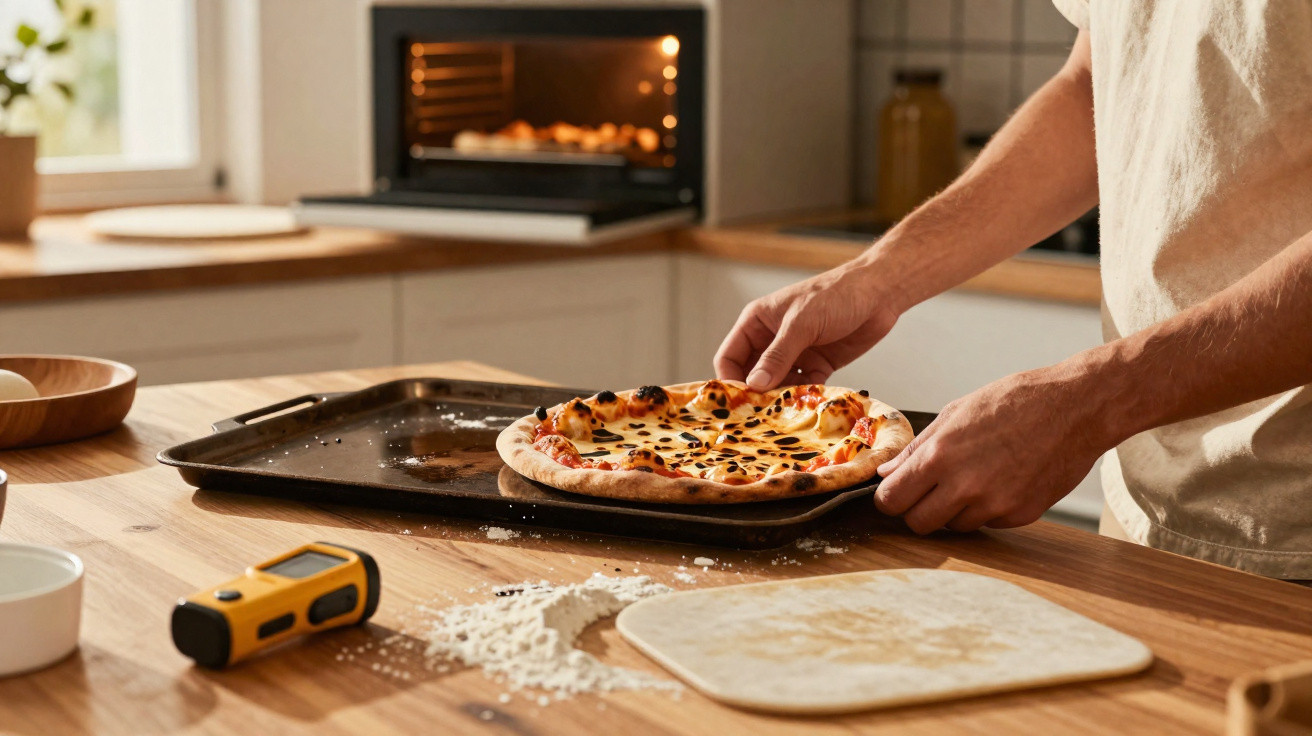
Some food professionals now teach a defined reheating routine. They recommend dividing leftovers into two groups: foods requiring moisture and foods needing crispness. Soups, stews and curries belong in a small saucepan or induction-safe pan, warmed slowly with a lid on. Breaded, roasted and baked items should go into an air fryer or onto a hot oven tray to restore their crunch.
This is not restaurant-level gastronomy. Instead, it is the everyday domestic equivalent of what restaurants discreetly do: they seldom use microwaves for anything they truly care about. The hiss of a pan warming up a slice of pizza is suddenly more appealing than the weary beep of a rotating plate.
There are, naturally, practical obstacles. Modern life is busy, and speed was the microwave’s whole purpose. Parents of young children tell food writers that it still rescues their evenings: warming milk, defrosting emergency nuggets and reheating forgotten coffee for the third time. Living microwave-free sounds luxurious when you are not balancing homework, laundry and a toddler’s meltdown.
For this reason, experts forecasting the microwave’s decline are keen to describe it as a gradual transition rather than an overnight prohibition. The appliance is unlikely to disappear entirely; it will simply cease to be the default. Like DVD players or landline telephones, it may remain in some homes long after it has vanished from new-build kitchens and glossy catalogues.
Designers say the change often starts when someone tries a combi appliance. A compact oven with convection, steam and microwave functions, for example, can handle everything a standard microwave can do and more. Initially, buyers still select the microwave-only setting for speed. Gradually, though, they find they prefer the results from the grill or steam settings, even when these take a couple of minutes longer.
A London-based food consultant put it bluntly:
“The microwave answered the question of the 80s: ‘How fast can I get this on a plate?’ Today’s question is different: ‘How good can this taste, with the time I really have?’ And the microwave doesn’t always win that contest anymore.”
That change in the question transforms the value of numerous kitchen tools. With 10 minutes available, would you prefer lukewarm lasagne with rubbery edges, or bubbling, browned lasagne straight from a hot pan? Increasingly, people are discovering that the hob or a small oven provides the answer.
How to use less microwave… without losing your mind
Food experts who have quietly reduced their reliance on the microwave share one central strategy: treat reheating as a miniature cooking task, rather than a last-minute thought. They advise deciding how leftovers will be reheated when they are put away. Roast chicken should be sliced before refrigeration, pizza stacked with baking paper between slices and rice stored in a shallow container.
This basic preparation lets you place properly sized portions in a hot pan, air fryer or oven, without fighting a solid, chilled block of food. It is a minor mental adjustment, but it makes a substantial difference: rather than watching a dismal plate turn in a humming box, you are rapidly turning yesterday’s dinner into something that feels nearly fresh.
Everyone knows those evenings when their energy has completely run out and extra washing-up feels unbearable. Food writers promoting less microwave use are candid about that reality. Their suggestion is to keep a “bare minimum” set of equipment: one reliable non-stick pan, a small lidded saucepan and a compact oven tray kept on the worktop. No cupboard searching and no fuss.
One frequently repeated, sympathetic piece of advice is this: do not chase perfection; make one small improvement. Perhaps that means placing a microwaved dish under the grill for two minutes to add colour. Perhaps it means reheating chips in the air fryer rather than eating them soft. Minor successes build up. Let’s be honest: nobody really does this every day.
One chef I spoke to described it this way:
“A microwave gives you hot food. A bit of extra heat in a pan gives you pleasure. And when your day has been rough, those five extra minutes pay back more than you think.”
To make the transition more manageable, many experts propose a brief experiment with no pressure attached: unplug the microwave for one week and find out what you genuinely miss. You may be surprised by which habits you do not miss at all. You may also find that some foods taste better, that you eat a little more slowly and that leftovers become more appealing.
- Begin by reheating just one meal a day without using the microwave.
- Reserve the air fryer or oven for “crispy” foods, and use a pot or pan for “saucy” dishes.
- Keep one pan and one tray permanently within reach on the worktop.
- Divide leftovers into small, flat containers in batches so that they warm through faster.
- Keep frozen “emergency” meals, but occasionally prepare them as though you were properly cooking.
A future kitchen where the microwave is not king
When designers and food futurists draw up the “smart kitchen” of 2035, the microwave is seldom the centrepiece. They describe modular induction hobs that identify your pan, wall ovens that steam, brown and even chill, plus small worktop appliances able to grill, bake, air-fry and slow-cook within a single footprint. A built-in microwave function may sit somewhere in the background, concealed within another appliance rather than occupying the worktop alone.
Food culture is moving towards slowness and care, even within fast-paced lives. People document sourdough journeys on social media, devote weekends to batch cooking and proudly share their latest fermentation project. Against that emotional backdrop, the microwave seems out of step. It still evokes the period of low-fat ready meals and solitary office lunches eaten at a desk.
In practical terms, the figures will change gradually. Millions of microwaves are already in use, and they will not disappear overnight. What is changing is their status. The microwave is no longer the automatic gateway to hot food. It is becoming optional, even easy to ignore, as other appliances take on its tasks and perform them better, or at least more deliciously.
We have all experienced a reheated meal that tastes dull and lifeless, leaving us to wonder why we bothered. Once you have noticed the difference a pan, an air fryer or a small oven can make, it becomes difficult not to question the humming box in the corner. The microwave may not vanish altogether, but its quiet withdrawal from the kitchen’s centre has already started – one unused “30 seconds” button at a time.
| Key point | Detail | Why it matters to the reader |
|---|---|---|
| The microwave is losing its central status | Chefs, designers and consumers are moving towards more versatile alternatives | Understand why your kitchen is changing without you really deciding it |
| New reheating habits | Air fryers, compact ovens and frying pans are gradually replacing the microwave | Discover straightforward ways to make leftovers genuinely tasty |
| A gradual transition, not a shock | The microwave is becoming optional, integrated into other appliances or kept for a few uses | Picture your future kitchen without sacrificing everyday convenience |















Comments
No comments yet. Be the first to comment!
Leave a Comment