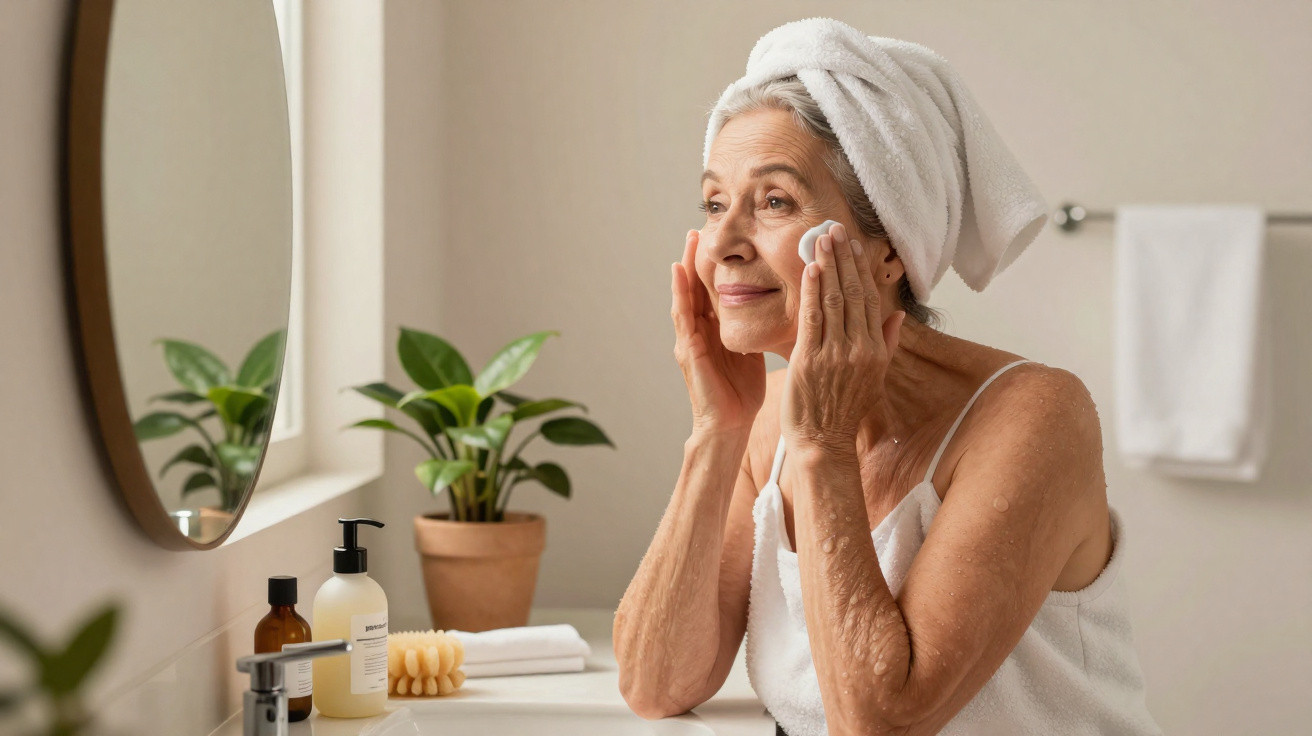
“Every day? That can’t be right at my age,” she mumbles, touching the thin skin on her forearm. Two lockers away, a man in his late sixties pulls his towel more tightly around himself as he waits for the water to “heat up”, despite the fact that it is already steaming.
Across the changing room, a friend boasts: “I only shower on Sundays now, my doctor says I shouldn’t dry my skin.” One person laughs and another grimaces, while an unspoken question seems to linger: have we all been getting this wrong?
Hygiene after 60 differs from hygiene at 30. Your skin, immune system and even what feels comfortable all change. Yet the familiar advice - shower every day or have a weekly “eco” wash - misses what really matters.
The healthiest approach lies in a rather unexpected middle ground.
Why daily showers backfire after 60 - and why weekly washing is no answer either
Ask people over 60 how frequently they shower and the responses will vary enormously. Some follow the longstanding rule of “once a day, no excuses”. Others limit themselves to one wash a week, either to “protect the skin” or because they are tired. Both ends of the scale, however, can cause understated problems that emerge over time.
Dermatologists treating older adults repeatedly describe the same pattern. Daily washing can remove oils that fragile skin urgently needs, while weekly showers allow sweat, bacteria and dead skin cells to build up. Odour is not the sole concern: minor inflammation, itching and low-level infections can begin to take hold.
The body remains resilient after 60, but its protective armour is thinner. Traditional hygiene rules were not designed for this changing skin.
A geriatric clinic in northern England offers a notable example. Nurses found that older patients who persisted with hot daily showers experienced more skin tears and frequently reported itching. They continued to use harsh soaps and scrub firmly, as they had done for decades, but their skin could no longer cope.
Home-care staff, meanwhile, have identified the opposite issue. Those who had adopted a “Sunday-only” shower routine were more likely to experience fungal infections, rashes beneath the breasts and persistent body odour. This was not a matter of being “dirty”; rather, their altered bodies needed a different washing rhythm.
Studies of hygiene habits among older people have also begun to identify connections with bathroom falls, sleep quality and even loneliness. When showering is painful or draining, people may stop going out, seeing friends or exercising. Hygiene can become an unobtrusive obstacle to living fully.
The explanation becomes clear at a microscopic level. After 60, the skin’s outer layer thins. Sebum production declines, collagen reduces and the “acid mantle” - the skin’s protective film - becomes more delicate. Hot water, powerful soaps and lengthy daily showers break down this barrier still further, leading to dryness, tiny cracks and a greater chance of infection entering the skin.
Waiting a week between showers creates the reverse problem. Sweat, traces of urine, skin flakes and natural bacteria remain longer in warm skin folds. Underarm odour may intensify, while groin irritation or redness beneath the breasts or abdomen can develop. This does not mean someone is “unclean”; it means the skin’s ecosystem has fallen out of balance.
Experts increasingly agree on one straightforward point: hygiene after 60 is not chiefly about being “clean versus dirty”. It is about finding the right frequency and gentleness for your own skin, health and lifestyle.
The surprising “sweet spot”: how often should you really shower after 60?
Most dermatologists specialising in ageing skin arrive at the same recommendation: two to three full-body showers each week, combined with light daily washing of important areas. It is neither a daily routine nor a weekly one, but a flexible middle course that allows skin to recover while controlling bacteria and odour.
For someone who is moderately active, a useful pattern is a proper shower every two or three days, with a brief “top and tail” wash at the basin on the intervening days. This involves washing the armpits, groin, under the breasts, feet and any skin folds where moisture gathers.
The unexpected benefit is that many older adults who adopt this approach report less itching, improved sleep and less anxiety about slipping in the shower. Doctors also see fewer minor skin complaints that previously filled appointments without much notice.
One retired bus driver in his seventies described it this way: “I used to shower every morning, scrub like mad, then spend all day scratching my calves. My daughter made me switch to three times a week, lukewarm water, quick wash on other days. Took me a month to admit she was right. My skin feels like it belongs to me again.”
Another woman, aged 64, was caring for her husband, who had Parkinson’s. Because it seemed safer and less tiring, she had reduced showering for both of them to once a week. A visiting nurse proposed another routine: brief showers twice weekly, with seated sponge baths on the other days. Within a few weeks, her husband’s recurring groin rash had eased, and she no longer dreaded “shower day” quite so much.
Statistics reflect these experiences. Clinics that help older patients move away from hot daily showers see fewer complaints about dryness. Care settings that stop relying on a once-weekly “bath day” report fewer skin infections. The middle route is not simply more pleasant; it also quietly helps prevent difficulties.
The reasoning is almost practical in its simplicity. Two or three showers weekly give the skin time to restore lipids between washes, particularly when the water is not excessively hot and the cleanser is mild. Daily washing of warm, damp areas keeps bacteria and odour under control. This routine accommodates the slower renewal of ageing skin while maintaining social comfort and personal dignity.
There is a psychological element too. A manageable routine is more likely to be maintained. A complete daily shower may become a burden or a hazard, whereas a weekly shower can turn into a major task that is repeatedly put off. The “every two or three days” approach can feel unexpectedly freeing: missing one day is not failure, but part of a rhythm that better suits your body now.
Let us be honest: nobody really does that every day.
How to wash more wisely after 60: small changes, major benefits for health and comfort
The benefit is not just about shower frequency, but also how you wash. Begin with the water temperature: choose warm rather than hot water. If the bathroom mirror steams immediately, the water is probably too harsh for ageing skin. Aim for a mild warmth, more like a summer breeze than a burst of sauna heat.
Keep showers brief, as five to eight minutes is generally sufficient. Apply soap mainly to the “high-traffic” areas - armpits, groin, feet, buttocks and skin folds - and only wash arms, legs and back lightly. Your shins, for example, almost never require scrubbing; they need gentle treatment.
Instead of rubbing vigorously, dab the skin dry with a soft towel. While it remains slightly damp, use a simple fragrance-free moisturiser. It need not be expensive or elaborate; applying it at the right time makes the real difference.
On days without a shower, think in terms of “strategic spots” rather than an all-or-nothing choice. A basin, soft flannel and a small amount of mild cleanser can be extremely useful. Clean the armpits, beneath the breasts, groin, genitals, feet and any skin folds. Doing this while seated can reduce both fatigue and the risk of falling.
Wipes may be useful when needed, but choose unscented, alcohol-free varieties. They can be a practical alternative on days when pain, cold weather or low energy make a basin wash feel overwhelming. An emotional aspect is rarely voiced: hygiene habits can carry long-held feelings of shame or pride. On a difficult day, missing a shower may feel like “losing yourself”. Viewing it instead as a deliberate and kinder decision can help.
Many people are held back by the assumption that “good hygiene” always means a complete shower. In truth, the body is most concerned with warm, moist areas where bacteria flourish. The remainder is largely a question of comfort.
As Dr. Rachel M., a geriatric dermatologist in London, puts it: “After 60, the goal is not to be squeaky clean. The goal is to have skin that doesn’t crack, itch, or burn, and a body that feels pleasant to live in.”
- Choose warm, rather than hot, water to safeguard thin, ageing skin.
- Restrict full showers to 2–3 times weekly and wash key areas daily.
- Select mild, fragrance-free cleansers and moisturisers.
- Make showers brief and safe, using non-slip mats and a seat where necessary.
- Pay attention to your skin: increased dryness is a sign that you may be washing too much.
Rethinking hygiene, ageing and what “feeling clean” actually means
There is a quiet sense of freedom in recognising that the old rule of one shower every day was never an unchangeable law. It was shaped by culture, habit and marketing. After 60, your skin sends different signals, and there is something powerful about responding to them rather than resisting them.
You may know this tension in your own bathroom. One part of you holds on to the routine you followed at 40, while another dreads entering a slippery bath or dislikes the stinging sensation in your shins afterwards. Changing your shower routine is not neglecting yourself; it is an adjustment suited to the body you live in today.
On a personal level, many older adults say that finding their “sweet spot” - often two to three showers a week alongside quick daily washes - brings a subtle change. They feel less tired and less hurried in the morning. They may be more inclined to take a walk, attend a class or invite someone over without worrying whether they “smelled okay”.
The science of hygiene after 60 is still developing, but one conclusion is already clear. Extremes are rarely helpful. Neither the strict daily scrub nor the once-a-week “it will do” bath truly meets the needs of older skin, joints and hearts. The middle path may not sound glamorous, but it is where comfort, dignity and genuine health quietly come together.
We have all stepped out of the shower thinking, “That was too much”, or gone to bed wondering whether skipping it was “bad”. That small inner negotiation may never vanish altogether. Yet the next time it arises, you will know that the healthiest option is seldom found at either extreme.
It lies somewhere between them: a gentle, realistic routine that keeps you clean enough, safe enough and fully at home in your own skin.
| Key point | Detail | Benefit for the reader |
|---|---|---|
| Ideal shower frequency | 2–3 full showers per week with daily targeted washing | Provides a clear, realistic routine that protects skin and manages odour |
| Water and products | Warm (not hot) water, gentle fragrance-free cleansers and moisturisers | Helps reduce dryness, itching and tiny tears in ageing skin |
| Safety and comfort | Short showers, a non-slip set-up, and the option to sit or use basin washes | Reduces fall risk and tiredness while preserving dignity and freshness |















Comments
No comments yet. Be the first to comment!
Leave a Comment