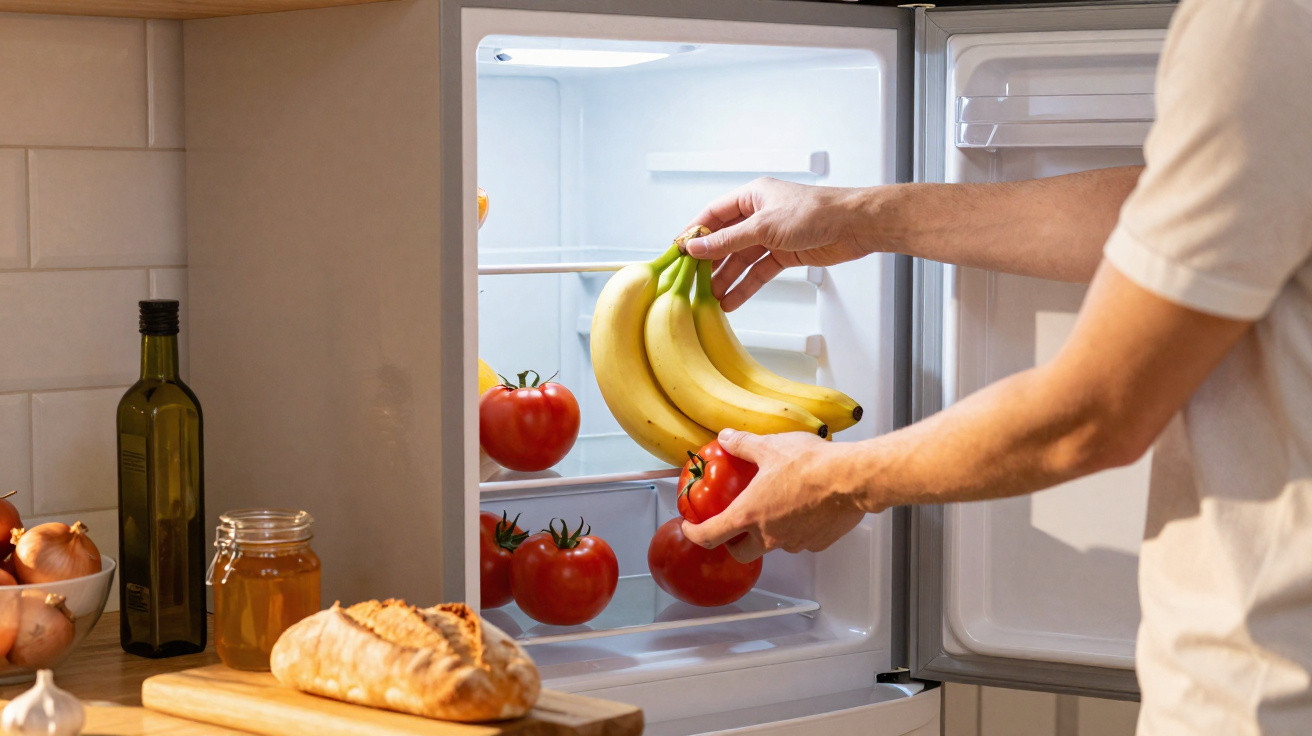
You open the fridge on a Tuesday evening, hoping for dinner inspiration and perhaps half a tomato that has not turned limp and watery.
Instead, the door shelves offer weary tomatoes, a wrinkled onion wrapped in plastic, and avocados that are still solid as rocks.
The fridge is full, but none of it seems especially appetising.
We tend to put everything in the fridge “to keep it fresh”, then wonder why our food becomes cardboard-like and spoils sooner.
The unspoken reality is that certain foods simply cannot stand the cold.
They can lose their flavour, texture and even nutrients because we use the fridge as though it were a magical storage cupboard.
Some of the biggest casualties may be sitting on your middle shelf at this very moment.
17 foods that actually suffer in your fridge
Begin with the familiar offenders: tomatoes, avocados and bananas.
These three are practically the symbols of “do not refrigerate”, yet many of us still put them straight into the cold as soon as we return from the supermarket.
Tomatoes become mealy, avocados go grey and ripen unevenly, while bananas develop miserable black-speckled skins and an oddly muted flavour.
Low temperatures disrupt the enzymes that allow these fruits to ripen correctly and build their flavour.
It is not your imagination: a tomato taken straight from the fridge really can taste like damp cotton wool.
Imagine buying a bag of tomatoes on Saturday, each one plump and shiny.
You wash them and neatly arrange them in the fridge drawer, feeling very organised and ready for the week.
When Wednesday arrives, you slice one open for a salad.
Its flesh is pale, the juice runs like water and nearly all of its scent has vanished.
You still eat it, but it lacks the bright, mildly acidic punch that a tomato ought to have.
Now picture that same tomato resting in a bowl on the worktop, out of direct sunlight.
By Wednesday, it is softer and more aromatic, with a flavour that lands on the back of your tongue like genuine summer.
Cold conditions slow ripening in almost all climacteric fruits - those that continue to ripen after harvesting.
That category includes bananas, avocados, peaches, nectarines, mangoes, kiwis, pears and tomatoes.
Putting them in the fridge too soon interrupts the chemical process happening inside.
The result can be fruit that is floury, fibrous or unexpectedly tasteless.
Moisture is another concern: because fridges are dry, fruits such as peaches, plums and whole melons can lose water and shrivel more quickly.
Let them ripen on the worktop first, then refrigerate them only once they are perfectly ripe and you want to keep them for an extra day or two.
That is the balance point between flavour and freshness.
What really doesn’t belong in your fridge - and where to keep it
Let’s look at the foods that cause the real problems.
Alongside soft fruit, the “no-fridge” list has several unexpected entries: potatoes, onions, garlic, bread, coffee, honey, olive oil, whole melons, basil and, in most households, chocolate.
Potatoes become sweet when chilled because their starch converts to sugar, then they darken during cooking.
Onions and garlic absorb moisture, becoming soft or mouldy.
Bread dries out and goes stale more rapidly in the fridge than it does on the worktop.
Coffee beans take on humidity and surrounding smells, which strips away their aroma.
As for honey, cold temperatures make it crystallise quickly, leaving it grainy rather than smooth.
Consider a typical post-supermarket routine.
You arrive home, put down the bags and begin filling the fridge without really thinking.
The bread goes on the middle shelf, onions into the vegetable drawer, potatoes into any available space, and chocolate into the door shelf “so it does not melt”.
A week later, the bread is hard, the onions have developed a damp patch, the potatoes have sprouted early and the chocolate has a faint taste of last night’s garlic pasta.
We have all had that moment of throwing away half a loaf or a slimy onion and feeling a small pang of guilt.
It is not because you are careless, but because hardly anyone teaches us the logic of fridge storage.
We simply repeat what we saw at home growing up, even when it is not especially effective.
There is one straightforward principle behind these 17 foods.
Most of them either:
- dislike humidity (onions, garlic and bread)
- dislike cold (tropical fruit, tomatoes and potatoes)
- or absorb odours (coffee, chocolate and some poorly wrapped cheeses).
Room temperature, darkness and airflow are often your strongest allies.
Potatoes need somewhere cool, dark and ventilated, such as a cupboard or pantry.
Onions and garlic need similar conditions, but should not share a bag with potatoes because they accelerate one another’s spoilage.
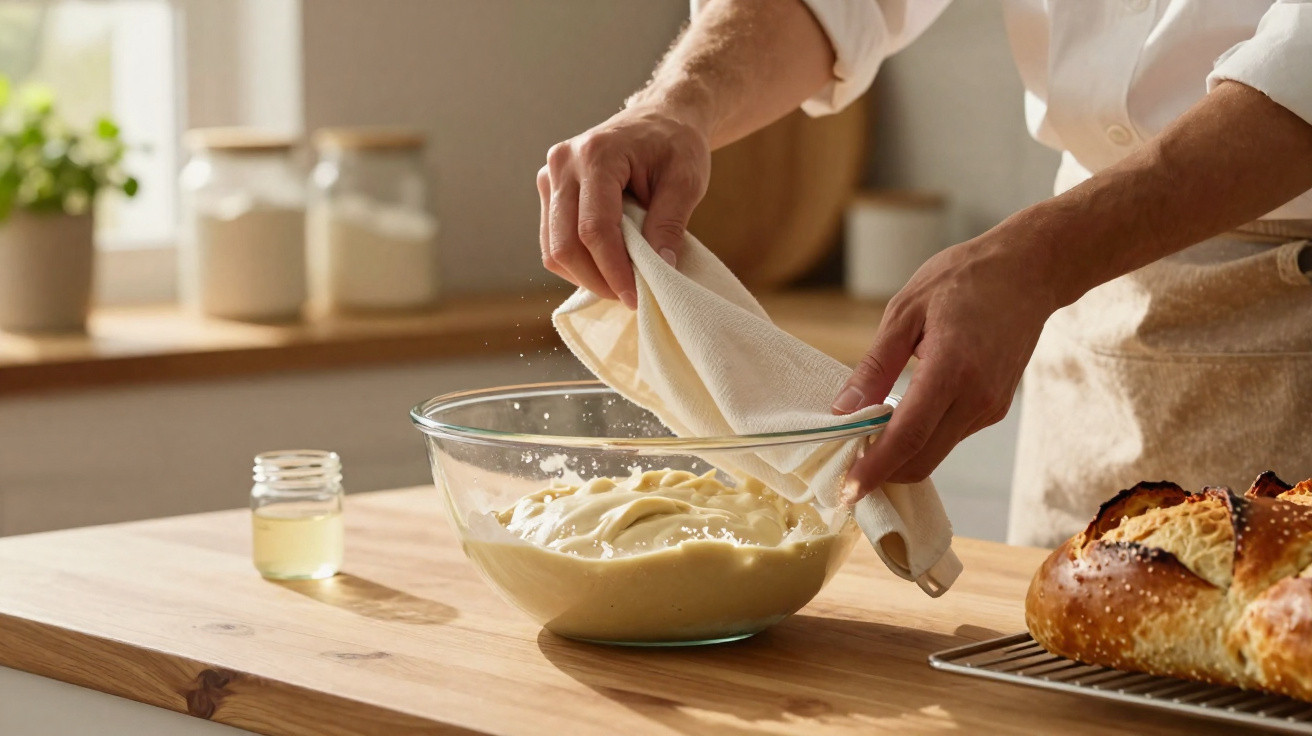
Bread keeps better in a bread bin or wrapped in a clean tea towel on the worktop; if you will not finish it quickly, slice and freeze it.
The fridge is excellent for many foods, but it is not a universal answer.
How to store these 17 foods for longer-lasting, better-tasting results
Think in terms of storage zones rather than simply “fridge or not fridge”.
In practice, you need three: a cool, dark area such as a pantry, a room-temperature spot with light such as the worktop, and the cold fridge.
This is where your 17 regular no-fridge foods should generally be kept:
Tomatoes, avocados, bananas, peaches, nectarines, mangoes, kiwis and pears should stay on the worktop while ripening, then go into the fridge only when ripe and likely to be eaten within two days.
Potatoes, onions and garlic belong in a paper bag or open basket inside a dark cupboard, rather than beneath the sink where conditions are damp.
Bread should be placed cut-side down on a board or kept in a bread bin for 1–2 days, with slices frozen afterwards.
Coffee belongs in an airtight container in a cupboard away from heat.
Honey should be tightly sealed and stored at room temperature, away from the hob.
The most widespread mistake is assuming that colder is always safer.
You are not “lazy” or “bad at adulting” if you have been chilling everything; you have simply been following the wrong rules.
Is your tomato salad bland? Your fridge is probably responsible.
Has your guacamole become strange and brown? The avocados were likely chilled while still rock-hard and unready.
Are your potatoes sprouting and your onions limp? That often comes from a combination of light, plastic bags and fridge moisture.
Honestly, nobody manages this perfectly every day.
No one has an immaculate pantry arrangement, whatever social media might suggest.
Even so, a few small changes can make a major difference: keep fruit in a bowl on the worktop, use a basket for onions and garlic, store coffee in a large jar, and freeze bread as soon as you know you will not eat it tomorrow.
“Once I stopped cramming everything in the fridge and started treating my kitchen more like a set of ‘climate zones’, my food waste dropped almost by half,” says Clara, a home cook who tracked every item she threw away for a month. “The bananas stopped going grey, the onions stopped rotting in the drawer, and my tomatoes finally tasted like tomatoes again.”
- Fruits to keep out (at first): tomatoes, avocados, bananas, peaches, nectarines, mangoes, kiwis, pears, whole melons.
- Pantry heroes: potatoes, sweet potatoes, onions, garlic, squash, honey, coffee, bread (short term), olive oil, most nuts.
- Fridge only at the end: ripe stone fruits, cut melon, cut tomatoes, ripe avocados you want to hold, fresh herbs except basil.
- Basil’s special case: treat it like flowers in a glass of water on the counter, lightly covered, never shoved at the back of the fridge.
- Chocolate’s comfort zone: cool, dry cupboard away from the oven, wrapped, not exposed on a fridge door next to strong-smelling foods.
A different way to view your fridge door
Once you understand the pattern, the fridge starts to feel less like general storage and more like a useful tool.
Cold is powerful, but it dulls fragile flavours and textures in many foods that were never intended to live there.
The next time you put away your shopping, pause briefly with each item in your hand.
Ask yourself: did this grow in a cold climate or a warm one?
Bananas, mangoes, avocados and tomatoes come from warmth, so they belong on your worktop rather than your coldest shelf.
The adjustment may seem small, but your meals will soon show whether you have got it right.
There is also something surprisingly grounding about keeping more food in sight.
A bowl of tomatoes, a bunch of bananas and a loaf beneath a tea towel can change the whole feel of a kitchen.
When food is visible, you are more likely to eat it, meaning ripe fruit becomes breakfast or a snack instead of dying unseen behind a jar of pickles.
Once you handle those 17 no-fridge foods correctly, they become easier to use and less likely to be wasted.
You do not need specialist containers or a walk-in pantry.
All it takes is a little attention, some space and a willingness to overcome the old “straight into the fridge” instinct.
Your taste buds - and your food bill - will show you whether it is working.
| Key point | Detail | Value for the reader |
|---|---|---|
| Keep climacteric fruits out of the fridge until ripe | Tomatoes, bananas, avocados, peaches, mangoes, pears, kiwis and nectarines develop flavour and texture at room temperature | Better taste and less money wasted on bland, mealy fruit |
| Use a cool, dark pantry for roots and alliums | Potatoes, onions and garlic prefer darkness, airflow, and paper or open containers | Longer shelf life, fewer sprouts, less mould and sliminess |
| Reserve the fridge for cut, cooked, or fully ripe foods | Bread, melons, tomatoes, herbs and ripe fruit go cold only when you want to slow them down briefly | Smoother kitchen routine and fresher meals through the week |
FAQ:
Question 1: Can I refrigerate tomatoes once they’re already ripe? Yes, once your tomatoes are fully ripe and you need to keep them another day or two, you can move them to the fridge, then bring them back to room temperature before eating for better flavour.
Question 2: What’s the best way to store bread if I live alone? Keep a small portion on the counter for 1–2 days and slice and freeze the rest; toast or briefly warm frozen slices when needed for almost-fresh texture.
Question 3: Why do my potatoes turn sweet and dark when I cook them? Cold storage converts potato starch into sugar, which then browns quickly when fried or roasted, giving a burnt look and off taste.
Question 4: Is it bad to keep coffee in the fridge or freezer? Fridges are humid and full of odours that coffee absorbs; freezers can work only if the coffee is in a truly airtight container and not opened often, otherwise it degrades faster.
Question 5: My honey crystallized, did I ruin it by refrigerating it? No, crystallized honey is still safe; gently warm the jar in a bowl of warm water and the crystals will dissolve, then store it at room temperature next time.

Comments
No comments yet. Be the first to comment!
Leave a Comment