The oven door opens with a soft, rubbery sigh, sending a rush of heat through the small kitchen. Beyond the window, life is carrying on as it has lately: headlines being endlessly scrolled, emails only half read, and the nagging feeling that something important has slipped your mind. But inside, a dish of bubbling pasta, perhaps a little too generously topped with cheese, is doing something much more reassuring: finishing just as it always does. Golden across the top. Crisp at the edges. It smells like a hug you never had to request.
One person leaves their bag by the door; another calls, “Is it ready yet?” from the hall. For a brief moment, none of it feels chaotic. There is simply this dependable square of food.
Some meals catch you by surprise.
Others arrive precisely when you need them.
The steady comfort of an oven you can rely on
A genuinely good oven meal creates its own particular hush once it reaches the table. It need not be fancy or picture-perfect; it just needs to be dependable. It is the sort of dinner that withstands delayed trains, irritable children and the person who forgot it was their turn to chop. As steam rises from the dish and the surface begins to blister, your shoulders seem to lower by an inch.
This is not dinner as a performance.
It is dinner as a promise fulfilled.
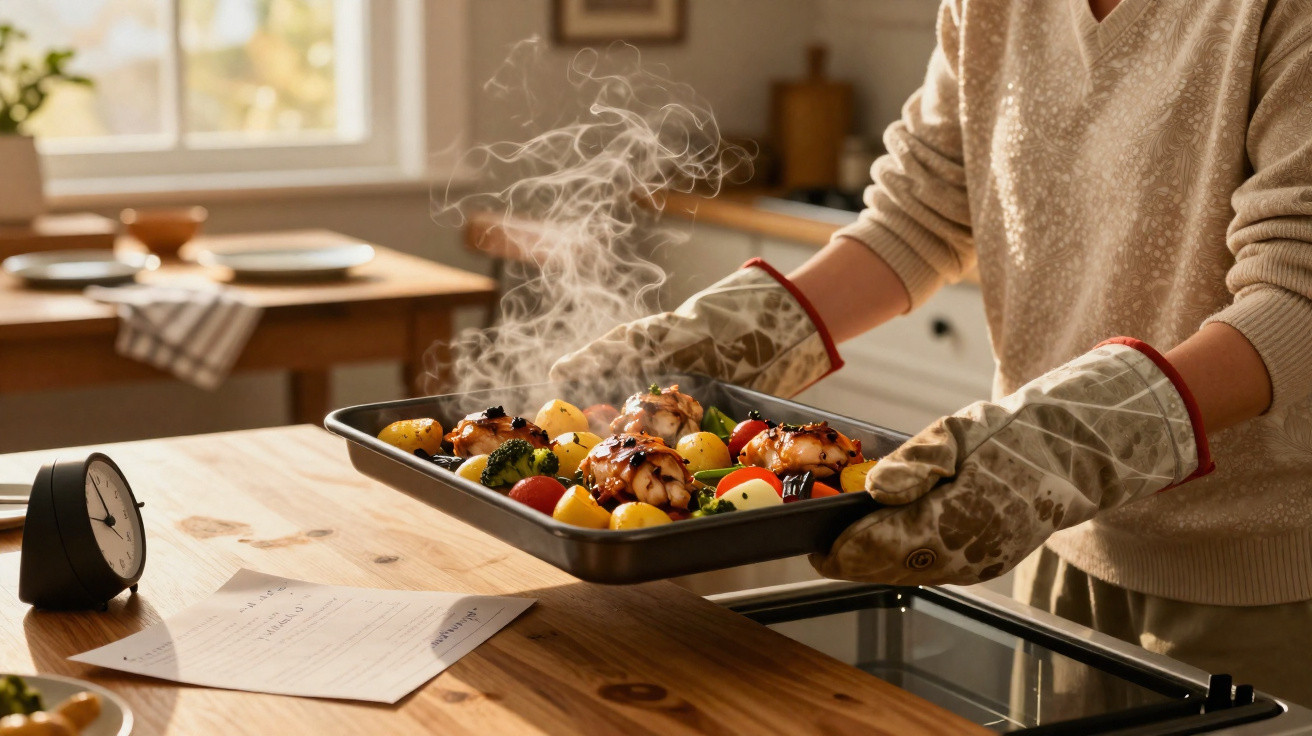
Imagine a Wednesday evening at 7:45 pm. You are tired in the deep, bone-weary way that does not care what your smartwatch reports about your sleep score. Into the oven goes a tray of chicken thighs, potatoes and carrots, dressed with olive oil, salt and cracked pepper, plus perhaps a squeeze of lemon if you remembered to buy one.
After forty minutes, the kitchen smells as though you had your whole life organised. The potatoes are soft and fluffy within, with sticky brown edges, while the chicken skin crackles beneath the tongs. Nobody asks, “What is this?” Instead, they reach for plates. It took only ten minutes of hands-on work, yet pays you back as if you had planned an elaborate chef’s night off.
The appeal extends beyond the food itself. It is about having one small part of the day work predictably when so much else does not. By nature, an oven meal is forgiving: temperatures may be slightly wrong and timers may run a little long. The children might need homework help at the very moment you intended to stir something. Meanwhile, the heat surrounds the ingredients and quietly, patiently gets on with the work while you deal with everything else.
That kind of reliability feels especially valuable when your phone is full of alerts and your mind is managing tabs that never seem to close.
Building a reliable warm oven meal
The most dependable oven meals generally follow a straightforward, almost unexciting pattern: a protein, a starch and a vegetable, all on one tray. Think of it as a rule of three: chicken with potatoes and carrots; sausages with sweet potatoes and onions; or tofu with cauliflower and chickpeas. Coat everything in fat, salt and something sharp or bright, then allow the oven to act as your quiet teammate.
The key is to cut each ingredient to a similar size and leave enough space around it on the tray. Food packed too tightly will steam; food with room will brown. And browning is where comfort begins.
This is where many of us make dinner harder than it needs to be, turning it into an exam with too many pans, too many stages and too many instructions telling you to “while that simmers, quickly do…” as though you are not also replying to a message from your boss and unpicking someone’s maths homework.
A dependable oven meal is kind about poor timing. It will not punish you for checking your phone. You can overdo one corner of the garlic bread and still find everyone returning for another helping. Realistically, no one manages this every day. Yet having two or three familiar trays that can be assembled almost automatically is the understated sort of life improvement no productivity app can offer.
“When my anxiety is high, I put something in the oven,” a friend told me recently. “It’s like outsourcing my panic for 45 minutes.”
Choose one tray
Fewer dishes mean less washing up, fewer opportunities to lose your place and more headspace for a proper conversation.Season generously
Salt, fat and one confident flavour, such as garlic, lemon or smoked paprika, work better than five spices used too cautiously.Have faith in the browning
Those dark, sticky patches on the potatoes are flavour. Take the tray out only when the smell becomes sharp, rather than merely because the food looks deeply coloured.Make use of the freezer
Adding frozen peas, sweetcorn or spinach near the end can turn a tray bake into a complete meal without requiring you to begin again from scratch.Make enough for leftovers
Preparing a slightly larger portion solves tomorrow’s lunch before today has even finished.
Why reliable matters more than perfect right now
Online, we often talk about “easy recipes”, but ease is not the entire point. At the end of a disorderly day, what our minds really want is predictability: the reassurance that doing A will probably give you B, and that B will smell inviting and stand a spoon upright. A warm oven meal remains one of the few household rituals that still follows old, reassuring rules.
You turn the dial and wait. Heat continues to do what it has always done. There are no updates, patches or notifications.
| Key point | Detail | Value for the reader |
|---|---|---|
| Simple structure | A single tray holding one protein, one starch and one vegetable | Cuts decision fatigue and reduces preparation time |
| Forgiving timing | Oven meals can cope with small delays and interruptions | Reduces stress when children, work or life interrupt cooking |
| Emotional reliability | Familiar aromas, textures and a warm, central-to-the-table feeling | Builds a small everyday ritual of steadiness and comfort |








Comments
No comments yet. Be the first to comment!
Leave a Comment