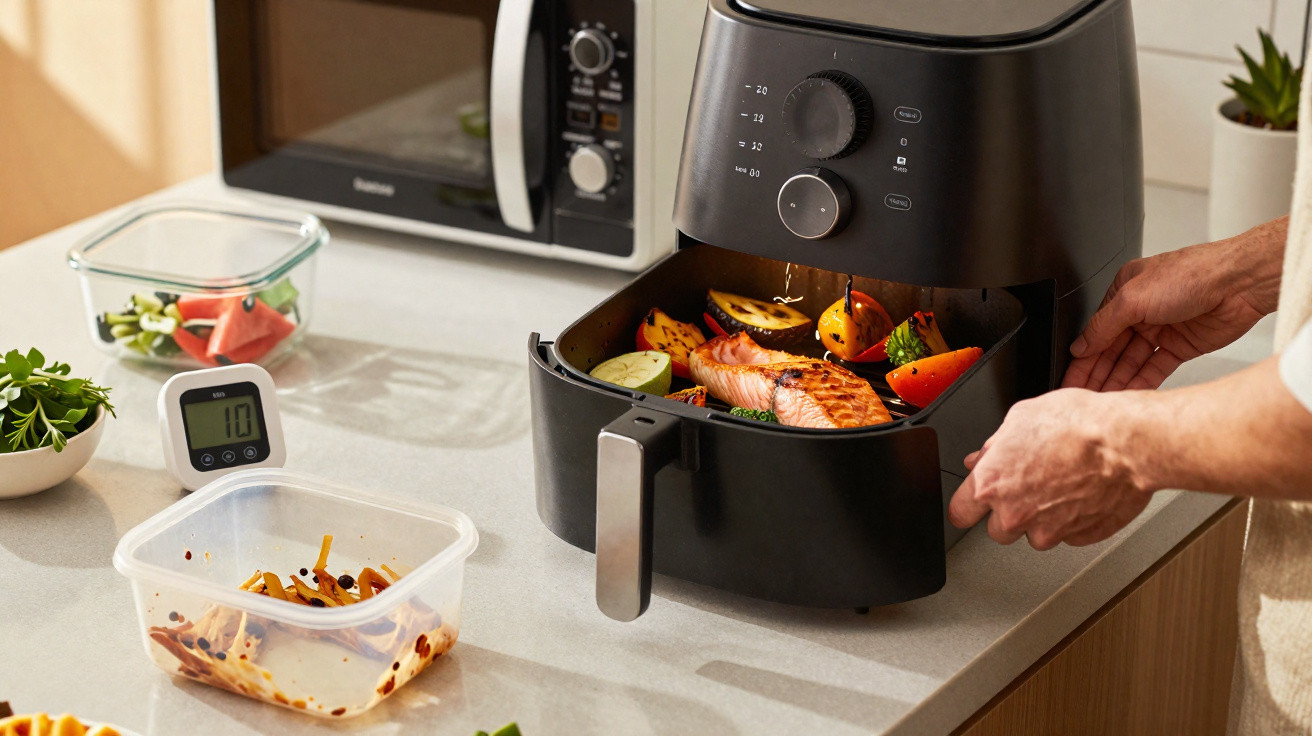
There is a low-key rebellion under way in UK kitchens. The trusty humming microwave – long the emblem of “tea’s ready in three minutes” – is being pushed aside for sleeker, cleverer, glossier machines that claim they can do every job better. Air fryers, smart ovens, rapid cookers and compact “infrawave” grills whose names sound like lesser Marvel heroes. Sitting on our worktops, they promise crunchier chips, more succulent chicken and a future in which nobody has to endure a miserable, rubbery ready meal again. At least, that is the sales pitch.
You notice the change when you visit a friend’s flat: the microwave is unplugged and brooding in a corner, while a matte-black new appliance glows with pride. People discuss their air fryer as though it were a recent romantic interest. They exchange cooking times with the enthusiasm of gossip. Yet, when it is late and all we want is yesterday’s curry heated quickly, it is fair to ask whether the “microwave replacement” craze is truly an improvement – or simply a very well-promoted diversion.
Why the microwave fell from favour
For years, the microwave was the unchallenged ruler of weekday suppers. It dealt with baked beans, jacket potatoes, revived coffee and those rather forlorn plastic trays steaming beneath their film lids. It never claimed to be glamorous. You used it when proper cooking had gone wrong, or had not happened in the first place. Dependable, slightly unattractive and usually hiding crumbs from an exploded mince disaster.
Then the mood changed. Somewhere between lockdown banana bread and the cost of living crisis, the story around it was turned on its head. Microwaves came to represent laziness, “ultra-processed” food and not making an effort. Instagram filled with air fryer hacks, TikTok with smart-oven recipes, and the microwave abruptly seemed like a leftover from the era when we bought CDs and regarded MSN Messenger as cutting-edge. The ambition moved from merely “fast” to “fast but still somehow healthy, crisp and aspirational”.
We have all pulled a reheated pizza slice from the microwave to find a strangely floppy base, cheese resembling a gummy blanket and all the pleasure somehow missing. That is the opening these newer machines are designed to exploit. They do not simply say, “I’ll heat it up for you.” They murmur, “You could be that person. The one who roasts vegetables midweek and never eats a limp chip again.”
What microwave replacements genuinely do better
In theory, the alternatives are compelling. The modern air fryer – the headline act – is essentially a compact, high-powered convection oven with excellent publicity and a basket that makes you feel as though you run a chip shop for one. It circulates hot air around the food, encouraging it to crisp rather than steam. Smart combi-ovens take things further, combining fans, grills and, in some cases, steam in ways that the old beige microwave could not have imagined. Put raw food inside and it emerges as if it has enjoyed a complete spa treatment.
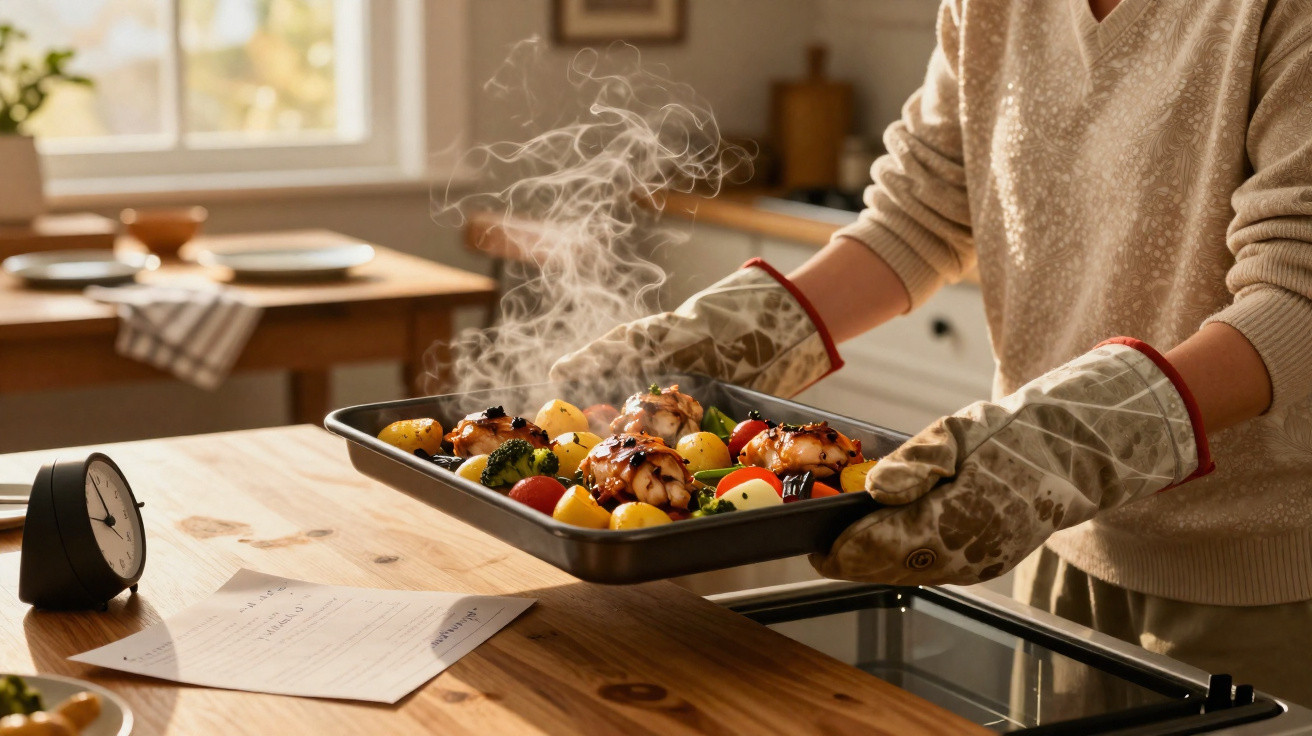
Texture is the first major advantage. Rather than making leftovers soggy, an air fryer brings them back to life. Chips retain shape rather than becoming an expression of despair. The final piece of yesterday’s margherita can return with a crisp base and bubbling cheese, rather than becoming the damp, unhappy wedge produced by a microwave. Chicken thighs can develop properly golden skin without filling the kitchen with smoke or requiring a 40-minute wait for the main oven to warm up.
The health halo – and a touch of smugness
The second benefit is health, or at least the impression of being healthier. Air fryer devotees enjoy one particular comparison: “Same taste, half the oil.” Potatoes can be coated with a teaspoon of oil and still emerge crunchy. Frozen nuggets, normally destined to bathe in deep fat, suddenly seem like a somewhat less guilt-inducing choice. That has appeal when you are trying to reduce bills without surviving solely on beige freezer food.
There is an emotional element too, although it gets less attention. Using an air fryer or compact smart oven feels like making an effort, in the best sense. You are not merely “zapping” a meal; you are “prepping” it. That offers a small burst of pride and the sense that you have done more than reheat food. You can persuade yourself that you cooked, even when you really just poured frozen cauliflower into a drawer and selected a preset. Sometimes that modest story is what separates “I’m failing at adulthood” from “I’m muddling through alright”.
Speed versus reality: can anything really outpace a microwave?
Every one of these appliances depends on time. That is the underlying reason we have forgiven the microwave’s offences against bread and pastry for so many years. It may transform a croissant into a vaguely edible sponge, but it will do so before you have even opened Instagram. If you are hungry after a late shift or managing homework alongside bedtime tantrums, speed is not an optional extra. It is the whole purpose.
Do these “replacements” really win that race? At times, yes. When cooking from raw – a tray of vegetables, some salmon or frozen chips – an air fryer can genuinely outperform a full-size oven. It preheats in minutes instead of ten. A perfectly reasonable dinner can be assembled in the time it previously took to remember where the takeaway menu had gone. That is a real benefit, particularly when energy prices make the sound of the large oven light switching on feel alarming.
Where the promise falls short
The limitations reappear when the task is reheating rather than cooking. This remains the microwave’s territory. Warming soup in a microwave is almost pure efficiency: put in the bowl, wait two minutes, finished. Attempt the same job in most air fryers and you are decanting food, managing pans on the hob or dealing with inconvenient ovenproof dishes. At 10.30pm after a lengthy commute, that additional faff can feel enormous.
Capacity is another issue. A typical air fryer manages chips for two, or one chicken breast with some vegetables, very capably. Feed a family of four or try heating several plates at the same time, though, and it becomes a hot-basket game of Tetris. The microwave may lack excitement, but it will readily accommodate a large lasagne dish or a full plate of last night’s roast. Honestly, nobody is batch-cooking three separate air fryer rounds each evening unless they are recording content for social media.
The emotional appeal of upgrading the kitchen
Owning an impressive “microwave replacement” carries a quiet aspiration. It implies: I care about what I eat. I am making an effort. I do not exist purely on soggy supermarket pasta trays and instant noodles. It is rather like replacing an old tracksuit with a good pair of jeans; you remain the same person, but approach your evenings with a little more self-respect.
For certain people, the impact is genuinely transformative. Those who never used to turn on the oven now roast vegetables three evenings a week. Students who might once have lived on beans on toast are encouraging themselves to batch-cook chicken and freeze portions. Parents of fussy children are finding that carrots are slightly less objectionable when they arrive crisp and caramelised. These modest improvements can bring real, understated happiness.
The difficulty is that a new gadget makes our expectations expand with it. We picture ourselves making “healthy fakeaways” twice weekly, producing flawless salmon and roasting chickpeas for snacks. The appliance arrives, we unbox it lovingly and become evangelists for the first two weeks. Then work becomes frantic, school emails accumulate, and before long it is only being used to heat supermarket garlic bread. The microwave can be blunt, but it never offered promises it could not fulfil.
The inconvenient details the adverts ignore
Glossy promotional clips leave out the washing-up: sticky baskets and the unexpected burnt patch because you followed a US recipe while your UK model runs hotter. They do not show the cursory wipe when you realise, after pressing “start”, that crumbs from yesterday’s chips remain at the bottom. Nor do they show the moment the kitchen carries a faint smell of last week’s sausages because the tray was not properly scrubbed.
By comparison, microwaves are remarkably forgiving. Wipe the turntable, run a cloth around the interior and you are done. Air fryers and elaborate mini-ovens have components: grills, racks and perforated trays. Some are dishwasher-safe, some certainly are not, while others technically can go in but emerge looking as though they have survived a small house fire. It is the mundane, real-world inconvenience nobody mentions while enthusing on Instagram Stories.
Space and cost matter as well. Not every home has enough worktop depth to keep a bulky air fryer beside the kettle. In compact UK kitchens, each additional appliance demands a compromise. Something must be removed: the toaster, bread bin or microwave itself. Nor are these £20 impulse purchases. A respectable combi “microwave replacement” can cost as much as some households spend on a month of energy. That is a substantial outlay for an appliance chiefly used to reheat pizza and frozen wedges.
The jobs the microwave still wins quietly
Once the hype is stripped away, the microwave still dominates certain tasks. Warming drinks. Melting butter or chocolate. Defrosting the item you absolutely intended to remove from the freezer three hours earlier. Heating one serving of stew or curry when you are too exhausted to recall where the frying pan is kept. No fashionable drawer or elaborate grill bar can match the simple convenience of pressing 2:00 and walking away.
Its straightforwardness has a kind of emotional reassurance. The microwave does not care whether you have had a difficult day, whether your mental health is on the floor, or whether you are cooking for one because the house has become quieter than it once was. It does not judge the ready meal or suggest you are failing to use it properly. It hums, rotates, dings and gives you hot food. That reliable little routine has more value than we tend to acknowledge.
For people with mobility issues, ADHD, limited budgets or simply very little capacity, a microwave remains a lifeline. There is no preheating, no halfway checks and no need to consider basket capacity, turning food or choosing a rack. It is not stylish, but it is inclusive in a way that “do-it-all” appliances do not always equal. There is a reason that nearly every rental property, office kitchen and student flat still includes one as standard.
Are “microwave replacements” really misleading us?
The uncomfortable reality is that most are not microwave replacements at all. They are slightly different appliances – and they excel when used accordingly. Treat the air fryer as a compact, efficient oven that is excellent for cooking and crisping. Regard the combi-oven as a tool that makes genuine weeknight meals easier, rather than simply dealing with leftovers. Viewed in those terms, they are upgrades. Push them into the role of “microwave 2.0”, and they begin to falter.
Perhaps the most sensible arrangement is to let the microwave do what it does, while allowing newer appliances to handle their strengths. Keep the microwave for chaotic days when food needs to be hot immediately. Turn to the air fryer or smart oven when you have ten extra minutes of energy and want dinner to feel like a small act of self-care rather than damage limitation. No spectacle, no guilt and no imaginary personality test based on your preferred appliance.
Maybe the true change is not replacing the microwave, but revising the story we tell ourselves about our kitchens. Less performance, more honesty. On some evenings, you will batch-roast vegetables in your expensive gadget and feel quietly pleased. On others, you will pierce plastic film with a fork and wait for that familiar hum. That is entirely fine. Not every appliance needs to reinvent you; some only need to put dinner on a plate.






Comments
No comments yet. Be the first to comment!
Leave a Comment