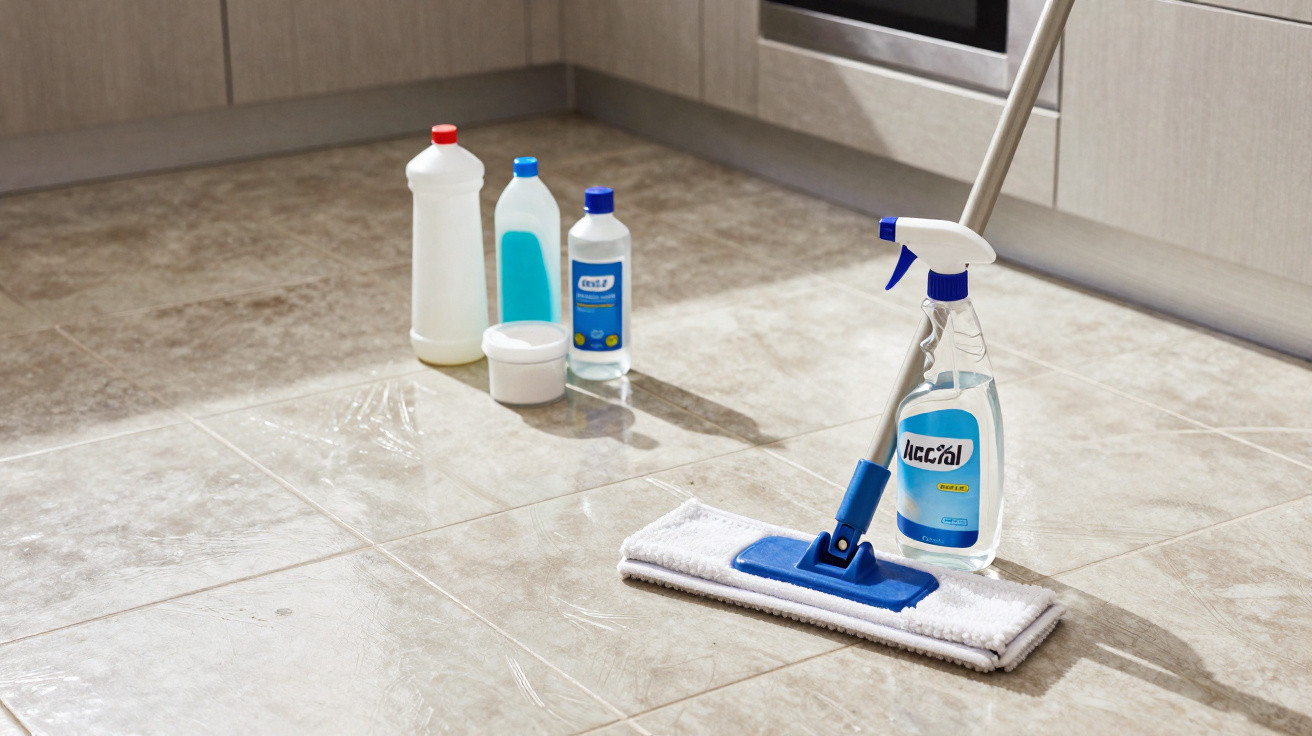
The answer is already in most kitchen cupboards.
When a tiled floor starts to look dull, many households turn to harsh chemical cleaners. For everyday grime on tiles, that is unnecessary. One straightforward mixture quickly removes grease and produces a clean, streak-free shine.
Why bleach and lemon do not belong in routine kitchen cleaning
Bleach can remove colour, damage grout and leave behind a strong odour that hangs around. It can also react dangerously with acids or ammonia, producing toxic fumes. Lemon may seem like a mild option, but its pulp and sugars can leave a sticky film, while acidity differs between fruits. Glazed ceramic and porcelain need consistent results from a cleaner you can rely on every day.
Skip bleach and lemon for routine tile care. You’ll avoid fumes, staining risks, stickiness, and surprises.
White vinegar mix for bright tiles
Plain white vinegar is the key ingredient, preferably 6% cleaning vinegar diluted with warm water. A light spray, brief pause and microfiber wipe will remove grease and a light mineral coating without exhausting scrubbing.
Step-by-step method
- Sweep or vacuum before cleaning. Loose grit can scratch the glaze and prevents cleaner from reaching the surface film.
- In a spray bottle, combine 1 part white vinegar with 1 part warm water. For heavily soiled kitchens, include 1–2 drops of mild washing-up liquid.
- Deal with greasy splashes around the cooker using a small amount of isopropyl alcohol on a cloth. It evaporates quickly while breaking down oil.
- Mist the tiles until they are damp rather than soaked. Clean in sections to stop the mixture drying on the floor.
- Leave it for 3–5 minutes. This contact time breaks down the film, so hard scrubbing is not required.
- Using short, overlapping movements, wipe with a clean microfiber pad. Rinse the pad regularly.
- If any residue is left, rinse promptly with clean water, then polish dry with a microfiber cloth for a glass-like finish.
Let the solution sit for a few minutes. Time does the heavy lifting, not muscle.
Why the mixture works
The mild acid in vinegar, acetic acid, helps loosen alkaline deposits and release oils. Warm water improves how the mixture spreads and how quickly it evaporates. A very small amount of washing-up liquid provides surfactants, lifting dirt into the cloth instead of redistributing it. Microfiber traps particles and creates fewer streaks than cotton or sponges.
Dilution and quick quantities
| Floor area | Vinegar | Water | Washing-up liquid (optional) |
|---|---|---|---|
| 5 m² (small kitchen) | 250 ml | 250 ml | 1–2 drops |
| 10 m² (average) | 500 ml | 500 ml | 2–3 drops |
| 20 m² (large) | 1 l | 1 l | 3–4 drops |
Stains and grout: lemon is unnecessary
Grout quickly absorbs grease and colourants, making it look grimy. Citrus is not needed to brighten it.
Gentle grout whitening
- Create a paste from 3 parts baking soda and 1 part water, then apply it along the grout line.
- On stubborn grout lines, add 3% hydrogen peroxide to the paste for extra whitening. Leave it in place for 10–15 minutes.
- Work the paste in with a soft brush. Do not use wire brushes, as they wear away the grout.
- Rinse thoroughly and dry the area. Re-seal grout once a year if water no longer beads on its surface.
Sticky marks and coloured spills
- Grease rings: rub with 70% isopropyl alcohol before wiping with the vinegar mixture.
- Food colouring or coffee: place a paper towel soaked in peroxide over the mark for 10 minutes, then rinse.
- Sap or adhesive-tape residue: loosen it with a little cooking oil, remove it using a plastic scraper, then degrease the area.
Never mix vinegar with bleach. The reaction creates toxic gases in seconds.
Products to avoid and surfaces requiring care
Acidic cleaners may etch natural stone. For marble, limestone, terrazzo or cement tiles, use a pH-neutral stone cleaner and avoid vinegar entirely. Try every cleaning approach in an inconspicuous area first, including on ceramic tiles, as some decorative glazes are fragile. Do not use abrasive scouring powders on a glossy glaze. Replace worn sponge mops with a flat microfiber mop, which leaves behind less water and fewer streaks.
Odour, residue and minor adjustments
As the floor dries, the vinegar smell disappears, normally within 15–20 minutes. Open a window slightly to ventilate the room. For a fresher finish, rinse the pad in warm water containing one drop of washing-up liquid instead of adding fragrances that may leave a film. Hard water can leave spots on tiles, so a final wipe with distilled water on a damp cloth helps prevent mineral marks.
Quick habits for keeping tiles bright
- Clean the splash area around the cooker after frying, as fresh oil comes away within seconds.
- Dry-mop crumbs every evening. Underfoot, grit works like sandpaper.
- Use the vinegar mixture each week, then buff the floor dry. Keeping residue to a minimum helps shine develop.
Cost and environmental footprint
Per litre of ready-to-use solution, white vinegar often costs far less than branded degreasers. It also means less packaging, fewer volatile fumes and fewer coloured surfactants entering the drain. Microfiber pads withstand hundreds of washes, allowing this approach to pay for itself quickly. A small bottle of isopropyl alcohol deals with specific greasy areas without the need for another heavy-duty cleaner.
When stains indicate a larger problem
A white haze that keeps returning may indicate efflorescence caused by moisture beneath the tiles. Grout that is crumbling can point to movement or water penetration. Dark orange marks may be rust seeping from metal edging. Vinegar cannot resolve structural problems. Where these occur, inspect for leaks, increase ventilation and consider professional grout repair or re-sealing.
Extra tips for an easier routine
- Mark the spray bottle with its contents and the date, and make a fresh solution every month to maintain consistent results.
- Start in the furthest corner and work towards the door. Place a dry towel at the threshold to prevent footprints.
- Wear thin gloves if your skin is sensitive. Vinegar is gentle, but it remains acidic.
- Use less washing-up liquid on matte porcelain to prevent sheen. On glossy glaze, spend longer buffing for a mirror-like finish.
Keep it simple: 1:1 warm water and white vinegar, microfiber pad, a short wait, and a dry buff. Tiles look clean, not coated.






Comments
No comments yet. Be the first to comment!
Leave a Comment