At moments like these, you need a straightforward, fast solution that makes the toilet feel fresh without hours of scrubbing or harsh chemical cleaners. A kitchen staple that almost everyone has at home can quickly give your toilet a hotel-like scent – and there are several other home remedies that help tackle odours and limescale too.
Why the toilet can become stressful before visitors arrive
Few things feel as awkward as a musty-smelling bathroom when friends or family are about to arrive. Even people who clean regularly will recognise the issue: smells from the drain, humid air and old deposits beneath the rim can all make a toilet smell used sooner than you would like.
- Damp conditions encourage bacteria and mould to develop.
- Urine scale and limescale can build up stubbornly in the bowl.
- Residue in the pipes and trap can gradually create a strong smell.
- Fragrance sprays often mask odours only briefly and can smell artificial.
Many people automatically reach for powerful toilet cleaners. Although they work, they often have a sharp smell, can irritate the eyes and airways, and are harmful to the environment. Home remedies, by contrast, can neutralise odours while cleaning at the same time – and are usually far cheaper.
The coffee trick: make your toilet smell like a hotel
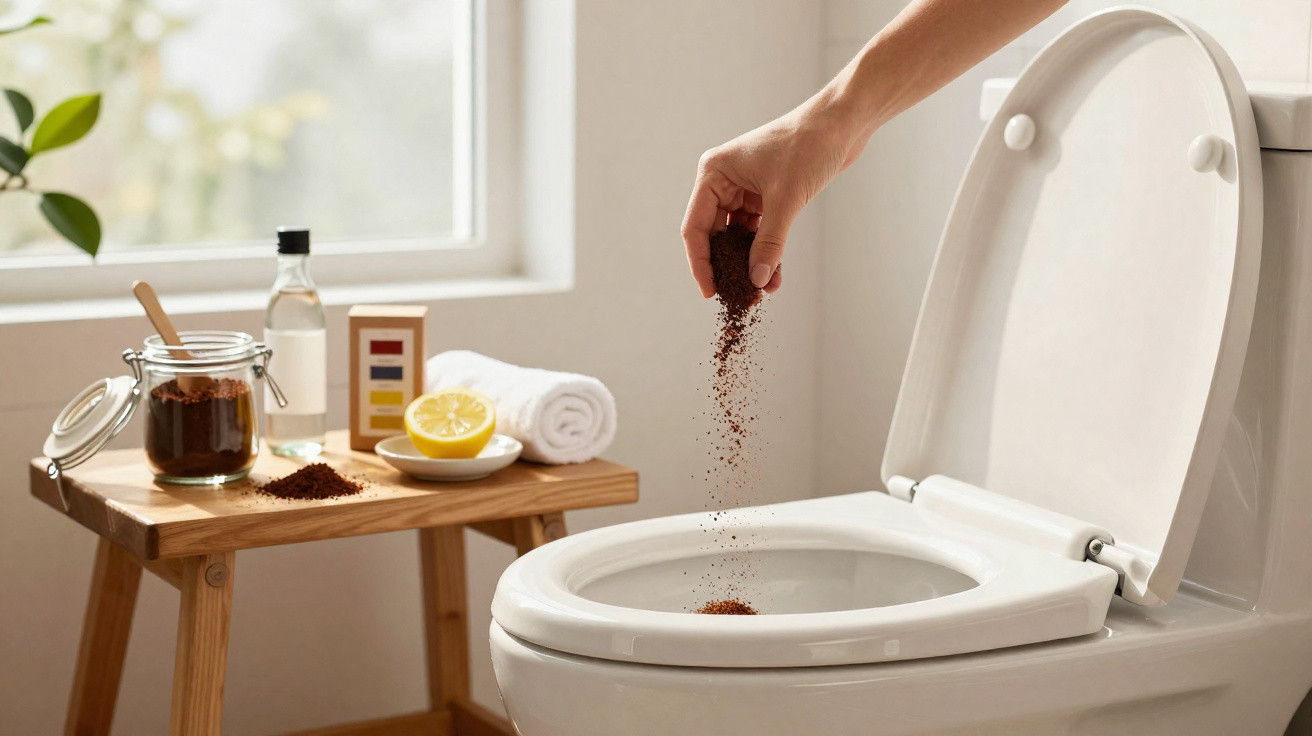
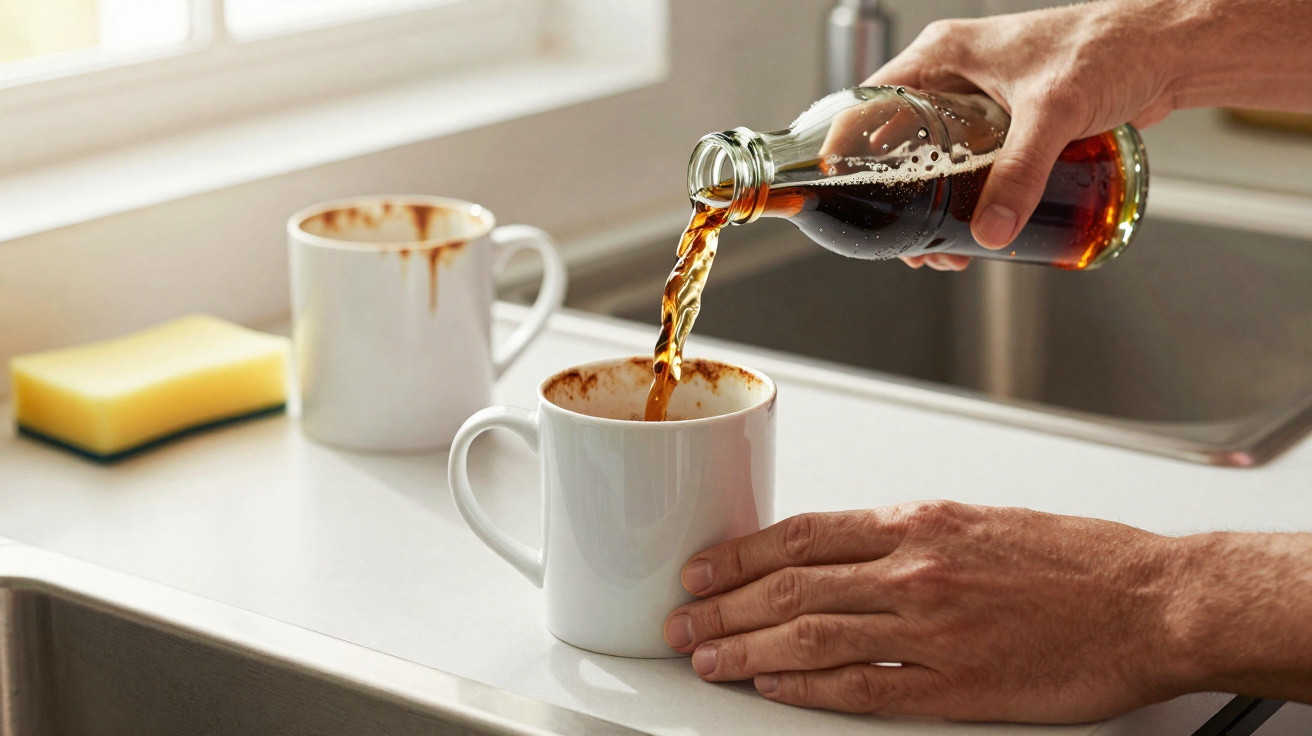
The standout quick fix is something most people would put in a coffee machine rather than a toilet: ground coffee. Its strong aroma does more than cover unpleasant smells; it can also partly absorb them.
“Coffee works like a natural odour vacuum cleaner – ideal when guests are arriving in 15 minutes.”
How to use the coffee method step by step
- Put two to three teaspoons of dry ground coffee directly into the toilet bowl.
- Leave it without flushing for around 10 to 15 minutes.
- Then flush thoroughly once.
- Briefly open the window or switch on the extractor fan so the scent can circulate.
In many cases, this is enough to leave the bathroom smelling noticeably fresher. The coffee replaces the unpleasant note with a warm, familiar aroma that many people associate with a hotel breakfast. If you wish, place a small bowl of fresh ground coffee beside the toilet as well – it will provide a pleasant scent for longer.
Which type of coffee works best?
Ordinary ground filter coffee is ideal. It is fine enough to absorb odours effectively and has a strong fragrance. Suitable options include:
- packet ground filter coffee
- freshly ground beans
- old coffee that is no longer good enough to drink
Instant coffee granules and heavily sweetened coffee mixes are less useful. They dissolve differently and do not deliver a comparable result.
Bicarbonate of soda and vinegar: classics for deposits and bad smells
If odours are coming from inside the toilet itself – from urine scale, limescale and built-up residue – fragrance alone will not be enough. This is where a reliable pairing comes in: bicarbonate of soda, or ordinary household soda, and vinegar.
“The combination of soda and vinegar fizzes strongly, loosens deposits and removes the toilet’s ‘old smell’.”
Using bicarbonate of soda and vinegar
- Sprinkle about half a cup of soda directly into the toilet bowl, including around the rim.
- Wait briefly for the powder to spread.
- Slowly pour in one to two cups of household vinegar.
- The mixture will start fizzing immediately – this is intentional.
- Ideally, leave it to work for several hours or overnight.
- The following morning, scrub with the toilet brush and flush.
The reaction loosens many deposits, while the vinegar smell disappears after flushing and the former musty note is usually greatly reduced. Those with a sensitive sense of smell can air the room briefly afterwards or light a scented candle.
Citric acid: the secret weapon against limescale and yellow marks
Citric acid powder is another useful cupboard ingredient. It is highly effective at removing limescale, shifts stubborn rings and leaves behind a fresh, lightly fruity scent.
How to use citric acid correctly
For a thorough clean, the following method will usually be enough:
- Add three tablespoons of citric acid powder to the empty toilet bowl.
- Pour in a little warm, but not boiling, water to distribute the powder.
- Leave it for 15 to 30 minutes; for heavy limescale, leave it longer if needed.
- Scrub with the brush, especially beneath the rim.
- Flush – the result should look noticeably cleaner.
Using small amounts of citric acid regularly helps prevent thick limescale from forming in the first place. This also reduces odours caused by old deposits.
When home remedies reach their limits
Sometimes the smell in a bathroom points to a bigger problem than an uncleaned toilet bowl. Typical warning signs include:
- gurgling sounds from the drain
- water draining more slowly than it used to
- a pungent sewer smell that keeps returning despite cleaning
In these cases, the cause is often within the pipework itself, such as a blockage, inadequate ventilation or a problem with the trap. The coffee trick may briefly improve the smell in the room, but it will not fix the underlying cause. If the issue persists, have the pipes inspected by a qualified professional.
Things that should never go into the toilet
Many odour and drainage issues arise because items are flushed that belong in the general waste bin. Common offenders that affect both pipes and smells include:
- wet wipes and cosmetic tissues
- sanitary products such as pads and tampons
- fats and food leftovers from the kitchen
- cigarette ends and ash
- cat litter or other absorbent litter materials
All of these can narrow pipes, encourage deposits and therefore contribute to unpleasant odours. Households that avoid flushing them tend to have far fewer toilet problems.
How often should you use these tricks?
The coffee trick is mainly intended as a short-term fix, for example:
- immediately before visitors arrive
- after heavy toilet use
- when there is no time for a full clean
Bicarbonate of soda, vinegar and citric acid are more effective as part of regular care. Many households find it works well to use these home remedies once a week or every fortnight. This keeps the toilet smelling fresh as well as looking well maintained.
Risks, benefits and useful combinations
Each of these remedies has its advantages, along with a few points to bear in mind:
| Remedy | Benefits | What to consider |
|---|---|---|
| Coffee | quick fragrance, inexpensive, almost always available at home | with very hard water, tiny residues may remain, so flush well |
| Soda + vinegar | loosens deposits, cleans and reduces odours | do not mix with chlorine cleaners; gloves are sensible for sensitive skin |
| Citric acid | highly effective against limescale, fresh scent | do not use water that is too hot, as solid deposits can otherwise form |
A sensible combination can provide long-lasting results: for instance, give the toilet a thorough soda-and-vinegar treatment once a month, use citric acid between cleans for limescale, and rely on the coffee trick for a quick hotel-style refresh when visitors arrive unexpectedly.
One final practical tip: many people keep a small “guest emergency box” in the bathroom, containing spare toilet paper, matches or a subtle room spray, plus a small jar of ground coffee. This makes the guest toilet seem not only clean and thoughtfully stocked, but also pleasantly scented without creating the impression of a chemistry lab.








Comments
No comments yet. Be the first to comment!
Leave a Comment