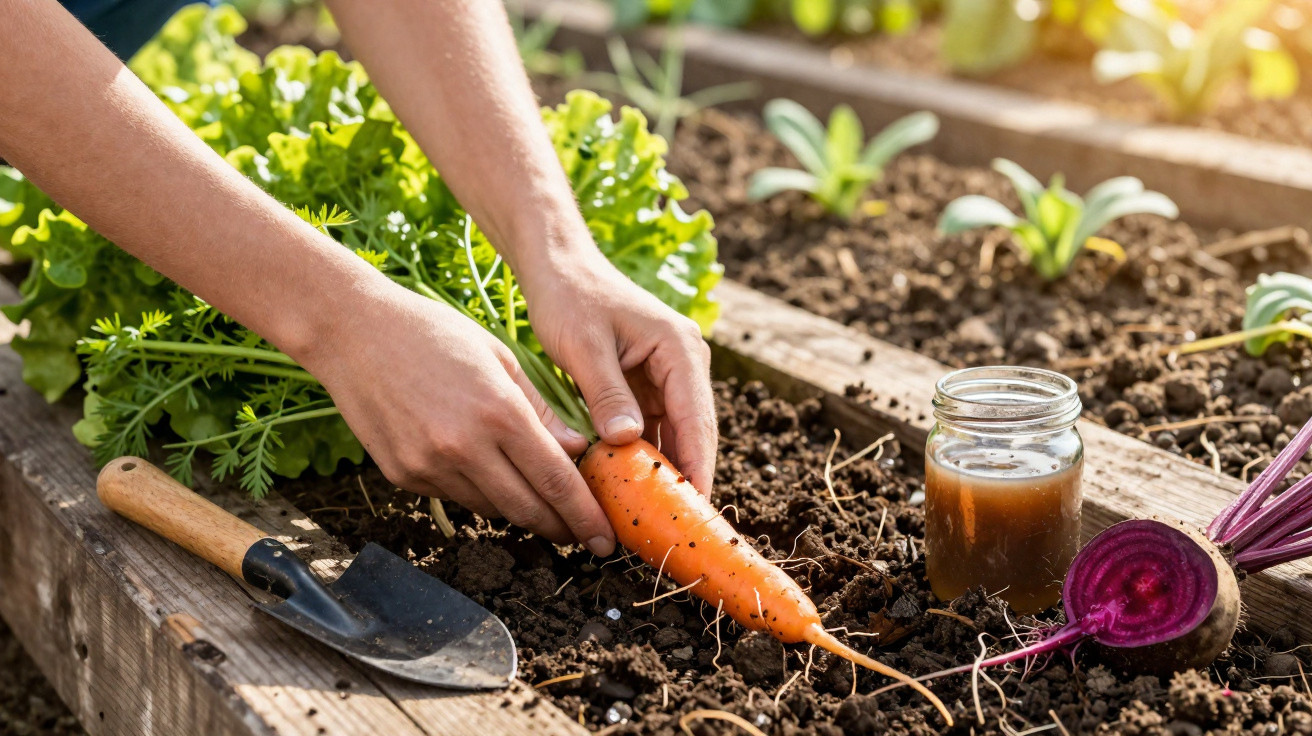
A study now shows how this trend can be reversed.
An international research team has demonstrated that the nutrient content of vegetables can be substantially increased when farmers replace chemical fertilisers with organic nutrients and carefully selected microorganisms. The findings sound almost like a return to the “old-fashioned” vegetable flavour remembered by grandparents - and fundamentally challenge established practices across many farms.
Vegetables today: high yields, fewer nutrients
Vegetable production has changed dramatically over the past 80 to 90 years. High-yielding varieties produce vast quantities, but this comes at a cost: they contain fewer minerals and valuable plant compounds than they once did. The new data analysis indicates losses of 25 to 50 per cent in the original nutrient density of many varieties.
The decline is especially concerning for minerals that are already scarce in many areas. Compared with historical figures, modern vegetable varieties show, in some cases, severe reductions:
- Sodium: down by around 52 per cent
- Iron: down by around 50 per cent
- Copper: down by around 49 per cent
- Magnesium: down by around 10 per cent
The researchers describe this as a gradual problem: people consume enough calories to feel full, yet remain undernourished in terms of micronutrients. This situation contributes to so-called “hidden hunger”, which affects more than two billion people worldwide.
How chemical fertilisers “starve” the soil
The criticism is not aimed at vegetables themselves, but at the way fields are farmed. Mineral fertilisers and intensive cultivation methods have dominated many areas for decades. As a result, soils steadily lose their biological diversity.
The researchers refer to “starved soils”: rich in nutrient salts, but depleted of life.
Soil microorganisms - including bacteria, fungi and single-celled organisms - play a crucial part in supplying plants with nutrients. They break down organic material, unlock nutrients and improve soil structure. Where these microbes are missing, nutrients become less available. Although artificial fertiliser enables plants to grow quickly and tall, they produce lower levels of secondary plant compounds and minerals.
Microorganisms as “bio-fertilisers”
The study from India, published in 2025, addresses this issue. On trial fields, researchers largely replaced chemical fertilisers with organic sources such as farmyard manure and vermicompost. They also introduced specific plant growth-promoting microorganisms into the soil.
These organisms are known in technical terminology as “Plant Growth Promoting Microorganisms”. They primarily include soil bacteria, such as certain rhizobacteria, which work closely with plant roots.
What these microbes actually do
- They fix gaseous nitrogen from the air, making it available to plants.
- They release poorly available minerals in the soil, including phosphorus and trace elements.
- They improve soil structure, allowing it to retain water more effectively.
- They help plants cope better with heat, drought and other stress factors.
According to the researchers, these microbes function like a form of “living fertiliser”: they supply nutrients without the disadvantages of purely chemical fertilisation, while also building long-term soil fertility.
Significantly more minerals in vegetables
For consumers, the most compelling aspect is what ends up on the plate: what does this approach mean for the nutrient content of vegetables? The trials showed a clear advantage over conventional cultivation relying solely on chemical fertilisers.
Zinc, iron and calcium increased by as much as a third or more in vegetables fertilised with organic and microbial methods.
The study reports, among other findings:
- Zinc: plus 48.48 per cent
- Iron: plus 31.70 per cent
- Calcium: plus 23.84 per cent
These minerals are essential for blood formation, the immune system, bone development and many metabolic processes. Higher levels in vegetables could noticeably improve nutritional intake among populations, particularly where supplements are expensive or difficult to access.
More secondary plant compounds, more flavour
Alongside minerals, the researchers paid particular attention to secondary plant compounds. These substances, including flavonoids and phenols, are involved in numerous protective processes in the body and, among other roles, help defend against free radicals.
The new growing system also performed well in this area. Examples from the trial crops include:
- Potatoes: plus 45 per cent flavonoids, plus 49 per cent total phenolic compounds
- Onions: plus 27 per cent flavonoids, plus 31 per cent antioxidant capacity
- Legumes such as peas and black-eyed beans: substantial increases in antioxidants and vitamins
Of particular everyday relevance is that the study assessed more than laboratory measurements. It also examined flavour, aroma and texture - the qualities consumers directly notice. In these organoleptic tests, vegetables produced using organic and microbial methods came out ahead. The measured flavour score rose by up to 27.9 per cent.
More nutrients in the laboratory, more flavour in the mouth: the new growing system scores on both levels.
Why “hidden hunger” is so dangerous
Many people associate hunger mainly with an empty stomach. Yet a silent lack of vitamins and minerals is far more widespread. People whose diets are largely calorie-rich but nutrient-poor may appear full from the outside while suffering deficiencies internally.
This type of undernutrition contributes to tiredness, susceptibility to infections, reduced concentration and, over time, chronic illnesses. If staple foods such as potatoes, beans and onions once again provide higher amounts of iron, zinc or antioxidants, this could make a difference for millions of people without requiring them to fundamentally change their eating habits.
What this means for farming and consumers
For farmers, the study sends a clear message: placing greater emphasis on organic fertilisation and microbial soil life not only builds humus-rich soils, but also produces higher-quality vegetables. Compared with exclusively mineral fertilisation, this approach can combine yield, nutrient content and sensory quality.
For consumers, this has several implications:
- Organic farms using compost, manure and diverse crop rotations could offer a nutrient advantage.
- Local farms that prioritise soil building are of interest not only for climate reasons, but also for an individual’s nutrient intake.
- Extended storage, long transport distances and intensive processing can reduce nutritional advantages again - freshness remains decisive.
How to apply parts of the principle in your own garden
Anyone with only a small vegetable garden or balcony can still put some of the study’s findings into practice:
- Compost instead of complete fertiliser: turn kitchen scraps and garden waste into compost, then work it into beds.
- Vermicompost: small worm composters produce highly nutrient-rich humus for container plants and raised beds.
- Mulching: a thin layer of leaves, straw or grass cuttings protects the soil and feeds microbes.
- No constant wetness and no bare soil: both damage soil life and reduce fertility over the long term.
Commercial products containing soil bacteria or mycorrhizal fungi can provide additional support when establishing living soil. They are no substitute for a compost heap, but can help at the outset, for example in depleted or newly created growing areas.
Risks, limitations and unanswered questions
However promising the findings may be, not every growing area can be fully converted overnight. Building organic matter takes years. During this period, farmers must maintain yields and remain economically viable. In poorer regions, there is also the question of whether sufficient good-quality organic material is available.
Legal requirements also matter, for instance concerning the use of manure near groundwater protection areas. Clear strategies are needed to ensure that greater use of organic fertilisers does not create new environmental problems, such as nutrient leaching.
In addition, microbial products vary greatly in composition and quality. Not every mix suits every soil type or climate. The study makes clear that trial schemes must be carefully planned before recommendations are rolled out on a large scale.
Why it is worth focusing on soil
The new data bring attention to an issue that has long received too little notice: life in the soil. To ensure food security in the future, it will not be enough to consider yields per hectare alone. What will matter is how nutrient-rich harvested foods are and how reliably the farming system functions over the long term.
When people discuss healthy eating today, the conversation quickly turns to superfoods, shakes and supplements. The study is a reminder that even a potato or a handful of peas can contribute a great deal - provided the soil they come from is alive and well nourished.
















Comments
No comments yet. Be the first to comment!
Leave a Comment