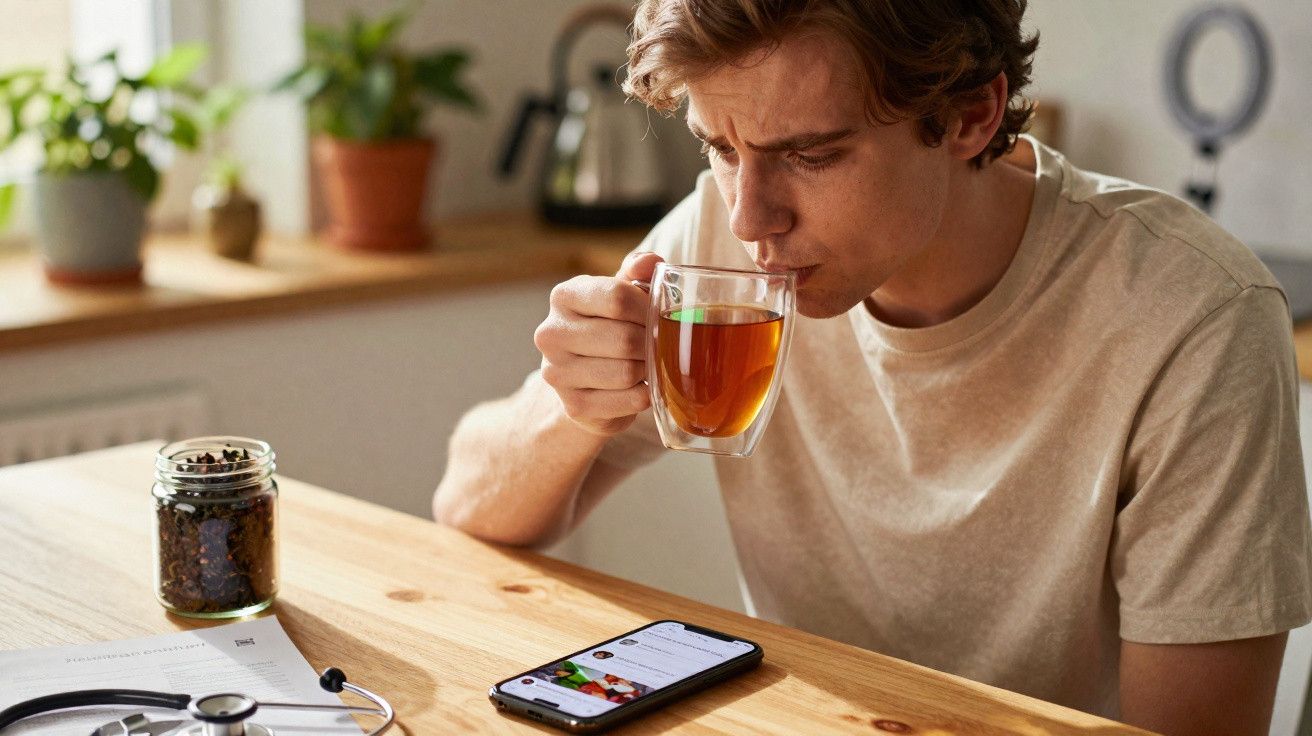
Promoted as a mild wellbeing hack, a fashionable herbal tea now filling social-media feeds could be placing an unnoticed strain on your body.
Throughout TikTok, Instagram and YouTube, this seemingly innocent “natural” brew is marketed as a quick route to detoxing, a flat stomach and urinary comfort. However, using it over the long term may carry more risk than people realise.
The viral tea everyone swears by
On accounts centred on wellbeing, a particular herbal tea regularly features in morning rituals and “self-care night” clips. Influencers portray it as a gentle, plant-derived solution for recurring urinary tract discomfort, bloating and an undefined sense of heaviness.
The tea is brewed from bearberry leaves, which are also called uva ursi or busserole. The plant has been used in traditional herbal medicine for many years, particularly for urinary complaints. Sponsored content often places it alongside candles and bath salts, presenting it as a comforting ritual instead of a product with potent effects.
The pitch is straightforward: it is natural and “just a tea”, meaning it can supposedly be consumed whenever you want. That can mean morning and evening as part of detox programmes that run for weeks, or even months.
Natural does not always mean harmless, especially when active plant compounds are used like everyday drinks.
It is this gap between its soothing image and its real effects that creates the problem.
A powerful plant disguised as a comfort drink
Bearberry leaves contain arbutin, a compound that is converted by the body after absorption into substances with antibacterial properties. This helps explain why the infusion is promoted for urinary discomfort.
When used briefly and with suitable guidance, the plant can have a place. Uva ursi is listed in traditional pharmacopoeias in many countries as support for mild, occasional urinary problems.
The concern is the way social media has recast a long-established remedy as a lifestyle product. Some people drink it every day “just in case” or use it as a preventative cleanse. Others include it in extended detox plans alongside other draining or slimming teas.
Under those circumstances, the active compounds that make the plant useful may also put the body under pressure.
What can go wrong with long-term use
After arbutin is broken down, its resulting substances must be processed and eliminated, chiefly through the liver and kidneys. An occasional cup is unlikely to disturb this process in a healthy person. Consuming the tea for weeks, however, presents a different set of concerns.
Repeated or prolonged use of bearberry tea may overload the very organs people often believe they are “detoxing”.
Adverse effects reported after prolonged or excessive intake include:
- Headaches or an ongoing, indistinct feeling of tiredness
- Nausea and digestive discomfort
- A general feeling of being unwell or irritable
- Digestive disturbance, particularly when combined with other herbal blends
Many people do not link these effects to the tea straight away. Since they regard it as a gentle wellbeing product, they may attribute discomfort to work pressure, stress or poor sleep, then simply refill their cup.
Why “it’s just a tea” is a dangerous myth
The assumption behind this is clear: if something comes in a mug instead of a packet of tablets, there are no limits on its use. That assumption is mistaken.
Medicinal plants may provide active compounds in quantities comparable with mild medicines. Used at an appropriate time and for the appropriate period, they can be helpful. Used continuously, they may irritate organs, interact with treatment or conceal symptoms requiring medical care.
Bearberry is not an isolated example. Several other popular herbal ingredients have their own potential dangers when used improperly:
| Herbal ingredient | Marketed benefit | Potential risk with overuse |
|---|---|---|
| Senna | Flat tummy, “cleanse” | Dependence, dehydration, electrolyte imbalance |
| Green tea extracts | Fat burning, energy | Liver strain at high concentrated doses |
| Bearberry (uva ursi) | Urinary comfort, “natural antibiotic” | Liver and kidney stress, headaches, nausea |
These teas share a similar presentation: attractive packaging, wellbeing-focused slogans and almost no information about side effects or limits on use.
When influencers act like unofficial health advisers
Most creators who promote their preferred teas are not acting with bad intentions. They often repeat brand messaging alongside their personal experience. The difficulty is the influence their recommendations can have.
When a creator with hundreds of thousands of followers casually says they “drink this every day for months”, it can sound like health advice, even if it is framed as a personal habit. Those dealing with recurrent urinary discomfort or bloating may believe they have found an easy, natural solution and avoid seeking professional care.
Turning a symptom into a content opportunity can delay proper diagnosis and leave underlying problems untreated.
Urinary symptoms especially warrant medical advice, because they may indicate infections, stones or other conditions that herbal teas alone will not resolve.
Using herbal teas safely, without giving them up
This is not a reason to throw all herbal blends away. Tea can provide hydration, comfort and a ritual that benefits mental wellbeing. What matters is giving potent medicinal plants the same level of care you would apply to over-the-counter medicines.
In professional herbal practice, bearberry-based teas are generally approached using several precautionary principles:
- Restrict use to short periods, often only a few days
- Do not repeat courses without medical supervision
- Get medical advice when urinary symptoms continue or return
- Take particular care during pregnancy, breastfeeding, or where kidney or liver problems exist
For everyday comfort drinks, herbalists usually suggest gentler options, including chamomile, lime blossom, rooibos, verbena, mint and fruit infusions without strong antibacterial compounds.
Listening to your body’s signals
One useful approach is to view any new wellbeing product, including a herbal one, as a trial with a defined beginning and end. Start with small quantities and monitor how you feel for a few days. If you develop headaches, nausea or poorer sleep, consider whether this supposedly healthy tea may not suit you.
It is also sensible to tell your GP or pharmacist what you drink, rather than only listing products taken as tablets. Herbal products are often left out of consultations, even if they are consumed every day. A brief comment such as “I’ve been drinking this urinary comfort tea twice a day for three weeks” may alter how a healthcare professional understands your symptoms.
Trends, bodies and the lure of shortcuts
The appeal of detox teas, slimming blends and “natural antibiotics” points to something broader: a wish for control within an uncertain health landscape. A pretty plant-printed mug can feel more reassuring than a prescription form.
However, there can be consequences when trends take the place of appropriate care. A teenager recreating a favourite influencer’s detox routine, a student with recurrent cystitis depending only on bearberry tea, or an employee drinking slimming infusions all day may make the same mistake: treating marketing claims as though they were medical guidance.
For anyone drawn to the newest wellbeing tea, one simple approach is useful: regard plants as tools rather than miracles. Find out what the active ingredient is, how long it is intended to be used and which warning signs should prompt you to stop. A herbal infusion may support health, but only if you remain in control rather than allowing your feed to make the decision for you.












Comments
No comments yet. Be the first to comment!
Leave a Comment