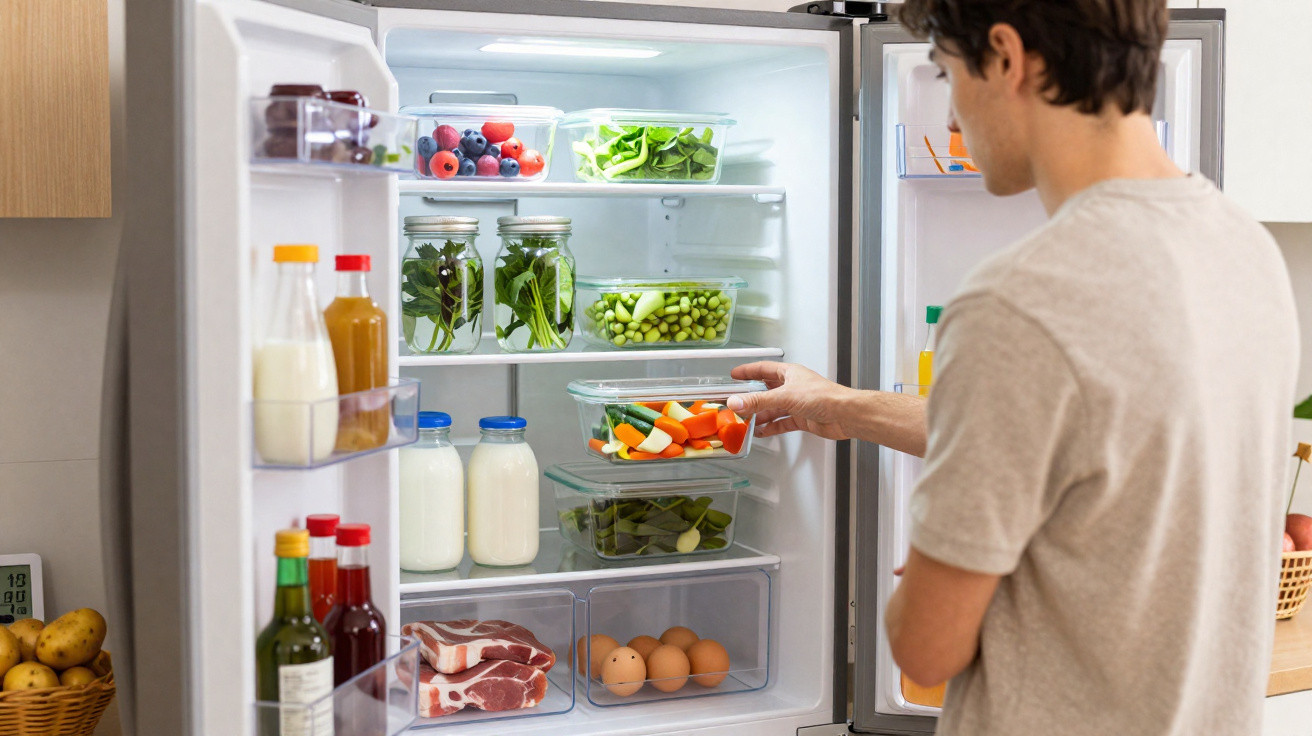
Storing groceries incorrectly undermines product quality and speeds up household food waste. Many people do not realise that certain items require constant refrigeration to keep their nutrients active. Understanding the proper organisation of the kitchen protects the integrity of every food item.
How does correct storage reduce waste?
By arranging the fridge methodically, you ensure that every product receives an even temperature. This precaution prevents leafy greens from rotting too soon and shields dairy products from unwanted contamination. Proper preservation delivers noticeable monthly savings.
Keeping food in airtight glass containers is an excellent way to keep harmful bacteria at bay. Older plastic tubs often have invisible scratches that harbour dangerous bacteria. Using suitable containers increases the durability of all your food.
How can food last twice as long in the fridge?
A strategic arrangement of the shelves keeps food fresh for much longer while also cutting the cost of your bill… Read more
Which foods should never be kept in the door?
The appliance door is exposed to continual temperature fluctuations whenever it is opened during the day. Keeping highly sensitive items in this area hastens deterioration and harms their basic nutritional properties. Thermal stability is essential to retain nutrients.
Eggs and long-life milk are particularly affected by these temperature changes, so they should be kept on the internal shelves. Ideally, the door should be reserved solely for commercial sauces, vinegars and less perishable drinks. Keep dairy products under intensive refrigeration to prevent problems.
Below is a video from the TV Gazeta YouTube channel that explores the points discussed in this topic in more depth:
How should delicate vegetables and fruit be preserved?
Delicate fruit, including strawberries and grapes, should be cleaned and stored in tightly sealed containers. Leaving this fruit loose or in ordinary plastic bags encourages mould because of the excess retained moisture. Protecting these foods in glass containers maintains the freshness of your market produce.
Leafy greens need to be dried thoroughly before they are stored in the bottom section of the fridge. Too much moisture speeds up decomposition, while very cold areas can scorch the leaves. Adopt effective drying methods for excellent results.
Efficient Organisation
Key Care Measures
Preserve your food with these simple practices:
- Avoid keeping eggs in the door to prevent temperature fluctuations;
- Always store dairy products on the upper shelves;
- Use tightly sealed glass containers for cleaned leafy greens.
What are the risks of cross-contamination?
Storing ready-to-eat food in open containers makes it easier for pathogens that harm the human body to multiply. Direct exposure to chilled air dries out the food and drastically reduces the amount of essential minerals. Give priority to sealed containers to ensure a completely safe meal.
Another common mistake is placing metal pans containing leftover cooked food directly on the shelves. This practice may transfer hazardous metal residues to the food and can also damage the fridge's internal operation. Choose quality containers for successful storage.
A few additional precautions make for a much safer kitchen:
- Eat cut lemon within six hours;
- Remove food from aluminium pans;
- Use fabric bags that allow vegetables to breathe.
How should potatoes and onions be managed correctly?
Tubers and onions can be kept outside the fridge when the weather is mild. On hot summer days, refrigerating these products extends their shelf life. Store vegetables in an orderly way to make your routine easier.
If you choose to keep these items in a fruit bowl, never place both foods in the same compartment without suitable dividers. The gas released by onions speeds up the ripening of potatoes and changes the natural flavour of fruit. Make smart storage choices to protect your health.





Comments
No comments yet. Be the first to comment!
Leave a Comment