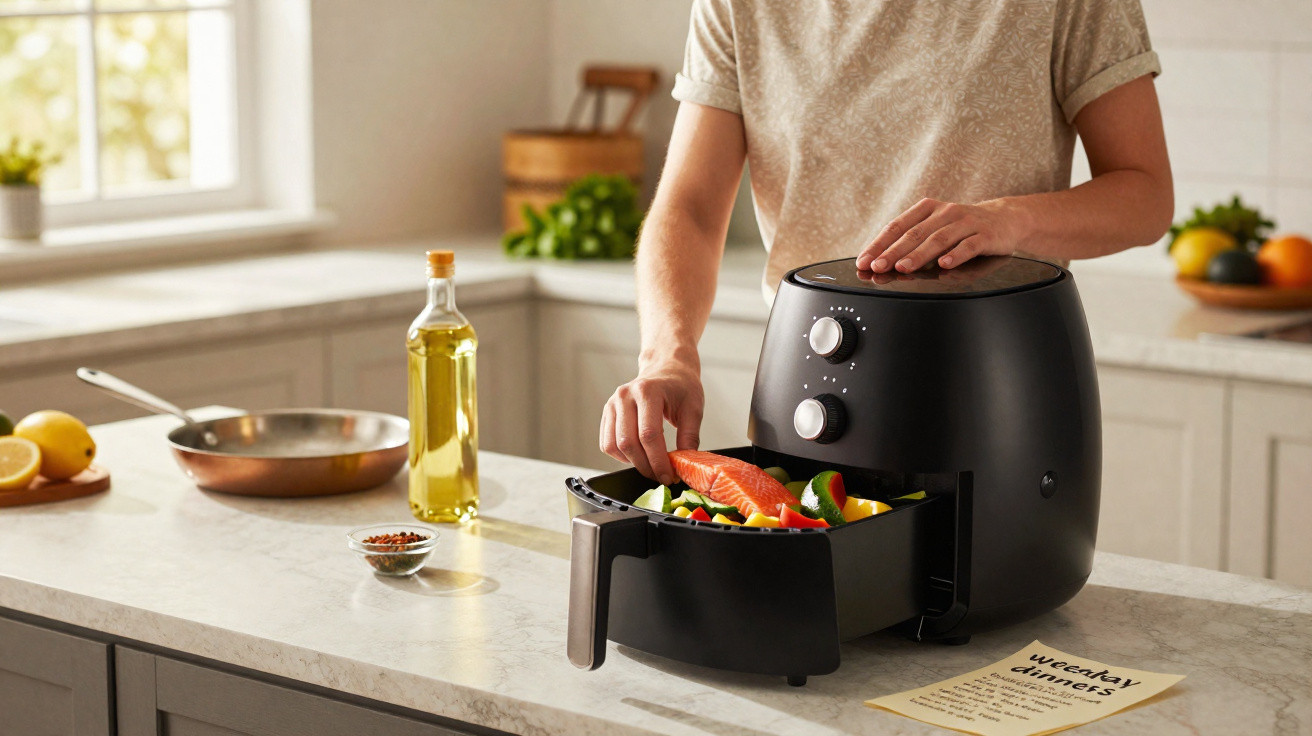
The soundtrack of the kitchen is different now.
There is less fierce sizzling and more of a gentle whirr. On weeknights, rather than battling spitting oil and scorched pans, people are adopting another routine: baskets slide into compact countertop appliances that glow and give a soft beep. Raw vegetables emerge browned and caramelised. Frozen chicken goes in pale and comes out with the crunch of a good takeaway. The oven remains off and the hob is barely dirtied.
Browse Instagram or step into an appliance shop and the change is obvious: the frying pan is being pushed aside. A new appliance has quietly taken on the role of the everyday kitchen hero. Its appeal is compelling - quicker, healthier and simpler. Yet the reality is more layered, and more intriguing.
This compact appliance is not only reshaping the way we cook. It is also altering the way we spend our evenings.
Why the frying pan has suddenly been sidelined
In a compact Manchester flat, the hob is immaculate at 7.30 pm. An air fryer on the worktop hums like a miniature spacecraft as its owner scrolls on their phone, looking up only when the timer sounds. A plate of crisp salmon, roasted broccoli and sweet potatoes sits on the table, and it looks as though it has come from a restaurant oven. The frying pan? It hangs silently on the wall, unused since Sunday brunch.
This is increasingly familiar in homes once centred around the skillet. Initially written off as a temporary craze, the appliance has become part of everyday speech: “Just air fry it.” Searches for “air fryer recipes” exploded globally over the last three years, while supermarkets now mark products as “air-fryer ready” as readily as they once labelled them “microwave safe”. The frying pan has not vanished; it has simply moved from first choice to reserve option.
The driving force behind this change is, in part, brutally straightforward: time. A tray of vegetables that needed 40 minutes in the oven can now be ready in 15. Chicken thighs that formerly crackled amid a haze of oil can cook with a teaspoon of fat and next to no attention. People arrive home exhausted, hungry and half absorbed in work emails. An appliance that takes 20 minutes off dinner preparation and reduces the washing up feels less like a novelty item than a relief. Goodbye frying pan isn’t a slogan, it’s more like a quiet, practical decision made at 6:45 p.m.
How the air fryer makes cooking easier
The central idea is straightforward: picture a “mini fan oven in a box”, rather than a magical fryer. Arrange the food in one layer in the basket, add a light coating of oil if you want a golden crunch, select the temperature and timing, then leave it alone. There is no need to stand over the hob. You do not have to shuffle ingredients around a hot pan while trying not to scorch the garlic. Fast-moving air takes care of that work, circulating around every surface.
For busy cooks at home, that changes the whole rhythm of the evening. Seasoned chickpeas, potato wedges, tofu pieces or salmon fillets can go in with a few button presses, leaving you free to walk away from the kitchen. As the air fryer browns and crisps, you can have a shower, assist with homework or simply take ten minutes to breathe. On evenings when your mind is already fried, the appliance quietly provides what you need most: fewer decisions.
Many people come to realise this accidentally. A London nurse we spoke to purchased an air fryer “just for frozen chips”. She now uses it almost every day. After a 12-hour shift one Wednesday, she roughly combined frozen cauliflower, a drained tin of chickpeas, curry paste and a spoonful of yoghurt in a bowl before tipping the mixture into the basket. Twenty minutes later, she had a smoky meal with crisp edges and a surprisingly comforting quality. There was no frying pan, no spitting oil and no standing over the food. “Honestly,” she said, “it’s the only reason I still cook on some nights.”
The figures support this emerging routine. Retail associations in Europe and the US report double-digit year-on-year growth in air fryer sales, while traditional cookware is largely flat. Social-media feeds serve up endless clips of “5-ingredient air fryer dinners” attracting millions of views. This is not merely about newness or kitchen gadgets. It also reflects energy costs and everyday reality. An air fryer generally heats up more quickly and prepares smaller amounts more efficiently than a large oven. For someone living in a one-bedroom flat, this means hot food without warming half the kitchen - or half the home.
There is a health aspect too, although marketing can occasionally overstate it. It remains possible to overdo the salt and cheese, but plenty of home cooks naturally use less oil because they no longer need a pan half-filled with it. Fresh vegetables can go in rather than being submerged in batter. Chicken wings become crisp through heat and circulating air, not a deep pool of fat. It is not a detox miracle; it is simply a subtle adjustment to daily habits that, repeated week after week, reshapes the idea of a “normal” dinner.
Small habits that make an air fryer a weeknight lifesaver
The appliance alone guarantees nothing. Its usefulness comes down to a handful of simple routines. Build meals in “layers”: a base, a protein and flavour. Begin with something that crisps well, such as sliced potatoes, cauliflower florets, diced courgette or drained beans. Add a protein of your choice: chickpeas, tofu, halloumi, chicken thighs or salmon. First toss it all with oil and seasoning in a bowl, rather than adding them directly to the basket. Then distribute the food in a single layer and set the timer.
That one-layer approach separates “why is this soggy?” from “oh wow, that’s crunchy”. When cooking for several people, prepare food in batches and keep the first batch warm in a low oven, or accept that dinner may arrive in stages. Let’s be honest: nobody genuinely does that every day. On lazy evenings, people simply heap everything in, shake the basket halfway through and accept a result that is a little less than perfect. The aim is convenience, not performance cooking.
New owners often make the same mistakes. Some leave out oil entirely, then wonder why everything tastes dry; others add far too much, then question why they are not getting that mythical “healthier” outcome. Another common error is using the appliance like a microwave by packing leftovers into a bowl or foil parcel. Air has to circulate. Give the food room. Let it breathe.
There is an emotional benefit that instruction manuals rarely mention. On evenings when you have nothing left to give, an air fryer gives you permission to make “just enough” food without feeling guilty. It does not need to be a flawless meal or a multi-course production - merely something warm, crisp and satisfying. On a difficult Tuesday, frozen gnocchi with a little olive oil, garlic powder and grated cheese, cooked until golden, can feel like a small salvation. On Sunday, there is time to take things slowly and experiment with marinated aubergine slices, spice-rubbed cauliflower steaks or leftover bread transformed into crisp homemade croutons.
One food writer we interviewed put it in a memorable way:
“I thought I was buying a gadget. What I actually bought was twenty extra quiet minutes in my evening.”
That added mental breathing room explains why so many people continue using the appliance long after its novelty has worn off. It fits a range of routines: rapid dinners for one, snacks for children and protein plates after the gym. And it is particularly effective alongside partly prepared ingredients from the freezer or fridge drawer.
- On hectic evenings, use it for only one element at a time: the vegetables or the protein.
- Prepare spice blends in advance so choosing flavours takes just one scoop.
- Keep a “panic drawer” stocked with frozen vegetables and proteins that can be cooked from frozen.
- When using marinades, line the basket with perforated paper to make cleaning easier.
- Save the frying pan for occasions when you truly want that intense, smoky sear.
The quiet revolution on kitchen worktops
Goodbye frying pan does not mean goodbye flavour. Instead, it signals a new kitchen hierarchy. The tools we once reached for automatically now compete with a box that can make dinner while you get on with something else. For many homes, the air fryer has taken over the microwave’s former place: the default solution to “How can I get hot food, fast, without thinking too hard?” This time, however, the results genuinely feel like cooking.
Behind that quiet hum lies a broader cultural change. When people describe their appliance, they rarely focus solely on texture or cooking times. They speak about getting home late and still being able to feed themselves something “proper”. They mention teenagers learning to cook through small, safe steps, and partners once anxious around hot oil taking responsibility for dinner once or twice each week. In very practical terms, the air fryer reduces the barrier to preparing real food, even when that food is only spiced carrots and frozen fish.
More broadly, there is a gentle pushback against the belief that home cooking only counts when it is elaborate. This appliance is made for shortcuts, semi-homemade ideas and guilt-free combinations of fresh and frozen ingredients. We’ve all had that moment when we stare at a bag of wilting spinach and feel we’ve already failed. With a little oil, salt and heat, that same spinach can be rescued by tossing it with chickpeas or leftover potatoes into something you will actually eat. The frying pan will always be valuable for omelettes, stir-fries and the perfect steak. What has changed is that, in daily life, many people are quietly choosing less drama and less oil - and finding that it suits them perfectly well.
| Key point | Detail | Benefit for the reader |
|---|---|---|
| Less time at the hob | Fast cooking, short preheating and almost no supervision | Dinners are ready sooner and evenings feel calmer |
| Lighter cooking | Less oil, more vegetables and controlled portions | Eat “as usual” while making healthier everyday choices |
| A simpler evening routine | Less washing up, less smoke and more mental space | Reduced mental load and more room for yourself and others |







Comments
No comments yet. Be the first to comment!
Leave a Comment