Automatically reaching for a warm cup after a meal?
Many people do not realise that another small aid can calm a bloated stomach far more effectively.
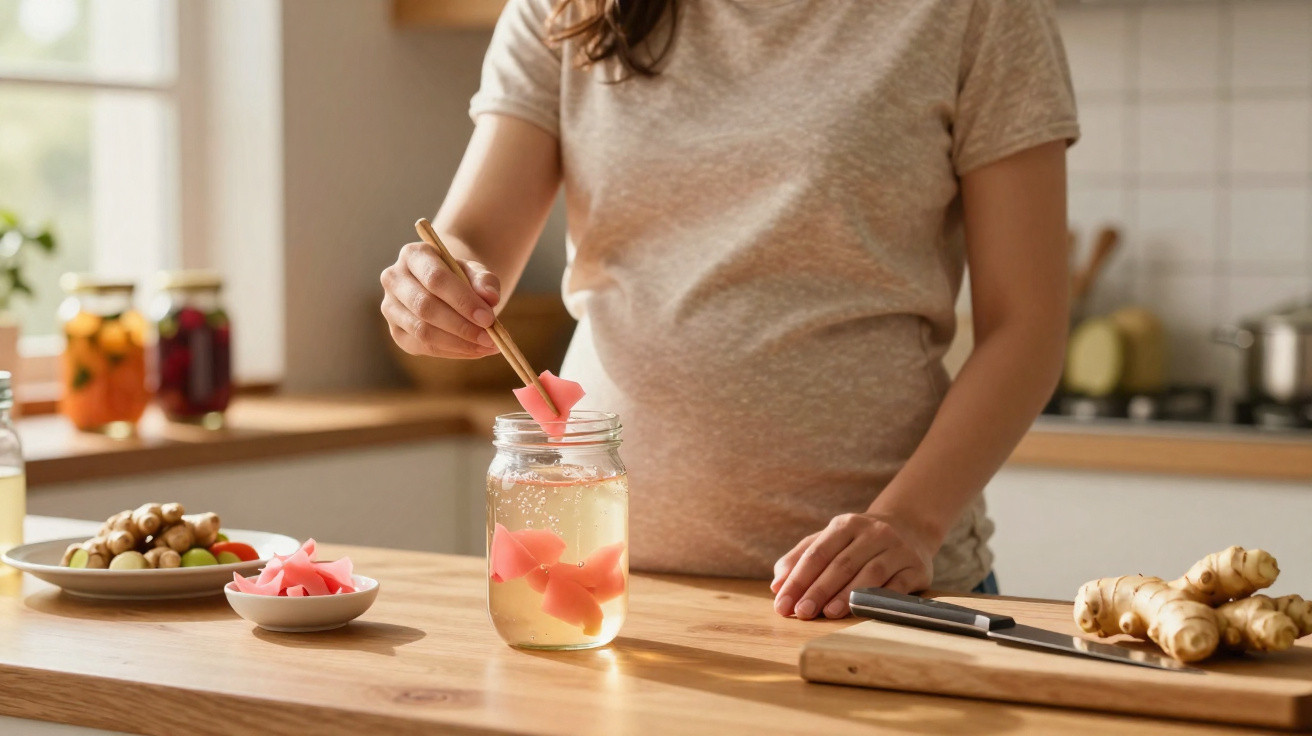
When you are sitting on the sofa in the evening feeling full and heavy, fennel, anise and caraway tea or peppermint is often the first thing that comes to mind. Your stomach feels tight and your waistband is uncomfortable, so you quickly begin a “digestive tea” ritual – more from habit than conviction. Yet an increasing number of nutrition professionals now favour another option: a few thin slices of lacto-fermented ginger. Crisp, gently fizzy and lemony-hot, they are noticeably more effective than a traditional pot of tea for many people.
Why ginger pickles are overtaking digestive tea
Digestive tea has a long-standing place in many homes. It provides warmth, feels soothing and, for plenty of people, simply belongs to a cosy evening. However, it often does less for bloating and trapped wind than people expect. Ginger pickles work elsewhere: directly within the digestive tract.
Lacto-fermented ginger brings together heat, acidity and live microorganisms – a trio that gently gets sluggish stomachs moving.
Ginger stimulates the production of digestive juices, supports gastric emptying and may therefore ease the sensation of pressure after a rich meal. Fermentation also produces lactic acid bacteria, which accompany the gut much like a protective team. The result is a twofold effect: greater activity in the stomach and more balance in the intestines.
What fresh ginger does in the body
For centuries, ginger root has been valued in many cuisines as both a spice and a home remedy. It has now become a regular feature of bowls, curries and soups across central Europe, and is increasingly served deliberately as a digestive aid.
A “friend to your stomach” with several effects
- stimulates gastric juices and bile flow
- supports the movement of food through the digestive system
- may relieve nausea and feelings of fullness
- creates an internal warming sensation through its heat
The key compounds are gingerols and shogaols: pungent substances that trigger nerve stimuli in the mouth and stomach. In response, the body increases blood flow and digestive activity. Anyone who feels uncomfortably full after cheese fondue, raclette or a Sunday roast will often notice this within a few minutes.
Fermentation: a turbocharger for the gut
When ginger is lacto-fermented, more than its flavour changes. Lactic acid bacteria settle on its surface and find ideal conditions in salt water. These microorganisms break down sugars, produce lactic acid and make the brine keep for longer – while also creating probiotic cultures.
A small serving of pickled ginger provides not only flavour, but also active bacterial strains that support the gut flora.
Many people report that bloating, cramps and irregular bowel movements noticeably ease after a few days of regular consumption. The change is not dramatic overnight; instead, it is a subtle yet steady tailwind for digestion.
Making ginger pickles easily in your own kitchen
Lacto-fermented ginger does not require a specialist laboratory or expensive equipment. A clean screw-top or clip-top jar is enough. The essential factors are the right water-to-salt ratio and a little patience.
Basic recipe for one jar of ginger pickles
- 150 g fresh ginger, preferably organic
- 300 ml filtered water
- 6 g unrefined salt, around 2% of the water
- 1 tbsp light brown sugar, optional, to soften the acidity
- zest of one untreated lemon, optional, for freshness
If you wish, add a few peppercorns or coriander seeds. They provide extra flavour without changing the effect.
Step-by-step guide to lacto-fermentation
- Peel the ginger and slice it very thinly using a sharp knife or mandoline.
- Dissolve the salt, and the sugar if using it, in the water until you have a clear brine.
- Pack the ginger slices tightly into the jar, add the lemon zest and cover with the brine.
- Leave around two centimetres of space at the top so that any gases produced have room to expand.
- Close the jar, but do not tighten it fully, otherwise pressure can build up.
- Leave it at room temperature for 5 to 10 days, away from direct sunlight. Gentle bubbles and a pleasantly sour smell indicate that fermentation is under way.
- Once you like the flavour and crunch, move the jar to the fridge and use it within around four weeks.
Careful cleanliness when preparing the jar, together with fresh ingredients, reduces the risk of the fermentation spoiling. Mould, a pungent smell or a slimy texture are warning signs – in that case, it is best to discard it and start again.
How to include pickled ginger in everyday meals
These pickles are not merely an “emergency remedy” for bloating; they can also become a regular kitchen staple. A small quantity can have a big effect, both for flavour and for your stomach.
When and how much?
Most people do well with one or two thin slices after eating – often, no more is needed.
Those who are sensitive should begin with half a slice and increase gradually. The best time is immediately after a meal or as soon as the feeling of fullness begins. The slices can be eaten plain or briefly drained on kitchen paper.
Popular everyday uses include:
- as the finish to a heavy meal, instead of herbal tea or a digestif
- finely chopped over a rice bowl or noodle dish
- as a topping for colourful bowls and salads
- with roasted vegetables or grilled fish for a fresh kick
Creative variations for the more adventurous
Anyone who enjoys the basic flavour can experiment with colours and aromas. A few ideas:
- Ferment thin slices of beetroot or radish alongside the ginger – the jar turns a vibrant pink and develops a lightly sweet flavour.
- Use lime zest instead of lemon zest for a more exotic note.
- Add a chilli to the brine for those who enjoy extra heat.
Over time, this can create a small collection of different jars in the fridge, making snacks, packed lunches and evening meals more interesting.
Where the limits are – and who should take care
Helpful though ginger can be, it is not a miracle cure without side effects. Anyone with a sensitive stomach, stomach ulcers or certain medications should seek medical advice first. Its heat can irritate mucous membranes, and larger quantities of ginger may affect blood clotting.
| Suitable for | Better to be cautious |
|---|---|
| People with occasional bloating | People with stomach or intestinal ulcers |
| Fans of fermented foods | People with severely weakened immune systems |
| Curious home cooks | People taking blood-thinning medication |
It is important to start slowly: first see how your body responds rather than eating half a jar straight away. Eating too much at once is more likely to cause heartburn than wellbeing.
More than ginger: fermented foods as a quiet game changer
Once people begin making ginger pickles, they often soon move on to other vegetables. White cabbage, carrots, beetroot and garlic can all be lacto-fermented in a similar way. Gradually, this creates a small repertoire of gut-friendly foods that enrich the menu.
Fermented vegetables offer an interesting alternative for people who tolerate little yoghurt or kefir but want to consume live microorganisms. Even small daily servings can be enough to encourage greater diversity in the gut over the long term.
Anyone who feels unsure can begin with very short fermentation periods: the vegetables remain crisp, the acidity stays mild and the body can slowly become accustomed to this new food. Combined with fibre-rich foods such as oats, pulses and vegetables, this creates an environment in which gut microbes can truly thrive.
Ultimately, the idea is simple, almost ordinary: rather than unenthusiastically sipping lukewarm tea after a meal, you put a small, crunchy bite in your mouth – lively, aromatic and immediately noticeable in your stomach. For many people, this small daily ritual is enough to make everyday digestion noticeably easier.







Comments
No comments yet. Be the first to comment!
Leave a Comment