The sound comes first.
It is that gentle, recognisable hum from the kitchen, continuing long after the dishwasher has finished, the household has gone to bed and the rooms are quiet.
The fridge lamp shines over a nearly bare shelf, the oven clock is flashing 00:00 once more, and the extractor hood remains there with its fan running, three hours after dinner.
Bills are edging upwards, electricity prices are constantly mentioned in the news, yet we pass those glowing standby lights as though they are simply unavoidable in modern life.
Oddly, the greatest waste is often not caused by the gadgets you would immediately suspect.
The silent energy leak hiding in plain sight
Step into almost any Australian kitchen after dark and the same understated scene appears.
The dishwasher is switched off, but its small red indicator remains lit. The microwave clock glows green. The coffee machine stays warm, ready for the first coffee of tomorrow.
None of these appliances is “on” in the usual sense.
Even so, each one is using electricity minute after minute, all day and night.
This continual, low-level consumption is known as standby power.
Multiplied across tens of millions of appliances, it quietly becomes a substantial cost.
Energy analysts sometimes refer to it as “vampire power”, and with good reason.
The Australian Energy Regulator estimates that standby loads can account for up to 10% of a household’s electricity consumption, with kitchens among the main contributors.
Consider a typical family kitchen: a fridge, freezer, microwave, oven, induction hob, dishwasher, air fryer, toaster, kettle, coffee machine, and perhaps one or two worktop mixers.
Almost every one remains plugged in even when it is not doing anything useful.
An energy consultant I spoke to in Sydney said an average home may spend $150 to $300 a year on standby power alone, much of it from the kitchen.
Over ten years, that is the cost of a long weekend away disappearing for no reason.
What goes on in the background is remarkably straightforward.
Any appliance with a light, clock, timer, Wi-Fi connection or warm “ready” setting draws a basic amount of energy.
A few watts from one appliance and a few from another may not seem significant at the time.
However, these devices keep going while you sleep, operating for 8,760 hours each year.
We often worry about the length of time the oven is in use, while overlooking the microwave using power all night merely to display the time.
The gradual drip causes the harm, rather than the sudden splash.
Small kitchen tweaks that can save big money
The answer is not to sit in darkness or disconnect the fridge every evening.
Instead, it means focusing on the biggest offenders through a handful of straightforward habits and inexpensive equipment.
Begin with appliances that do not need to be available 24/7.
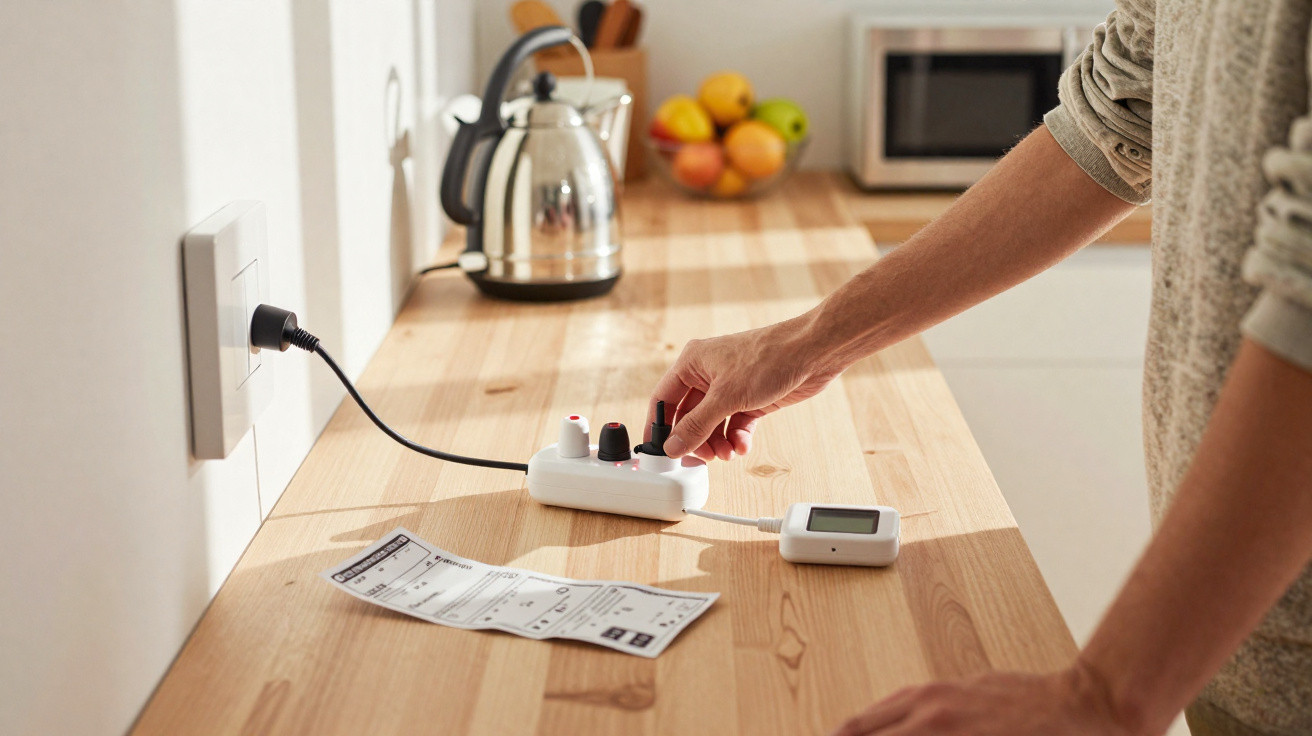
Coffee machines, toasters, kettles, air fryers, sandwich presses and worktop mixers can all be connected to a power strip with one switch.
Turn that switch off before going to bed or leaving for work.
Their standby use will fall to zero without altering how you cook, eat or get your caffeine fix.
It is the simplest sort of saving: after a week, you barely notice you are doing it.
We have all experienced that moment of opening a bill, seeing the new figure and feeling a slight knot in the stomach.
Then everyday life resumes, the children need feeding, and the intention to “get on top of the power bill” is postponed until next month.
That is why small routines that happen automatically are more effective than dramatic, one-off changes.
An inexpensive timer plug for the dishwasher and microwave can switch off their standby power overnight, then restore it before breakfast.
Honestly, hardly anyone unplugs appliances every day.
Pressing one switch on a power strip, though, is something even the most exhausted parent can do on the way to bed.
Energy auditor Melissa Grant, who’s spent 12 years crawling through Australian homes with a power meter, put it bluntly:
“People obsess over turning off lights, then leave a $300 espresso machine simmering on standby all night. In one Melbourne kitchen I tested, the ‘off’ appliances were costing nearly $200 a year. They changed nothing about how they cooked - just how they left things - and the next bill dropped enough to notice.”
- Move the small stuff onto switches
Put worktop gadgets together on one power strip and switch it off when the kitchen is closed for the night. - Use timer plugs for “always on” gear
Schedule dishwashers, microwaves or water filters to lose power while the household sleeps. - Look for concealed standby drains
The mindset shift that keeps saving you money
When you start viewing kitchen standby power as a gradual, stealthy leak rather than an unavoidable expense, the way you use your home changes.
That low hum from the extractor hood after dinner stops sounding like harmless background noise and starts to resemble coins falling from your wallet.
You begin spotting the oven light left on, or an air fryer still glowing hours after lunch.
It is not about guilt; it is simply about becoming more curious about where your money is going.
The emotional change is slight but important: instead of feeling entirely trapped by rising bills, you feel that you have regained a little control.
In a year when groceries, rent and mortgages all feel more expensive, that matters more than we tend to acknowledge.
| Key point | Detail | Value for the reader |
|---|---|---|
| Kitchen standby adds up quietly | Microwaves, coffee machines, dishwashers and other “off but on” devices can burn through $150–$300 a year in power | Helps explain why bills feel high even if usage “hasn’t changed much” |
| Simple tools, not drastic cuts | Power strips with switches and inexpensive timer plugs reduce waste without changing how you cook or eat | Gives practical, low-effort ways to cut kitchen energy costs |
| Habit beats effort | One nightly “kitchen off” routine is easier to maintain than constant unplugging | Makes savings realistic for busy households with children and long workdays |













Comments
No comments yet. Be the first to comment!
Leave a Comment