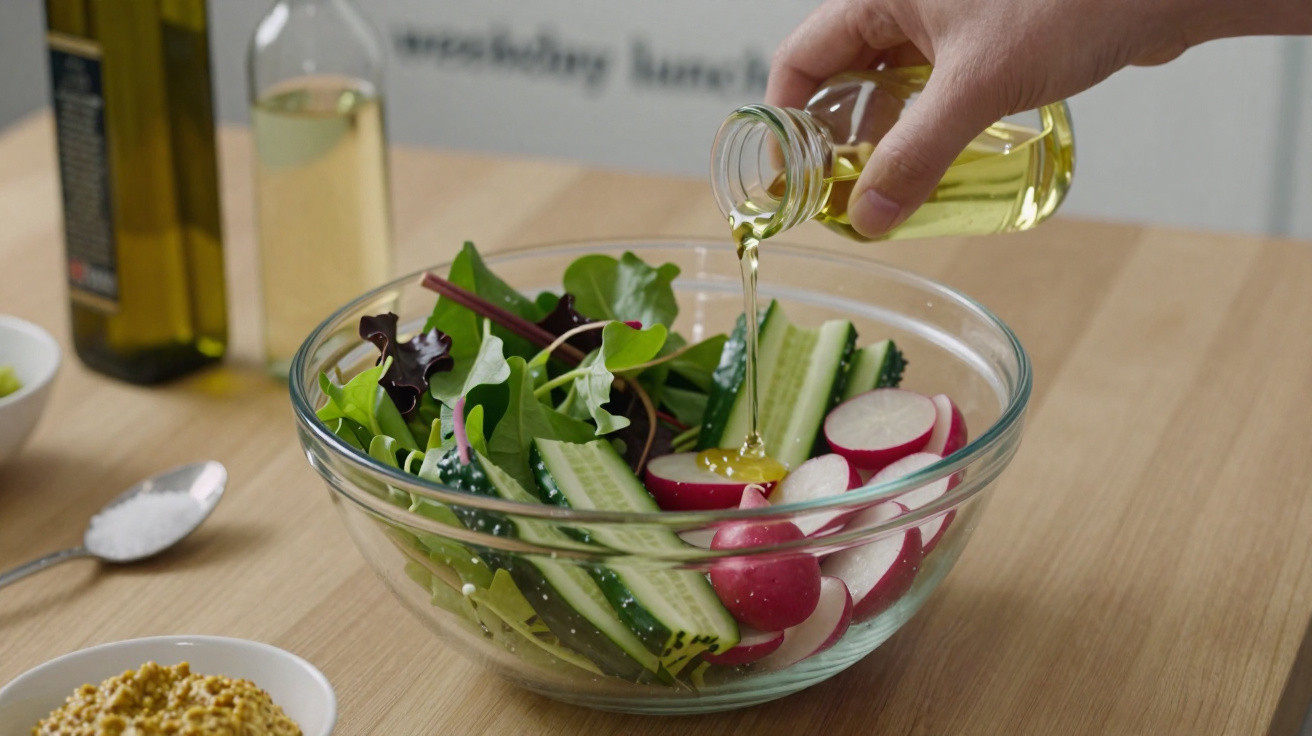
A salad can be spoilt in seconds by a dressing that pools in the bottom of the bowl, leaves grains of salt on the leaves or tastes far too sharp. The simple fix is to change the order in which you mix it: dissolve salt in vinegar and a little water before adding the oil.
The point is not that lemon juice has no place in a salad. It does. But vinegar, water and oil make a dependable everyday vinaigrette, and starting with the water-based ingredients helps the seasoning spread more evenly over the leaves.
Why the mixing order matters
Oil and vinegar do not naturally remain combined. Whisk or shake them and they will form a temporary emulsion, then gradually separate again. That is normal for a basic vinaigrette and does not mean it has gone wrong.
Salt is the more important consideration. It dissolves in water-based liquids, including vinegar, water and lemon juice, but not in oil. If oil coats the salt first, some grains may stay intact. The result can be an overly salty bite followed by one that tastes underseasoned.
A useful order is:
- vinegar;
- salt, stirred until dissolved;
- a small amount of water;
- oil added last.
The aim is not a complicated restaurant sauce. It is a dressing that seasons evenly and lightly coats every leaf.
A practical oil, vinegar and water ratio
A classic vinaigrette often uses three parts oil to one part vinegar. Adding a little water softens the acidity without making the dressing bland, provided you use only a modest amount.
For a larger jar, use:
- 150ml olive oil;
- 50ml vinegar;
- 15ml water;
- 3g fine salt, then adjust to taste.
This makes enough for several salads. You may prefer less salt if the salad includes feta, anchovies, olives, bacon or other salty ingredients.
For a salad serving two, try:
- 3 tablespoons olive oil;
- 1 tablespoon vinegar;
- 1 teaspoon water;
- a small pinch of fine salt.
Taste the dressing on a leaf rather than only from a spoon. Lettuce, cucumber and other watery ingredients can mute the flavour once everything is tossed together.
Choose the right vinegar for the ingredients
Lemon juice remains an excellent option for many salads, particularly those with herbs, fish, avocado or Mediterranean flavours. This method simply works especially well with vinegar, which gives a consistent acidic base while the water takes off the harshest edge.
Different vinegars will change the finished salad noticeably:
- White wine vinegar: clean and versatile for everyday green salads.
- Cider vinegar: gently fruity with cabbage, apples, walnuts and cheddar.
- Red wine vinegar: fuller in flavour; suitable for tomatoes, beans and roasted vegetables.
- Sherry vinegar: rounded and nutty with peppers, toasted nuts and robust leaves.
- Balsamic vinegar: sweeter and darker; use sparingly with pale, delicate leaves.
- Rice vinegar: mild enough for cucumber, sesame and noodle salads.
If the vinegar tastes particularly forceful, add another teaspoon of water before adding more oil. That keeps the dressing light while reducing the sharpness.
How to make the vinaigrette
A small clean jar with a secure lid is ideal, though a bowl and a small whisk work perfectly well. Make only as much as you are likely to use within a few days.
1. Dissolve the salt first
Add the vinegar, water and fine salt to the jar or bowl. Stir for around 20 to 30 seconds, until the salt no longer looks grainy.
Fine salt is more reliable here than large flakes, which can take longer to dissolve and may leave unevenly seasoned spots.
2. Add flavourings if wanted
Mustard and honey are useful additions, but use them carefully. Mustard helps the dressing stay emulsified for longer, while honey rounds out a very sharp vinegar.
For a small bowl of salad, start with no more than half a teaspoon of Dijon or wholegrain mustard, or half a teaspoon of runny honey. You can also try:
- freshly ground black pepper;
- chopped chives, parsley or dill;
- a pinch of dried oregano;
- finely chopped shallot;
- a little finely grated garlic, used straight away.
3. Whisk or shake in the oil
Pour in the oil gradually while whisking, or put the lid on the jar and shake vigorously for about 10 seconds. The dressing should become cloudy and slightly thicker.
It will eventually separate, especially if there is no mustard. Shake it again just before using.
4. Dress the salad at the last minute
Wash salad leaves thoroughly and dry them properly in a salad spinner or clean tea towel. Wet leaves dilute the dressing and encourage it to slide to the bottom of the bowl.
Add less dressing than you think you need, toss thoroughly with clean hands or salad servers, then taste. It is easy to add more; an overdressed salad is much harder to rescue.
What the water adds
Water may seem unnecessary in a salad dressing, especially when leaves can carry moisture. Used in a measured amount, though, it has a clear purpose.
It helps dissolve the salt, moderates the vinegar and gives the oil a lighter texture when the dressing is whisked. With mustard, it can also help create a more stable emulsion.
The difference is subtle. Rather than a mouthful that tastes first of oil and then of vinegar, the flavour is more evenly distributed across the salad.
A good dressing should lift the ingredients rather than conceal them under a heavy layer of oil.
Match the dressing to the bowl
Once you have the base method, small adjustments can suit almost any salad.
For tomato and mozzarella, use white wine vinegar or a mild balsamic. Go easy on the water and add torn basil after dressing.
For roast squash, feta and lentils, cider or sherry vinegar works well with mustard and a small amount of honey.
For cucumber, radish and herbs, choose rice vinegar or white wine vinegar, with dill and black pepper.
For bitter leaves such as chicory or radicchio, a touch of honey or mustard can temper the bitterness without making the salad sweet.
For potato salad, use a slightly sharper dressing and toss it through the potatoes while they are warm, but not piping hot. Add delicate herbs once the potatoes have cooled a little.
Common mistakes that make dressing disappointing
Even a good ratio cannot compensate for a few common errors:
- Adding salt after the oil: it may remain gritty instead of seasoning evenly.
- Using wet leaves: excess water thins the dressing and stops it clinging.
- Pouring in too much at once: the ingredients should glisten, not sit in a puddle.
- Not tasting the vinegar: acidity differs greatly from one bottle to another.
- Overdoing honey: too much can make a dressing cloying.
- Leaving a dressed salad standing: tender leaves wilt quickly, especially in a warm centrally heated kitchen.
- Using a strongly peppery oil for everything: mild lettuce and cucumber may suit a lighter olive oil better.
Storage and kitchen safety
Keep a plain oil, vinegar, water and salt dressing in a clean, sealed jar in the fridge and use it within three days. If the oil turns cloudy when chilled, leave the jar at room temperature for a short time, then shake well before serving.
If you add fresh garlic, chopped shallot or fresh herbs, make only what you need and use it immediately. Do not keep garlic-in-oil dressings for later. Discard any dressing that smells unusual, looks mouldy or has been left at room temperature for hours.
Keep raw meat and ready-to-eat salad ingredients separate, including chopping boards, knives and hands. Wash leaves and herbs carefully, particularly loose salad leaves that can trap soil.
Make the order a habit
The most useful part of this method is not an exact measurement. It is the sequence: dissolve the salt in vinegar and water, then add the oil.
Keep a small jar to hand, choose a vinegar that suits what is in the bowl and dress the salad sparingly just before serving. Lemon can still be the right choice on another day, but this small splash of water is a straightforward way to make a familiar vinaigrette taste more balanced.











Comments
No comments yet. Be the first to comment!
Leave a Comment