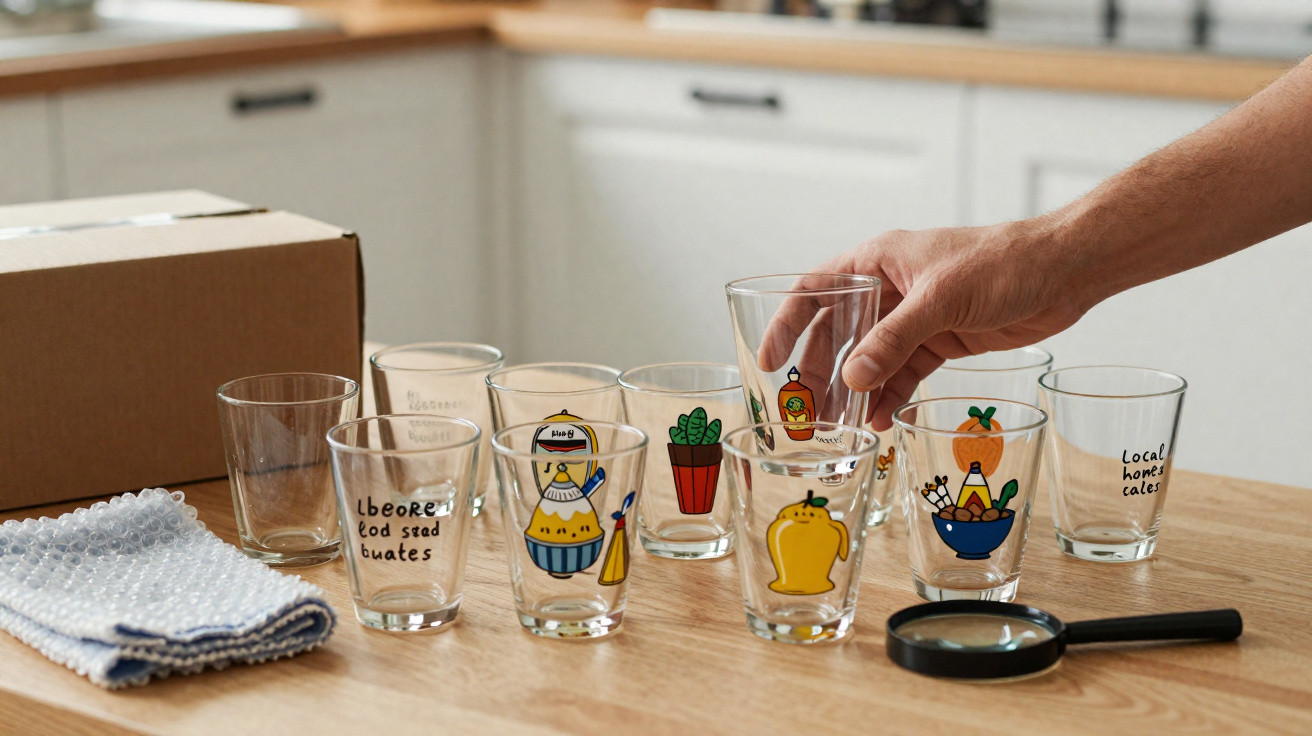
A cupboard clear-out can make almost any old glass seem worth investigating. Small mustard glasses decorated with cartoons, coloured borders or retro illustrations are often kept for years as children’s tumblers, pencil pots or spare drinking glasses. Some are listed online at eye-catching prices, but an ambitious advert does not mean anyone has paid that amount.
The useful rule is simple: a few vintage mustard glasses can interest collectors, especially as a complete matching set, but a single ordinary glass is unlikely to be a windfall. Identify the design, check genuine sold prices and assess its condition before deciding whether it is worth listing.
Why mustard glasses can be collectable
In some European countries, mustard and other foods were once sold in reusable drinking glasses rather than conventional jars. Once washed, the glass became part of the household cupboard. Designs included frosted patterns, animals, children’s illustrations, commemorative themes and licensed characters.
That everyday use is part of the appeal now. A particular illustration may remind someone of family meals or holidays, while a complete run of designs can appeal to collectors trying to finish a set.
Interest is usually strongest where a glass has several of these features:
- a clearly identifiable older series or design;
- a less commonly seen illustration;
- a complete or nearly complete set;
- bright, intact printing and no chips or cracks;
- original packaging, labels or reliable information about its age.
In the UK, these glasses can turn up at car-boot sales, charity shops, antiques centres and online marketplaces. Imported examples may attract interest here, particularly where the design is recognisable to collectors.
The potential value is in the exact design, condition and completeness - not simply in the fact that the glass once held mustard.
Asking prices are not proof of value
This is the most important point when researching household collectables. A listing for £20 or £30 shows what a seller hopes to receive; it does not show what a buyer has actually paid.
Search for the closest possible match and use a platform’s sold or completed listings filter where available. One unusually high sale is not enough to set a reliable price. Look for several comparable results and check:
- the exact picture or character on the glass;
- whether the sale was for one glass or a group;
- the condition of the rim, base and printed decoration;
- whether postage was included in the price;
- where the item sold, as demand may differ between the UK and mainland Europe.
If nothing appears under the obvious description, try alternatives such as “vintage mustard glass”, “mustard tumbler”, “promotional drinking glass”, the character name, or a detailed description of the image. Searching in another language can be useful only if you are confident about the series; overseas postage, import arrangements and selling fees can make foreign prices a poor guide to what a UK buyer will pay.
A listing that has sat online for months, repeated price reductions or many similar glasses available at once are signs that the advertised figure may be optimistic.
Identify the glasses before cleaning or listing them
A little research can prevent you from underpricing a desirable set - or describing an ordinary glass as rare. Inspect each one in good daylight before doing anything more than a gentle wash.
1. Photograph the details
Take clear photos of:
- the front and back of the illustration;
- the base, including any mould marks or numbers;
- the rim and sides at an angle, showing wear honestly;
- every glass together if you have a set;
- any original box, leaflet or label.
Do not identify a series from one online image alone. Similar collections have sometimes been reissued with slightly different shapes, colours or illustrations.
2. Sort them into possible sets
Lay the glasses out on a table and group matching shapes, colours and themes. Check whether the pictures make up a sequence of animals, stories, sports, places or characters.
A mixed group can still be useful, but collectors often prefer a coherent run. If you have several designs from one series, do not split them before checking whether they form a complete set.
3. Check condition safely
Look carefully for chips, cracks, cloudy areas, scratches and faded print. Hold the glass against a window or lamp to help reveal fine damage.
Avoid running an unprotected finger around a suspect chipped rim: tiny sharp chips can cut. Instead, use a soft cloth while handling the glass and photograph any damage clearly. Old adhesive marks, dishwasher dulling and worn decoration should also be mentioned in a listing.
“Light surface wear consistent with age” is more useful than claiming “excellent condition” where marks are visible.
Why matching sets often sell better
A complete themed set can be more appealing than separate individual glasses because it saves a buyer time and searching. That does not mean multiplying the price of a single glass by six: buyers commonly expect some saving when purchasing a group.
Still, a matching lot is often easier to list, pack and sell than numerous low-value single items. Six glasses from one collection, with bright decoration and no damage, may attract more interest than six unrelated designs.
If you have duplicates, consider dividing them into:
- one complete or nearly complete set, priced as a group;
- one smaller mixed lot, with duplicates or flawed examples clearly described.
A fair price and accurate photographs are usually more persuasive than calling something rare.
Where to sell in the UK
The best route depends on the likely value, the effort involved and how willing you are to post fragile items.
Online marketplaces
eBay can be useful for researching sold listings and reaching collectors. Facebook Marketplace, local selling groups and Vinted may suit inexpensive bundles or collection-only sales, depending on the categories and rules available at the time.
Use a specific title. Include the known series or character, the number of glasses and “vintage mustard glass” if relevant. Give measurements in centimetres, as very similar-looking glasses can vary in height and capacity.
Car-boot sales and local collection
Car-boot sales are practical if your priority is clearing space quickly. Buyers will normally expect lower prices, so they are better for modest bundles than for items you believe may appeal to a specialist collector.
Collection-only listings can also make sense for low-value sets, as postage and protective packing can take up much of the return.
Dealers and antiques centres
A dealer may offer convenience for a larger or unusually attractive collection. However, an offer will reflect their costs, risk and resale margin. Ask whether they are buying outright or offering sale-or-return, and agree the terms before leaving anything with them.
Common mistakes that reduce the chance of a sale
- Copying the highest online price. Use comparable sold listings where possible.
- Describing an item as “rare” without evidence. Say what you know, rather than making claims you cannot support.
- Breaking up a complete set too soon. Check whether it forms a recognised series first.
- Hiding flaws in flattering photos. Chips, cracks and worn print are likely to cause disputes.
- Using vague titles. “Old glass” will not reach someone searching for a particular design.
- Ignoring fees, postage and packing. A small sale can leave very little after costs.
- Scrubbing printed decoration. Abrasive pads and strong cleaning products can permanently damage it.
Clean and pack them with care
For most glasses, warm water, a little washing-up liquid and a soft cloth are enough before photographing or selling. Avoid scouring pads, harsh solvents and repeated dishwasher cycles on older printed glasses, as heat and detergent can dull decoration or cause it to lift.
Do not describe a chipped or cracked glass as suitable for drinking. It may still be useful as a display piece or craft material, but make its condition plain. If it has metallic decoration, do not assume it is microwave-safe.
For posting, wrap each glass separately in bubble wrap, add extra protection around the rim and base, and use a sturdy box with cushioning on every side. Shake the sealed parcel gently before posting: nothing should move inside. For a higher-value set, consider a tracked service and keep photographs of the packed parcel.
Is yours worth selling?
It may be, if you have a recognisable design, a tidy matching group or a complete collection in good condition. A larger, desirable set might achieve several dozen euros’ worth in pounds, but that is not a realistic expectation for every mustard glass in the cupboard.
Most ordinary single examples are modest-value items, particularly if they are common, worn or difficult to identify. Sort what you have, compare genuine sales and choose a sensible route. If the likely return is small, a local bundle, everyday use or a donation of clean, undamaged glasses may be the best outcome - along with a clearer cupboard.







Comments
No comments yet. Be the first to comment!
Leave a Comment