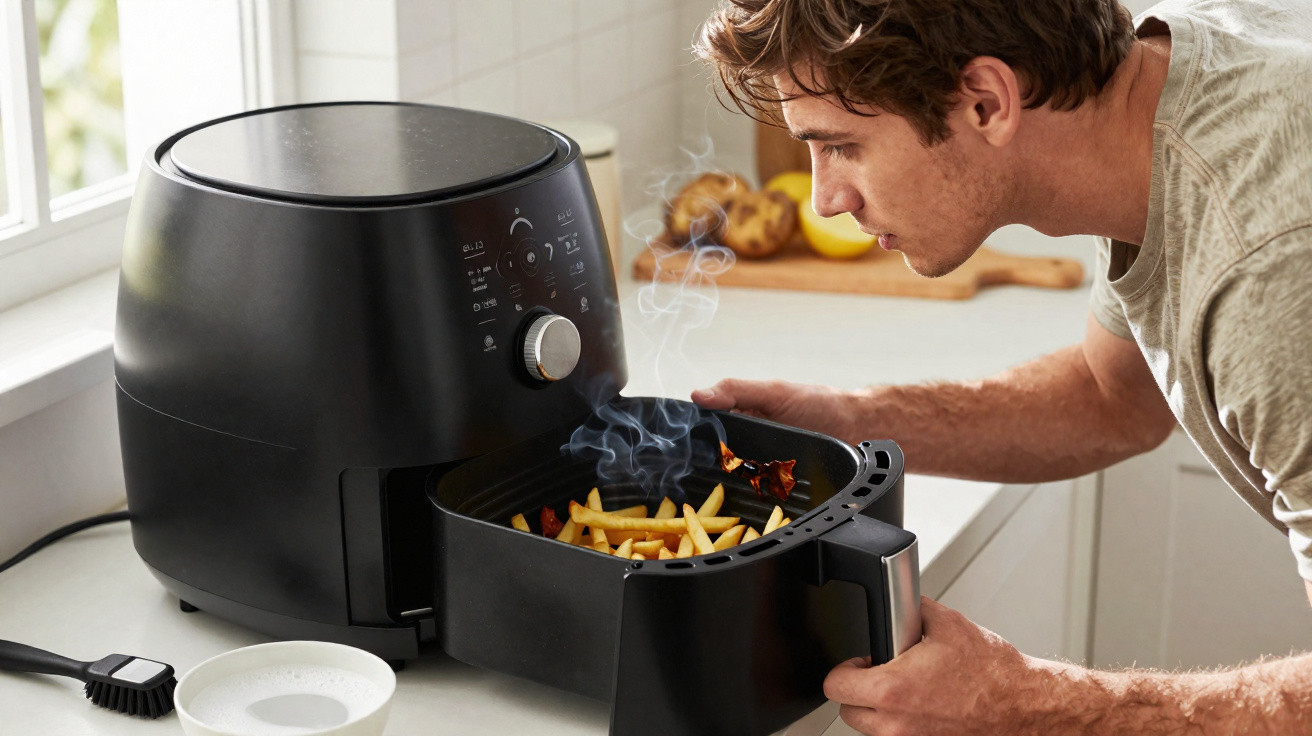
Ignoring the early warning signs can lead to serious trouble at the cooker.
In many homes, the Airfryer has long replaced the deep-fat fryer, compact oven and often even the frying pan. It is quick, convenient and uses less fat – job done. Yet those very advantages can make it deceptive: people rely on it. When the first faults appear, they are easily dismissed. Some signs, however, are a clear indication that an Airfryer is close to becoming a safety hazard.
When chips suddenly stay pale
One early sign that is often overlooked is the loss of the usual crisp finish. Chips remain pale, chicken pieces turn dry on the outside while still being partly raw inside, and vegetables cook unevenly. Many users immediately blame the brand of frozen chips or a “bad batch”. In reality, the appliance itself is often the cause.
Inside an Airfryer, the heating element and fan work closely together. The heating coil produces high temperatures while the fan circulates the hot air. If either component begins to fail, heat builds up in some areas while “cold spots” develop elsewhere. The result is:
- Cooking times become noticeably longer.
- Food browns only in isolated areas.
- You have to keep shaking or turning the basket.
“If you feel that recipes suddenly no longer work even though you have changed nothing, the problem is often the Airfryer itself – not the recipe.”
Simply increasing the temperature at this point will make matters worse. The motor then has to operate at its limit, the housing may become unusually hot, and individual components will age faster. Once this inconsistency occurs every time you use it, replacement should be considered.
Unusual noises: a warning from inside the Airfryer
A properly functioning Airfryer makes a quiet, steady hum. If that basic sound suddenly becomes louder, shriller or starts to vibrate, the appliance is effectively calling for help.
Recognising typical alarm sounds
The following noises are particularly noticeable:
- Heavy droning – often points to a fan that is no longer running smoothly.
- Scraping or grinding sounds – dust, grease or a barely visible foreign object is obstructing moving parts.
- Pulsing whining – the motor is visibly struggling, speeding up briefly before slowing again.
These sounds are never “just annoying”. They indicate that the motor may overheat or that the fan is no longer moving enough air. If ignored, the worst-case outcome can be a short circuit or burnt plastic parts.
“An Airfryer that suddenly sounds like an old vacuum cleaner should no longer be used continuously – it belongs on the inspection list.”
Anyone with technical knowledge can carefully check for loose screws or visible dirt. However, the motor section of most appliances is not accessible to non-specialists. In these situations, it is worth making a realistic calculation: attempt a repair or buy a new, safe appliance straight away?
Smoke inside the appliance: where there is smoke, there are risks
A little steam while cooking foods with a high water content is normal. Thick, acrid smoke that keeps returning even after thorough cleaning is not. In that case, the cause is often more serious than a few grease splashes.
When the coating begins to fail
Many Airfryers have coated baskets and inserts. Over time, these layers can peel away, become chalky or develop microscopic cracks. Grease and marinade can then settle directly onto the metal and heating element. This can result in:
- dark clouds of smoke even at medium temperatures,
- scorch marks near the heating coil,
- an unpleasant taste in foods that would normally be neutral.
“Regular smoke despite a clean drawer is a clear stop signal – this is no longer about convenience, but fire safety.”
There is another factor to consider: if baking paper, small moulds or overly light silicone inserts are positioned directly in front of the heating element, they can come loose and be drawn into the hot area. Combined with grease and damaged coating, this creates a highly flammable mixture.
When an Airfryer smells: odour as an early warning system
The human sense of smell is a very reliable sensor. If you suddenly notice a persistent smell of rancid fryer oil, scorched plastic or sweet metallic vapour, you should not ignore it.
Where does the bad smell come from?
Three common sources occur time and again:
Grease deposits in hidden areas
Over weeks and months, grease collects on the fan, heating element and in difficult-to-reach corners. It then carbonises again with every use.Ageing plastics
Intense heat can cause lower-quality plastics to release gases. The smell may resemble hot rubber, solvent or adhesive.Overloaded electronics
Cable insulation or soldered joints may begin to smoulder when overloaded. This smell is usually sharp and unfamiliar, and should prompt you to unplug the appliance immediately.
If neither lemon, vinegar water nor the bicarbonate of soda trick helps despite thorough cleaning, dirt alone is rarely the issue. The smell is more likely signalling worn internal components. There is little point in continuing to operate an appliance with these symptoms – and it creates an unnecessary safety risk.
How to clean your Airfryer properly
To prevent warning signs from appearing in the first place, proper care is essential. A few straightforward routines can significantly extend its service life and reduce both fire risk and exposure to harmful substances.
Quick routine after every use
- Rinse the basket and insert with hot water and a little washing-up liquid.
- Wipe away larger grease residues with kitchen paper while they are still warm.
- Leave the appliance open to cool so that moisture can escape.
Regular deep cleaning
At least once a month, a more thorough clean is worthwhile – especially if you often cook particularly fatty foods:
- Wipe the inside of the cooking chamber with a soft, slightly damp cloth.
- Avoid abrasive cleaning products so the coating is not damaged.
- Briefly let hot water with lemon slices steam inside to loosen grease layers.
“Anyone who regularly removes grease from hidden areas near the heating coil prevents many smoke and odour problems before they start.”
When you should replace your Airfryer for good
The key question is: where does normal ageing end and genuine risk begin? A few minor flaws may be tolerable, but not an accumulation of critical warning signs.
This combination is a clear stop signal
The appliance should be taken out of use at the latest when several of the following occur at the same time:
- Uneven browning, or browning that is barely achievable despite the correct settings.
- Loud droning, vibrations or grinding noises.
- Smoke even though the appliance is clean.
- A persistent smell of burnt grease or plastic.
- Visible damage to the cable, plug or housing.
In addition, older models often have no modern overheating protection or only very basic thermostats. Together with worn components, this significantly increases the risk of fire. Leaving the Airfryer running while you briefly leave the room then means unknowingly playing with fire.
What a safe replacement Airfryer should offer
Replacing an old appliance can be an opportunity to upgrade both safety and convenience. When buying a new model, several criteria are more useful than marketing claims:
- Overheating protection and automatic shut-off in the event of faults.
- A robust, low-hazard coating with clear manufacturer information.
- Easy access to the heating element and interior for cleaning.
- A sufficiently long cable and a stable base.
- Clearly documented maximum temperatures and usage limits.
Reputable manufacturers also state how long spare parts will remain available and whether baskets or inserts can be ordered individually. This extends the appliance’s useful life and reduces electronic waste.
Why many Airfryer problems only become visible after months
Airfryers operate at high temperatures in a confined space. Every use places stress on plastic, metal and electronics. Grease, salty marinades and crumbs increase this wear. In day-to-day use, the damage often feels gradual: a dish “just takes a little longer”, the smell “is probably from yesterday”, and the noise “was surely always there”.
That is exactly the crucial point: taking small changes seriously protects not only your kitchen, but also your health. Heavily burnt grease residues produce, among other things, substances that nobody wants in their food. At the same time, the risk rises that an overloaded motor will burn out at the worst possible moment.
Treating your Airfryer as a serious kitchen appliance – by checking it regularly, cleaning it and replacing it in good time when in doubt – means you can enjoy its benefits for a long time: quick cooking, less oil and crisp results. The decisive boundary is where minor irregularities become unmistakable warning signs. Recognising them prevents a practical helper from becoming a genuine kitchen hazard.















Comments
No comments yet. Be the first to comment!
Leave a Comment