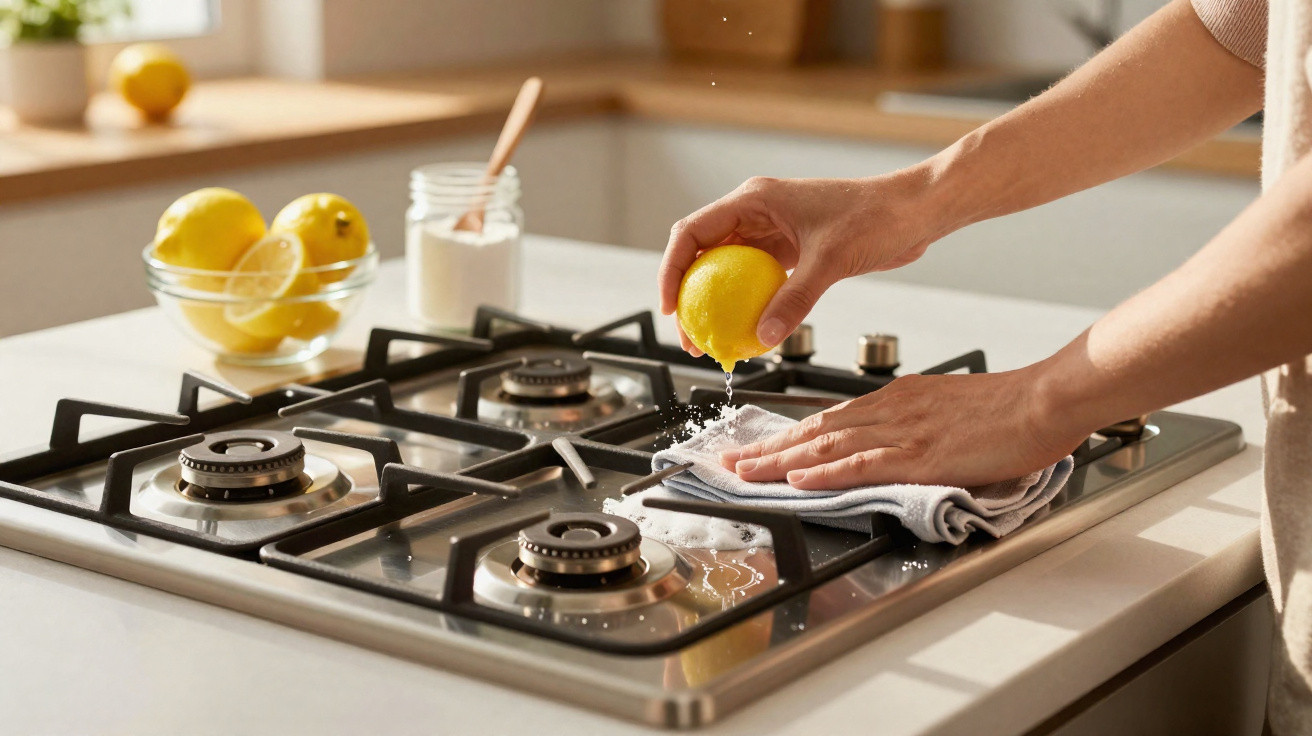
A simple natural product is already sitting in most kitchens: it cuts through grease, neutralises odours and restores shine to the hob without hours of scrubbing. Once you have tried it, you may genuinely wonder why so many costly specialist cleaners are taking up space in the cleaning cupboard.
Why hobs quickly become yellowed and greasy
Whether you have a ceramic glass hob, an induction hob or traditional cast-iron hotplates, cooking inevitably causes grease to splash, liquids to spill and sauces to boil over and burn on. Over time, this leaves behind a stubborn layer of grease, sugar and charred residue.
Many people then make the same mistake: they hurriedly wipe the surface with a wet cloth, merely spreading the grease and dirt around. Aggressive cleaners are often used afterwards, which can harm not only the environment but also the hob surface itself.
The good news is that everyday cleaning only requires a natural ingredient that is in almost everyone’s fruit bowl – and it is far gentler than harsh chemicals.
Lemon: the overlooked cleaning hero from the fruit bowl
The key ingredient in this cleaning method is lemon. Its high citric-acid content breaks down grease and limescale deposits, brightens mild discolouration and neutralises unpleasant smells. The juice also has a mildly antibacterial effect.
Another advantage is that lemons are a household staple in many homes, inexpensive and biodegradable, and they do not leave concerning residues on the cooking surface.
How to clean a hob using only lemon
For lightly soiled hobs, lemon juice alone is usually sufficient. Follow these steps:
- Allow the hob to cool: The entire cooking surface must be completely cold so that the juice does not burn on.
- Prepare half a lemon: Cut a lemon in half crossways and remove the pips where possible.
- Rub it directly over the hob: Using the cut side, work the lemon in circular motions over greasy marks and edges.
- Leave it briefly: Two to five minutes is often enough for the dirt to loosen.
- Wipe with a damp cloth: Lift away the loosened residue with a soft, slightly damp microfibre cloth.
- Dry and buff at the end: Polish with a dry, lint-free cloth so that no water marks remain.
The results are particularly noticeable on light greasy films and fresh marks. The surface looks clearer, fingerprints disappear and the hob smells pleasantly fresh without artificial fragrances.
When lemon alone is not enough: combine lemon with bicarbonate of soda
For burnt-on patches, dark rings around cooking zones or yellowed areas, lemon needs some extra help. This is where bicarbonate of soda, also known as baking soda, comes in: it is a mild, slightly alkaline powder with a fine texture.
Lemon dissolves grease and limescale, while bicarbonate of soda provides gentle abrasion – together, they can remove stubborn baked-on deposits without scratching the surface.
Step-by-step guide to the powerful combination
- Prepare the hob: Remove larger crumbs and dust with a dry cloth.
- Cut the lemon in half: Use one half as your “cleaning sponge”.
- Measure out the bicarbonate of soda: Sprinkle one teaspoon of bicarbonate of soda over the cut surface of the lemon.
- Apply the mixture: Rub it over dirty areas in circular movements using light pressure. It will begin to fizz slightly.
- Allow time to work: Leave it for five to ten minutes so that burnt-on layers can loosen.
- Wipe with a damp sponge: Use a wet, soft sponge or cloth to remove every trace of residue.
- Buff with clean water: Rub over the surface again with a dry cloth until it shines without streaks.
A second application can be worthwhile for especially persistent marks. On ceramic glass hobs, you may also carefully use a scraper, but always keep it flat and avoid pressure to prevent scratches.
Suitable hob surfaces – and where caution is needed
Not every surface reacts in the same way to acid and gentle abrasion. Here is a quick guide:
| Surface | Suitability | Note |
|---|---|---|
| Ceramic glass hob | Well suited | Use only soft cloths and fine particles; avoid abrasive sponges. |
| Induction hob (glass) | Well suited | Treat it as you would a ceramic glass hob, and do not scrape with metal tools. |
| Cast-iron hotplates | Limited suitability | Dry thoroughly after cleaning to prevent rust. |
| Stainless-steel trim | Suitable | Always wipe in the direction of the grain, not in circular movements. |
| Marble / natural-stone worktops | Not suitable | Acid can permanently etch and dull the stone. |
Why choosing natural cleaning products makes sense
Conventional hob cleaners often contain harsh surfactants, solvents and fragrances. They can affect indoor air quality, irritate the skin and eventually enter wastewater. Lemon and bicarbonate of soda work differently: both fully biodegrade and leave no artificial residues behind.
- Cost benefit: One lemon and a little bicarbonate of soda cost considerably less than specialist cleaners.
- Less plastic waste: You avoid pump bottles, spray heads and single-use packaging.
- A healthier home: No coughing irritation or pungent fumes while cleaning.
- A versatile solution: Lemon and bicarbonate of soda can also be used for the sink, chopping boards and baking trays.
Anyone who regularly looks after their kitchen with mild natural products extends the life of their appliances while protecting their skin, airways and the environment.
Useful habits for a consistently clean hob
Rather than tackling a major cleaning job once a month, a few small habits can prevent a great deal of hassle:
- Wipe up boiled-over sauces straight away with a damp cloth while they are still soft.
- Establish a quick weekly lemon-cleaning routine, ideally after the final cooking session.
- Check the bottoms of pans regularly: clean undersides prevent new marks.
- Use a splatter guard when frying so that less grease reaches the hob in the first place.
Once these routines become second nature, you will only need the lemon and bicarbonate of soda combination for occasional mishaps, such as after a large dinner or when pans have burnt on.
Risks, limitations and useful additions
Despite its benefits, this method has limitations. Deep scratches, dull patches in glass and damage caused by unsuitable cleaners cannot be reversed. In these cases, professional restoration or, in the longer term, replacing the hob is the only solution.
A quick compatibility test is also important: if you are using lemon and bicarbonate of soda on your hob for the first time, test the mixture first on a small, inconspicuous area. This helps prevent unexpected reactions on sensitive surfaces.
A ceramic-glass scraper for isolated burnt-on marks, a soft microfibre cloth for buffing and, occasionally, a specialist ceramic-glass cleaner are useful additions if the manufacturer specifically recommends one. Lemon then remains the everyday cleaner, while the specialist product serves as occasional extra care.
Handily, leftover lemon halves can also be used for kettles, chopping boards or stainless-steel sinks. This reduces waste, while one item on your shopping list handles several household tasks, from removing limescale to eliminating odours.














Comments
No comments yet. Be the first to comment!
Leave a Comment