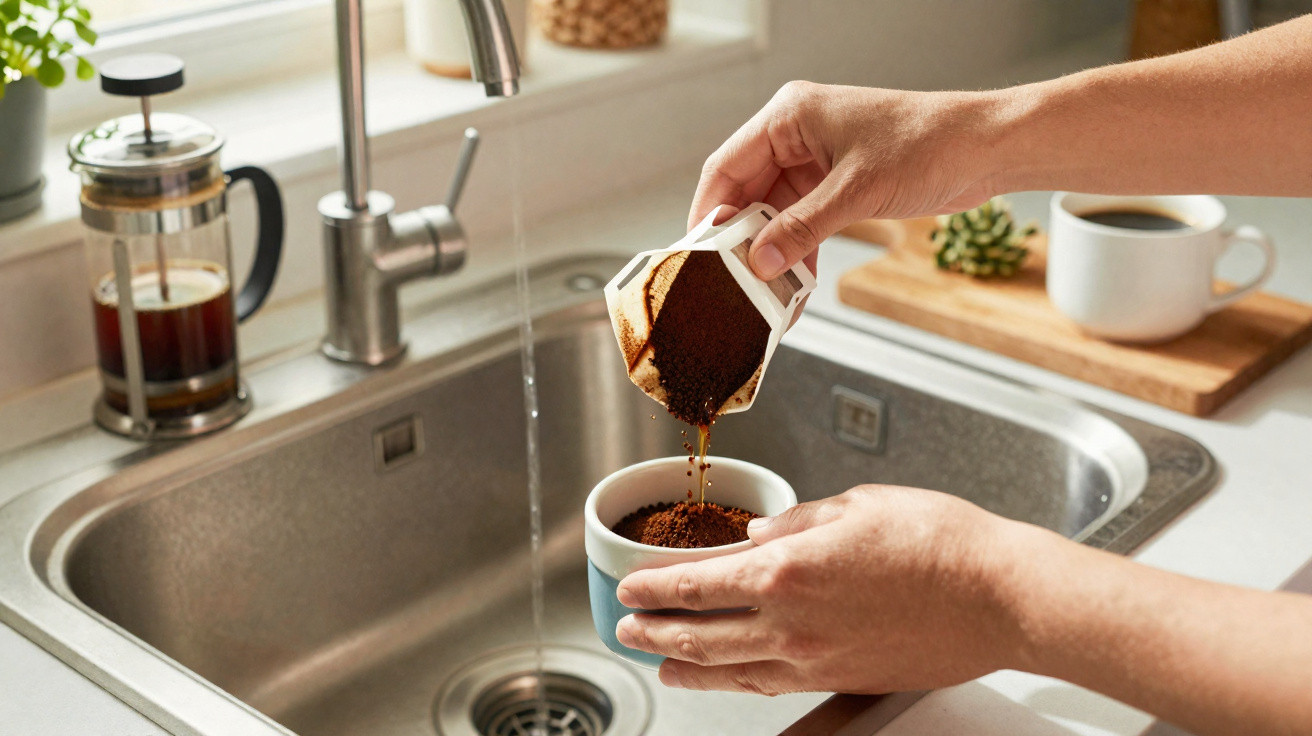
Discarding coffee grounds into the kitchen sink bowl may seem harmless to many people. However, the insoluble particles that build up inside the pipes cling to existing grease, restricting the flow of water and causing serious blockages in household plumbing.
Why do coffee grounds block the sink trap?
Once they pass through the drain, the damp organic residue does not dissolve in water and travels straight into the plastic trap. There, tiny particles are caught and come into contact with the dirt already deposited on the internal walls.
Over time, this combination creates a dense physical barrier that prevents liquids from draining normally. As the process continues, the usable pipe diameter gradually narrows, resulting in slow drainage and unpleasant odours.
Does coffee poured down the drain really damage kitchen plumbing?
The continual build-up of insoluble waste reacts with debris inside the pipes, forming solid barriers and plumbing blockages that… Read more
Can hot water and coffee grounds unblock a sink?
Many people believe in the popular method of pouring boiling water down the pipes with used coffee grounds to clean them. This is a dangerous myth, as it does not dissolve these materials and may worsen an existing blockage in the plumbing.
Heated water only moves grease temporarily, allowing it to solidify further along the pipe alongside the coffee particles. This creates a thick mass inside the pipe, requiring more complex technical maintenance work.
Below is a video from the Rádio Paiquerê FM 98.9 YouTube channel that explores the points discussed in this topic in greater depth:
How can you unblock a sink safely?
Rather than relying on home remedies without proven effectiveness, it is best to use methods that are genuinely safe and effective. Applying suitable compounds can help dissolve organic deposits without damaging your property's PVC connections.
The correct combination of simple household substances reacts effectively, neutralising the accumulated grease and making internal cleaning easier. This practical option ensures a continuous flow of water without causing damage to kitchen plumbing.
Cleaning kit
An effective plumbing solution
Use the following items to clean the drain safely:
- Bicarbonate of soda;
- White vinegar;
- Hot water for the final rinse.
Which daily precautions prevent sink blockages?
Daily prevention is the most practical way to keep the entire kitchen plumbing system working properly. Building simple habits into everyday life prevents unwanted deposits in the pipes and avoids repeated spending on specialist maintenance.
Small, practical changes to the household routine can easily stop solid waste from reaching the inside of the plumbing. Using straightforward protective equipment and disposing of organic material correctly will consistently keep drainage clear and uninterrupted.
Essential steps for protecting sink plumbing include:
- Fitting protective drain baskets in the sink;
- Putting food scraps directly into the bin;
- Avoiding the disposal of oils and fats in the sink bowl.
Where should coffee grounds be disposed of properly?
Rather than putting brewing residue down the drain, it is best to place this organic material in the general waste bin. This simple action protects the plumbing network and prevents barriers from forming inside household pipes.
Paying ongoing attention to daily disposal is essential for ensuring the durability of every kitchen connection. Acting responsibly prevents plumbing problems and maintains the proper operation of the entire residential system.











Comments
No comments yet. Be the first to comment!
Leave a Comment