Cleaning jewellery intelligently protects gemstones and saves both the money and time involved in costly jeweller visits.
Many rings, necklaces and earrings gradually lose their shine. Skin, air and cosmetics all leave their mark. The right cleaning method can restore their brilliance without scratches, hassle or a chemical mess on the kitchen worktop.
Why jewellery loses its shine
Silver reacts readily with sulphur-containing substances in the air, creating a dark coating. Sweat, moisture and hand cream speed up this process. Chlorinated bath water and salt also affect metals. On gold-plated pieces, the fine top layer eventually wears away, allowing the base metal to show through and discolour.
Gemstones respond differently depending on their type. Pearls, turquoise and opal are porous, meaning they absorb liquids and fragrances. Emeralds are often oiled during workshop treatment, and harsh cleaning products can remove this care layer. Adhesives in costume jewellery frequently cannot withstand heat or strongly alkaline solutions. Cleaning that is suited to the material prevents damage.
The kitchen trick with foil and bicarbonate of soda
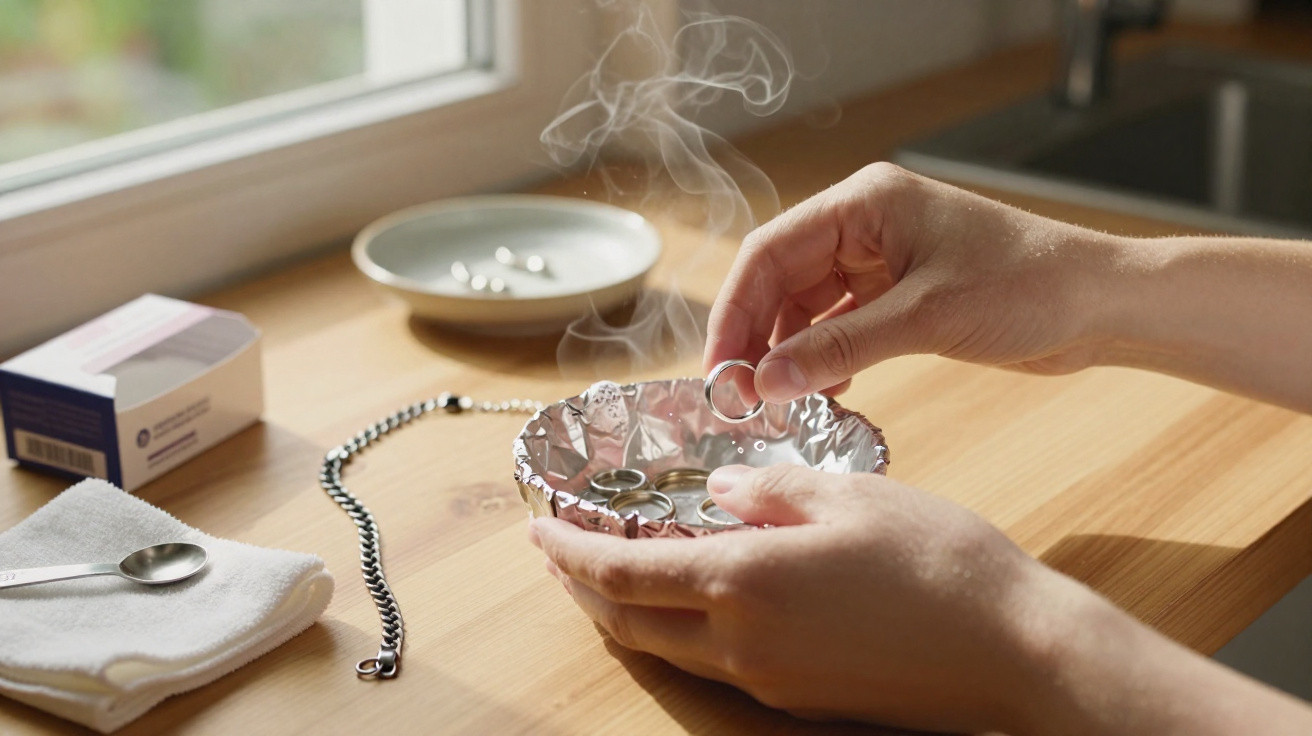
For tarnished silver, a straightforward kitchen method can be effective. It uses hot water, aluminium foil and bicarbonate of soda. An electrochemical reaction lifts the dark coating without any abrasive rubbing.
Step by step
- Boil enough water to fill a small bowl.
- Line the bowl with aluminium foil, with the dull side facing down.
- Place the silver jewellery inside, removing delicate stones beforehand.
- Add two tablespoons of bicarbonate of soda.
- Pour over boiling water until everything is submerged.
- Leave it for 10 to 15 minutes, depending on the level of tarnish.
- Rinse with lukewarm water and dry immediately with a soft cloth.
Suitable only for solid silver without porous stones. Prompt rinsing and thorough drying help to prevent fresh tarnish.
What happens chemically
In an alkaline environment, aluminium and silver form a galvanic pair. Bicarbonate of soda raises the pH level. Electrons move from the aluminium foil to the silver layer, reducing the sulphur compounds on the silver. The foil is sacrificed and the silver regains its shine.
Care by material and gemstone type
| Material | Foil + bicarbonate of soda | Gentle alternative |
|---|---|---|
| Solid silver | Very suitable | Impregnated polishing cloth for detailed work |
| Silver with intentional patina | Do not use | Clean specific areas, then rub dry |
| 14/18-carat gold | Hardly any effect | Lukewarm water, mild bar soap, soft brush |
| Gold-plated / rolled gold | Risky for the coating | Brief soapy-water bath, then dry quickly |
| Pearls, opal, turquoise, coral | Never use | Damp cloth, no immersion baths |
| Emerald (oiled) | Never use | Wipe gently while dry |
| Costume jewellery with glued elements | Never use because of the heat | Clean individual areas with a cotton bud |
Never place gold-plated necklaces, deliberately patinated pieces or porous stones in the foil-and-bicarbonate-of-soda solution. Soapy water is the safer choice here.
Common mistakes to avoid
- Stiff brushes scratch surfaces.
- Leaving jewellery in the bath for longer does not improve the result; it only increases the risk.
- Different metals can affect one another when placed in the same bath.
- Drying while moisture remains encourages immediate tarnishing.
- Toothpaste and scouring powder create fine scratches.
Everyday jewellery care
Put jewellery on only after perfume and cream have absorbed into the skin. Take it off before showering, swimming or entering the sea. Wipe it with a microfibre cloth in the evening, then store it somewhere dry and dark. Zip-lock bags and anti-tarnish strips help protect against sulphur in the air.
Store metals separately so that they cannot rub against each other. A silica gel sachet reduces moisture inside a jewellery case. An impregnated cloth refreshes pieces between cleans and reduces the need for more intensive cleaning.
After every bath: rinse clearly, then dry completely – including inside necklace links and beneath settings.
Costs, devices and alternatives
The kitchen trick costs only a few pence. A professional cleaning bath at a jeweller often costs between €15 and €30 for a simple item. Home ultrasonic cleaners generally range from €40 to €100. They remove dirt from fine gaps, but can loosen adhesives and disturb pearls. They are also delicate to use on coated pieces.
Commercial silver dip cleaners work quickly, but contain strong reducing agents. Gloves, good ventilation and extensive rinsing are essential. It is better to use them rarely and only for heavy tarnish. A polishing cloth gives more control and preserves deliberately darkened areas.
Practical questions about jewellery cleaning
How often to clean
Silver worn every week benefits from a quick refresh every four to six weeks. In humid areas or when exercising frequently, an interval of three weeks is often appropriate. Solid gold requires a soapy-water bath only occasionally.
Patina or wear?
Tarnish appears as an uneven grey-to-black film and can be removed with a cloth or a bath. Worn gold plating looks warm copper-coloured or brass-coloured. No cleaning bath can restore that finish; replating is the only solution.
What to do with a pitch-black necklace
Start with aluminium foil and bicarbonate of soda. If certain areas remain dark, use a silver-cleaning rubber or a polishing cloth. Avoid thinning the edges. Sandpaper and abrasive pastes should remain in the workshop.
Further useful advice: safety, storage and value
Work close to the sink, and use oven gloves or protective gloves to guard against hot water. Cover nearby surfaces so that nothing becomes discoloured. Check clasps and prongs regularly. A quick inspection at a jeweller often costs less than €20 and helps secure loose stones.
Keep records of your pieces, including photographs, hallmarks such as 925 or 750, and purchase details. This makes servicing and insurance easier. A simple routine works well: a microfibre cloth after wearing, a gentle bath once a month, and a visual inspection every quarter. This maintains shine without putting strain on the material.
Everyday factors that affect jewellery shine
Skin pH, diet and surroundings also play a role. Anyone who often cooks eggs or lives in cities with higher sulphur levels will notice tarnish more quickly. Airtight bags with anti-tarnish strips and as little air inside as possible slow the process. Bicarbonate of soda works reliably; baking powder is only partly suitable because it contains additives. With white gold, it is worth considering rhodium plating: a fine rhodium layer offers protection and a cool shine, and can be renewed after several years. Depending on size and intricacy, replating costs noticeably more than cleaning, but lasts well again.
If you own an ultrasonic cleaner, test it first on an inconspicuous item. Do not put watches with a crown in water, and do not use it for pearls or glued pieces. One final detail has a significant effect: after drying, blow warm air over the jewellery briefly before placing it in a bag. This prevents any remaining moisture from taking hold.











Comments
No comments yet. Be the first to comment!
Leave a Comment