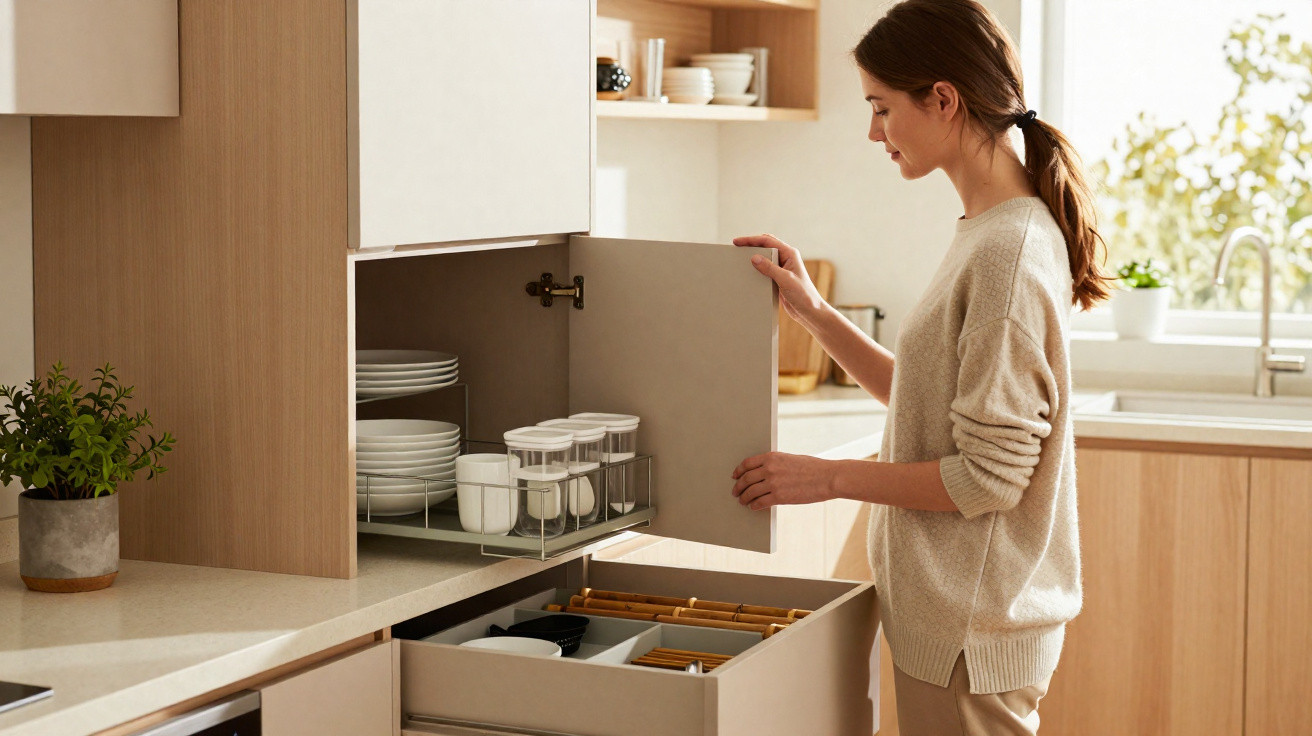
It often begins with one harmless move towards an attractive open shelf, then before you know it, half the morning has disappeared into dusting, rearranging and returning things to where they supposedly belong. The shelf may still photograph beautifully, yet your mind feels unsettled. Your mugs no longer match, the spice jars are an assortment of styles, and you quietly worry about anyone unexpectedly opening the kitchen door.
A few years ago, open shelving filled Instagram feeds. Now, an increasing number of homeowners are discreetly putting the doors back on. It is not that appearance matters less to them; they are simply worn out. Behind neat cabinet fronts lies something people want even more than an image-perfect kitchen: calm.
And much of that calm comes from what remains out of sight.
Why open shelving is losing its appeal
Spend an entire day in a kitchen with open shelving and pay attention. Breakfast cereal in the morning, hurried lunches, midnight snacks and a friend calling in “just for a coffee” all leave their mark on exposed surfaces. Bowls get moved around. Glasses are returned to the wrong place. A forgotten peanut butter jar ends up beside your best wine glasses.
By evening, the shelves have become a record of the day’s disorder. Worse, it is always visible: from the sofa, the hall and even the dining area. That ongoing visual distraction can be draining, much like a television left playing in the background after everyone has forgotten to switch it off.
A couple in London discovered this for themselves. They removed their wall cabinets in favour of crisp white-oak shelves that looked as though they belonged in a design magazine. During the first week, they arranged everything carefully: cookbooks grouped by colour, plates in tidy piles and thoughtfully chosen ceramics. Within three months, everyday weekday living had won. Plastic children’s cups, partly used cereal packets and an old water bottle that nobody owned had taken over.
They stopped photographing the kitchen because “it always looks messy”. When they eventually contacted their kitchen designer again, they requested something they had never imagined wanting: tall closed cabinets that concealed everything. They were surprised by how different the room felt. “It’s like our shoulders dropped,” they said.
There is a straightforward explanation for this change. Open shelving requires every item on display to look attractive at all times. Closed storage reverses the expectation. Cabinets become the behind-the-scenes space where daily life can be untidy, while the kitchen’s visible “stage” stays peaceful and ordered. This division reduces visual stress and eases the mental burden of continually tidying things that others could see.
Closed doors offer practical benefits too, shielding contents from dust, grease and sunlight. Crockery remains cleaner, food keeps for longer and there is less need to wipe rows of seldom-used glasses. This is not merely a move towards minimalism; it is also an act of consideration for your future self.
How to make closed storage work smarter than open shelves
The key to closed storage is not simply installing extra cabinets. It is creating a system. Begin by considering an ordinary day in your kitchen. Where do you naturally reach for coffee? Where do the children do their homework? Where do keys and post tend to land?
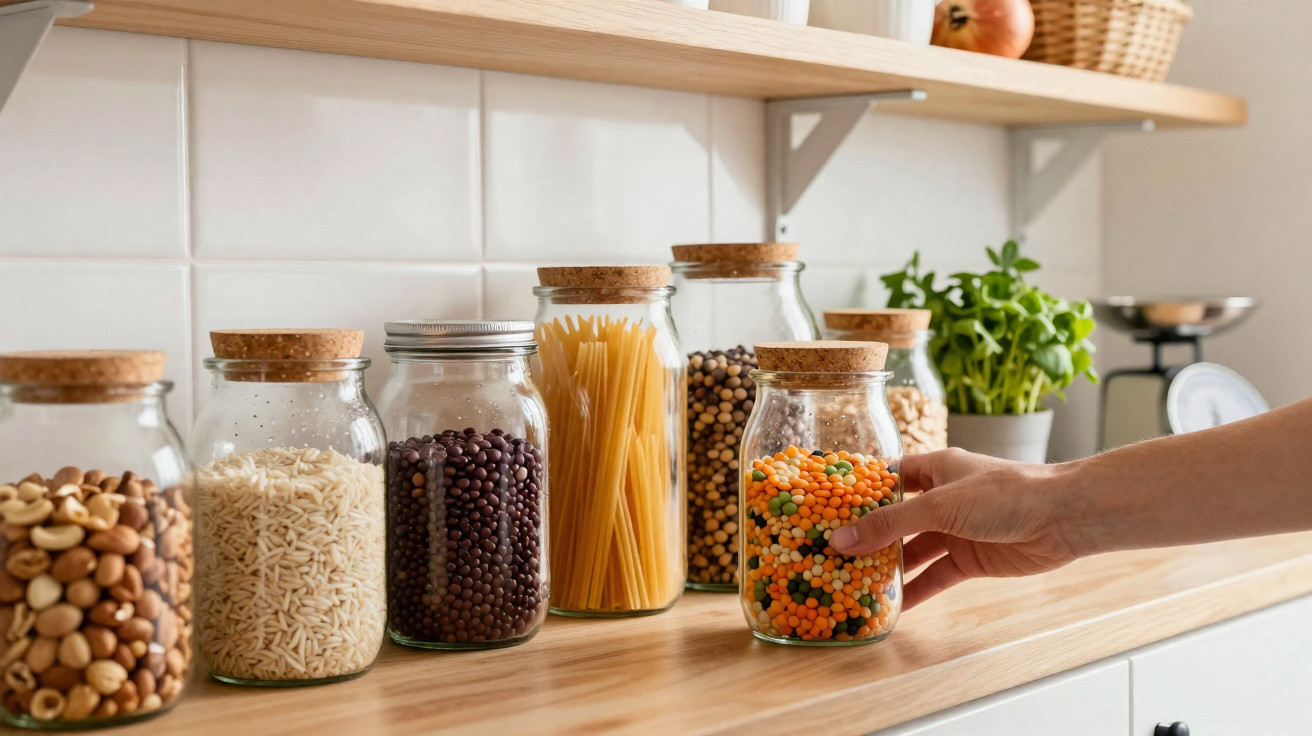
Plan your closed storage around those everyday habits. Store daily crockery close to the dishwasher. Keep breakfast supplies near the fridge. Add a “landing drawer” by the entrance for chargers, receipts and the miscellaneous items that never appear to have a proper place. Your cabinets can then become quiet helpers rather than places where clutter disappears.
Organise storage in layers. Use deep bottom drawers for saucepans, frying pans and mixing bowls. Choose medium drawers for plastic food containers and their lids. Reserve slim drawers for cutlery and tools used ten times a day. When each area has a defined function, closed storage feels less like a mystery box and more like an intuitive arrangement.
This is where many people go wrong: they fit handsome closed cabinets, throw everything inside and assume the doors will solve the disorder. They will not. The disorder merely shifts indoors. The next time a door opens, a pile of plastic containers may tumble out like a scene from a comedy.
You do not need a colour-coordinated Pinterest pantry to prevent this. Simple zones are enough. Allocate one shelf to baking, another to snacks and another to essential ingredients for evening meals. Labels can be useful, but habits are more useful still. Put items where your hand instinctively reaches, rather than where they would look best in a photograph. Let’s be honest: nobody really keeps that up every day when storage is counter-intuitive.
If things slip, treat yourself kindly. During a difficult week, the “snack basket” may overflow. That is not a failure; it signals that your storage needs to adapt to your life, rather than the reverse. When a cabinet arrangement consistently fails, alter the arrangement instead of blaming yourself.
“The best kitchen isn’t the one that looks perfect in a still photo,” says an interior designer friend who secretly regrets her open shelves. “It’s the one that still works when you’ve had a terrible day and just want to dump everything and sit down.”
For many homes, this ease now comes from well-planned closed storage: a tall pantry with opaque doors for bulk groceries, a slim pull-out beside the hob for oils and spices, and concealed charging points in a drawer to keep worktops clear. When the doors are shut, the room can look reset within seconds.
- Set aside one “ugly cabinet” for appliances and miscellaneous gadgets you may not love but still need.
- Leave one shelf largely clear to absorb unexpected clutter on hectic days.
- Fit racks to cabinet doors for foil, wraps and small bottles, freeing up entire shelves.
These small measures may sound basic, but on a Wednesday evening they can feel like a breath of fresh air.
A calmer kitchen with closed storage
There is a subtle satisfaction in switching off the kitchen light after clearing the worktops and closing the cabinet doors. It is not because the space is perfect, but because the mess has somewhere to go. Your eyes can relax, and your mind relaxes alongside them.
For a decade, display has been celebrated: open shelves, glazed fronts and carefully styled stacks. Now the balance is shifting towards sanctuary. Closed storage is becoming the more thoughtful option, not because people value beauty less, but because their definition of beauty is changing. Less performance, more peace.
One friend once had three long open shelves across a kitchen wall, filled with cookbooks and ceramics. That wall now has full-height cabinets in a gentle matt shade, with a single uncomplicated artwork between them. The room appears taller, softer and more forgiving. Behind the doors is real life: mismatched mugs, children’s artwork and the chipped bowl that nobody can bear to discard.
Everyone knows the moment when the doorbell rings and the kitchen needs to look “okay” within ten seconds. Closed storage performs that trick better than any styling tip. Sweep stray items from the worktop, put them behind a door and breathe once more. This is not about concealing who you are; it is about having the freedom to live untidily without feeling untidy all the time.
Perhaps the kitchen of the future is not the open, curated stage we expected. Perhaps it is a collection of considered closed compartments that discreetly carry the demands of daily life, leaving the visible space light. That modest change affects the look of a room. It also changes how you feel when you enter late at night, in the half-light, to pour a glass of water in a space that finally feels as though it is working with you.
| Key point | Detail | Benefit for the reader |
|---|---|---|
| Closed storage reduces visual noise | Cabinet doors conceal daily clutter and mismatched items | Helps your kitchen feel calmer, even on busy days |
| Design storage around real routines | Position items according to how and where you genuinely use them | Makes cooking and tidying quicker and less frustrating |
| Use “flex” zones inside cabinets | Empty or loosely organised areas take in overflow and unexpected clutter | Keeps your system functioning even when life becomes chaotic |








Comments
No comments yet. Be the first to comment!
Leave a Comment