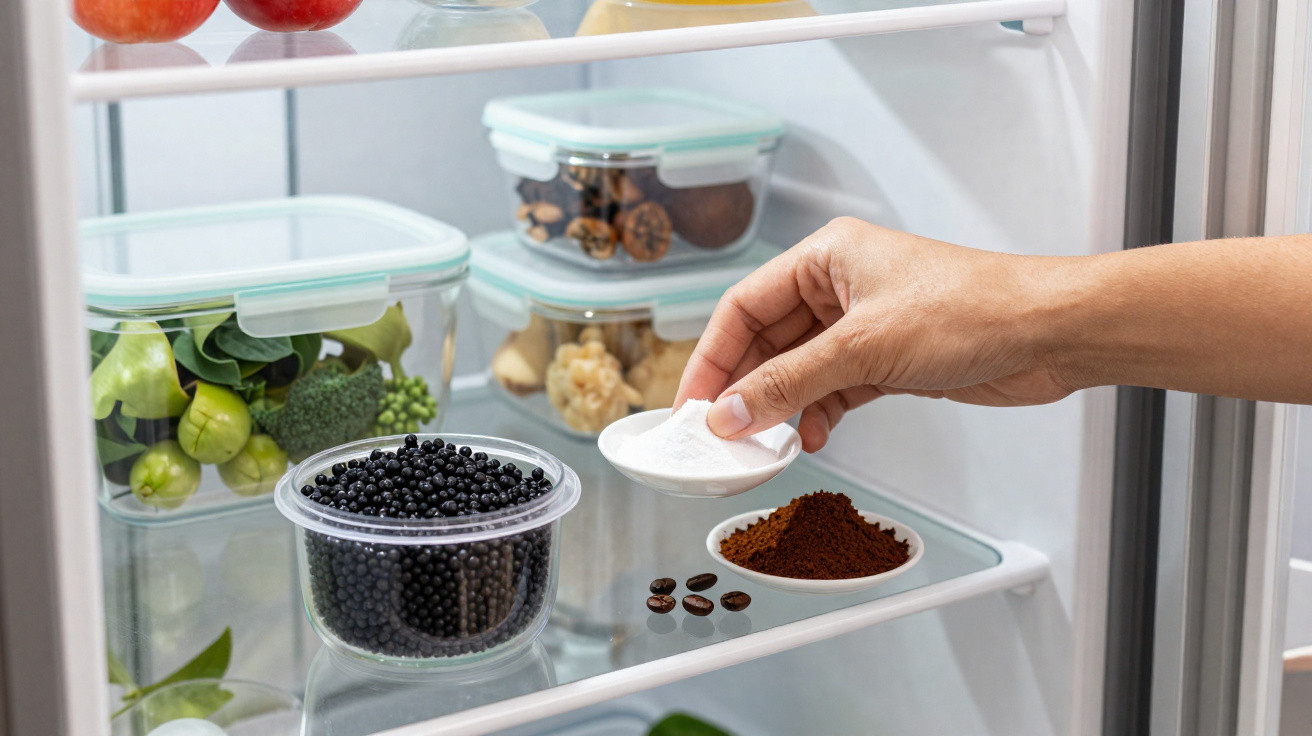
We all know that slightly awkward moment: you open the fridge to make dinner and an unidentifiable smell hits you straight away. It is not quite cheese, nor exactly a forgotten vegetable, but a stubborn blend that makes you want to shut the door immediately. You investigate, throw out a questionable leftover and wipe down a shelf… yet the odour remains, as though it has made itself at home. Baking soda, coffee grounds, lemon and charcoal: there is no shortage of natural remedies, and each has its convinced supporters. However, they do not all work in the same way. Some genuinely absorb odour molecules, while others mainly cover them up. It is worth knowing the difference.
Why fridge odours linger for so long
An unpleasant smell in a refrigerator almost never appears without a cause. It often starts with a very ordinary oversight: a poorly wrapped tray of meat, some sauce spilled behind a jar, a tired leek at the bottom of the vegetable drawer, or a supposedly airtight container that was no longer properly sealed. Cold temperatures slow bacterial growth, but do not stop it completely, particularly when the temperature rises above 4 °C. Odour molecules then move around this enclosed space and settle on seals, plastic and poorly protected food. A fridge retains traces more effectively than you might think.
Cheese provides a telling example. A study published in the Journal of Food Protection found that certain sulphur-based and acidic compounds produced by food can remain on surfaces even after the source has been removed. This is why getting rid of an overripe piece of Camembert is not always enough. In many kitchens, the smell also comes from the drip tray at the back of the appliance, which is rarely considered. Let us be honest: nobody really cleans it every day. Yet a few drops of water containing food residue can quietly ferment there for weeks.
Before looking for the best odour absorber, it is therefore important to separate two tasks: cleaning the source and treating the air that remains. Baking soda, charcoal and coffee cannot replace a sponge, warm water and thorough cleaning of the corners. They work afterwards, on what is still floating in the air or gradually being released by surfaces. This is where activated charcoal stands out: its highly porous structure traps a large number of molecules. Baking soda, meanwhile, mainly neutralises certain acidic compounds. Coffee, on the other hand, primarily adds a competing aroma, pleasant to some but not everyone.
Baking soda, charcoal and coffee grounds: which truly deserves a place in the fridge?
For a tangible result, activated charcoal remains the most effective natural method, provided you use genuine food-grade activated charcoal or charcoal intended for filtration, rather than barbecue briquettes. Put a small bowl of granules or a charcoal sachet in a stable corner of the refrigerator, making sure it does not touch damp food. Its micropores capture odours without releasing another scent, which is exactly its advantage. Allow roughly 100 to 200 grams for a family fridge. Replace it every two or three months, or sooner after an incident such as a power cut or forgotten food.
Baking soda is still an excellent supplementary option, especially if the odour suggests sour milk, overripe fruit or an acidic sauce. Put three or four tablespoons into a wide bowl: a large surface exposed to the air works better than a box left closed with a pierced lid. The most common mistake? Keeping it for six months, sometimes a year, because it “looks clean”. It nevertheless eventually becomes saturated. Replace it every month, then reuse the old powder to scour the sink or deodorise a bin. It is straightforward and fairly economical.
Coffee grounds have a strong reputation, passed from one kitchen to another, but their effectiveness is more limited. They can reduce a mild smell and leave behind a roasted fragrance that creates the impression of fresher air, without necessarily solving the problem. Coffee masks rather than absorbs.
“A lingering odour should first prompt you to look for food, liquid or a dirty area: the absorber comes only after cleaning.”
- For a faint smell: baking soda replaced every month.
- For a strong or recurring smell: use activated charcoal first.
- For a temporary fragrance: dry coffee grounds, without expecting miracles.
The action that makes all the difference before setting down a bowl
Once the smell has taken hold, the right approach is to empty the fridge section by section, without turning the kitchen into a laboratory. Remove any questionable food, check the dates, then wash the shelves and drawers with hot water, a little washing-up liquid and a clean sponge. For the seals, an old soft toothbrush often works better than a vigorous wipe with a cloth. Avoid mixing vinegar and baking soda in the hope of making a super-powered cleaner: they largely neutralise one another. Diluted vinegar can be used for cleaning and baking soda for deodorising, but use them separately.
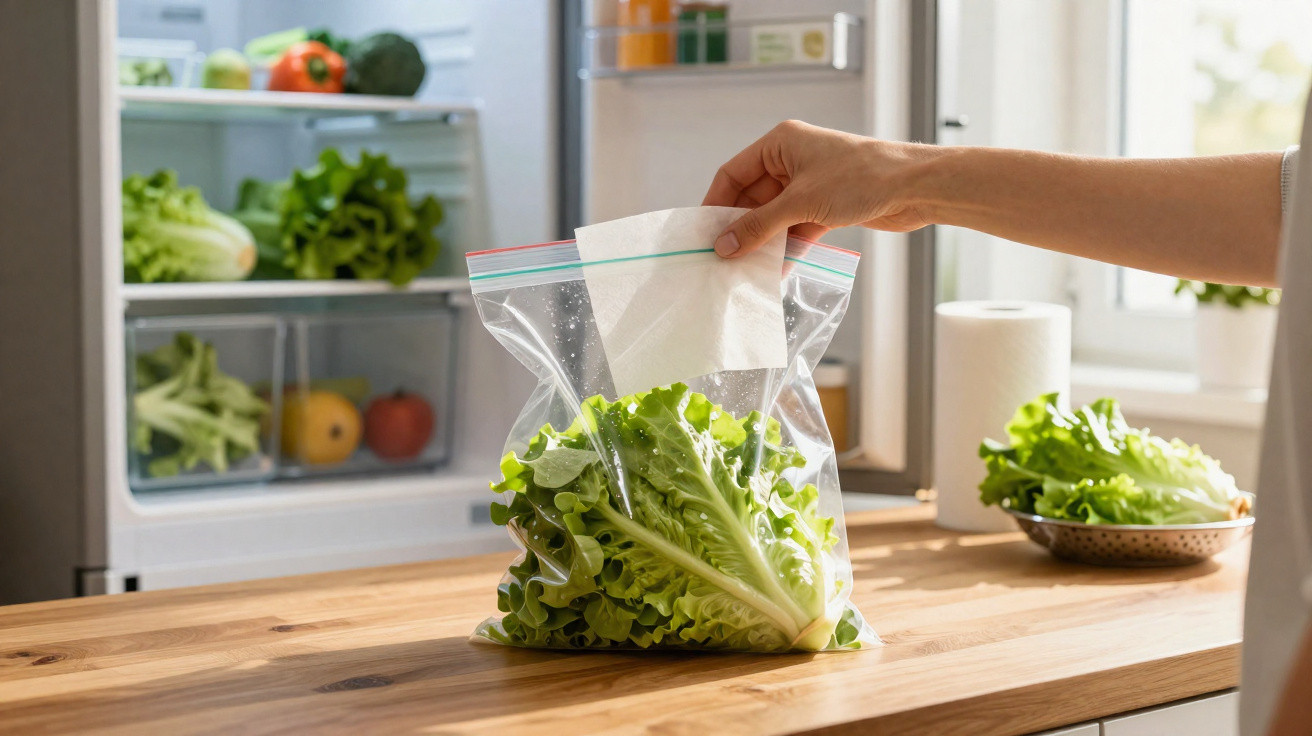
The small trap is trying to solve the issue in five minutes when one food item may have contaminated nearby packaging. A sticky bottle, a pierced bag of salad or a poorly closed leftovers container can continue releasing odours after cleaning. Also take thirty seconds to check the temperature: ideally, it should stay at around 4 °C. Above that, both odours and food-safety risks increase. The fridge should not be too full either, as cold air circulates less effectively between foods. A persistent smell can sometimes reveal this simple imbalance.
After cleaning, leave the appliance empty with the door open for around ten minutes if possible, then put in your chosen absorbing solution. Activated charcoal suits households that want to forget about the issue for several weeks, while baking soda appeals to those who prefer a regular, accessible routine. Dry coffee grounds can still have a place in a small spare fridge, as long as they are not given a task they cannot perform. A particularly strong smell of fish, spoiled milk or meat juices often requires two rounds of cleaning. That is not a failure: plastic absorbs odours too, and sometimes needs a little patience.
A neutral-smelling fridge is often a better-monitored fridge
The real success is not having a refrigerator that smells of coffee, lemon or artificial fragrance. It is regaining that almost reassuring absence of odour, which allows every food to remain in its proper place. Activated charcoal appears to be the most effective choice for long-lasting absorption of the molecules behind bad smells, while baking soda remains a practical ally for routine maintenance. Coffee grounds, meanwhile, are mainly valued for their comforting character and familiar aroma. Keeping a bowl in the fridge can become a small household ritual, much like checking leftovers on a Sunday evening. If a smell keeps coming back, it may deserve attention: it often points to something forgotten, an incorrectly set temperature or an area that is never inspected.
| Key point | Detail | Added value for the reader |
|---|---|---|
| Activated charcoal | Highly porous, it captures odour molecules over time. | The most effective natural solution for stubborn smells. |
| Baking soda | Especially useful against certain acidic odours, and should be replaced every month. | A simple, inexpensive and easy-to-find option. |
| Coffee grounds | They add fragrance more than they neutralise odours. | Best kept for mild smells or as an occasional supplement. |












Comments
No comments yet. Be the first to comment!
Leave a Comment