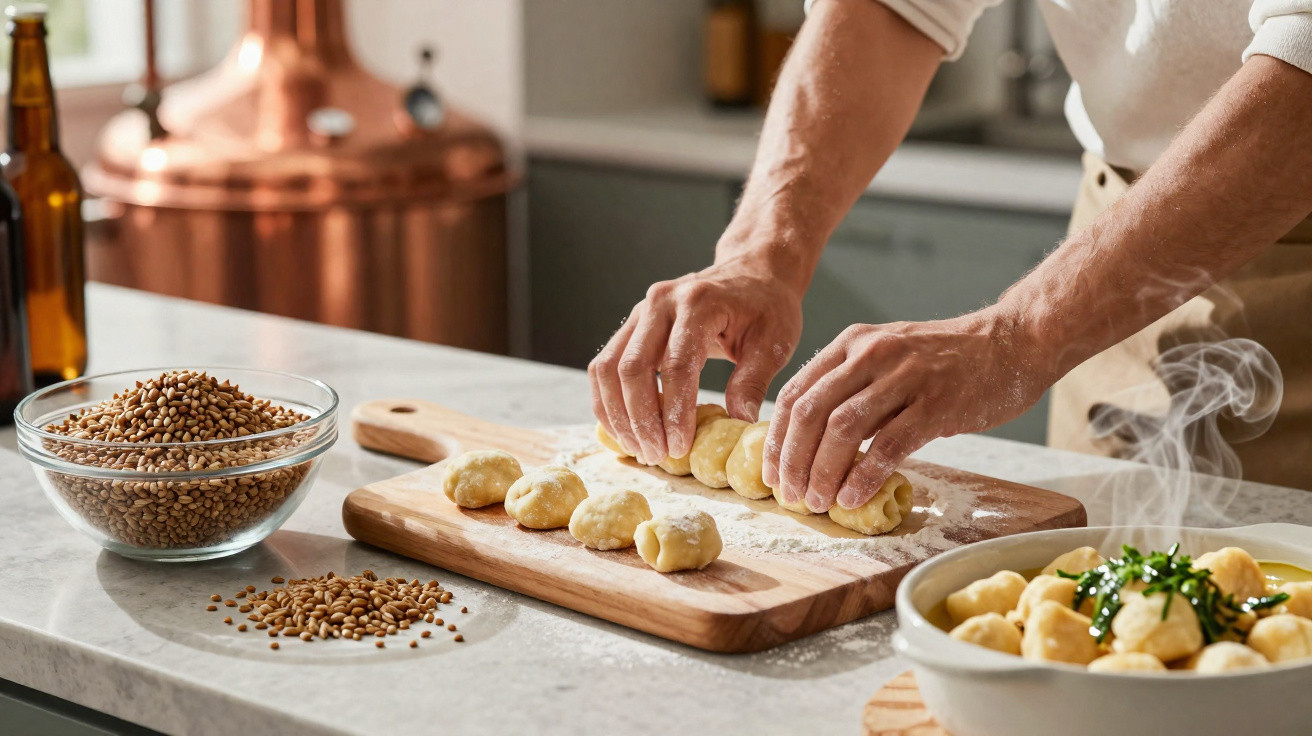
In a small production workshop, an experiment is under way that many people might consider absurd: making food from material that would previously have gone into the bin or, at best, into an animal feed trough. Two young founders are turning brewing residues into flour and adding it to gnocchi dough. The resulting product makes two promises at once: less waste and more nutrients.
What sits behind Beer Gnocchi
The idea is based on a principle that has long been popular in fashion and is now reaching supermarket shelves: upcycling. Rather than simply throwing away or incinerating waste materials, they are transformed into a new product of higher value. In clothing, this might mean rucksacks made from old sails or belts fashioned from bicycle tyres. Now the same approach is being applied to pasta.
In this case, the key ingredient is spent grain, also known in brewing as brewer’s spent grain. It is the solid material left over after beer has been made from barley or other grains. The grain is milled and boiled in the mash; sugars and flavour compounds transfer into the liquid, while the solid components remain behind.
“A seemingly worthless by-product of beer production is turned into a new food with added value – all without high-tech processes.”
This residue is dried, ground down and incorporated as flour into the gnocchi dough. It currently accounts for around twelve per cent of the mixture. As usual, the remainder consists of potatoes, conventional flour and a small number of other ingredients.
From animal feed to the plate
Spent grain would ordinarily be used in agriculture. Breweries often supply it to farms, where it serves as feed for cattle, pigs or poultry. While that is a sensible use, it does not make full use of the ingredient’s potential.
The founders behind the gnocchi project have taken the concept a stage further. They examined exactly what these leftovers contain and found substantial amounts of fibre, a respectable proportion of plant protein, and a nutty, cereal-like flavour.
- Raw material: spent grain from beer production
- Processing: drying, milling and use as flour
- Application: gnocchi containing around 12% spent-grain flour
- Benefits: less waste, more nutrients and a new flavour
A traditional by-product therefore becomes part of a complete foodstuff. The gnocchi are already available through organic food retailers, including Biocoop branches, at a price of around €3.40 per pack. This places them in the same price range as other organic pasta specialities.
What Upcycled Gnocchi taste like
For all the sustainability benefits, the decisive question remains: do they taste good? This is precisely where many environmentally focused food concepts fall short. According to initial tastings, spent-grain gnocchi have a lightly roasted, almost toasted note. Their texture is similar to traditional gnocchi, though it feels slightly more robust.
Anyone used to gnocchi as a mild, floury dish will find that this version has a noticeably more pronounced flavour. Its savoury character works particularly well with fuller sauces, such as mushroom ragù, tomato sugo or sage butter.
“Spent-grain gnocchi are not a diet miracle, but they are a smart way to add more fibre and plant protein to a familiar dish.”
More nutrients from brewery residues
Compared with standard wheat flour, spent grain contains considerably more fibre and protein, but less readily available starch. As a result, gnocchi made with spent-grain flour raise blood sugar somewhat more slowly than pasta dishes made purely from starch-rich ingredients.
Initial nutritional information from the manufacturers shows:
| Characteristic | Standard gnocchi | Gnocchi with spent-grain flour |
|---|---|---|
| Fibre | low to medium | significantly higher |
| Protein | mainly from potato and wheat | additional plant protein from barley |
| Use of raw materials | no by-products | food rather than animal feed |
For consumers looking for filling, fibre-rich foods, this is an advantage. Combined with vegetables and pulses, it can form a complete, plant-focused meal.
Obstacles still facing the Beer Gnocchi concept
However promising it may sound, reaching the mass market will not be entirely straightforward. Production is directly linked to beer brewing. Although spent grain is produced in large quantities, it must be processed quickly because the fresh material has only a limited shelf life. Drying and milling require both energy and careful planning.
There is also a psychological barrier. Many people react sceptically when they hear that their food is made from “waste”. The language used is therefore crucial. This is not about rubbish, but about by-products, residual materials and resources. Communication will determine whether customers are intrigued or put off.
Regulatory clarity is needed too. While spent grain is an established animal feed, its use as a food ingredient is subject to different standards. Hygiene, traceability and quality control must all be demonstrated rigorously. For small start-ups, this can mean a mountain of paperwork.
Why food upcycling is gaining momentum
Food waste is among the major drivers of climate change, with around one third of all food produced often said to remain unused. Upcycling aims to recover part of that value by creating complete products from leftovers.
Examples already appearing in shops include:
- crackers or cereal bars made from spent grain and fruit pomace
- banana bread made from overripe fruit that retailers no longer wish to sell
- soups and sauces made from “wonky” vegetables that were previously discarded
- iced teas or lemonades made from offcuts from tea and herb production
For producers, this creates a twofold opportunity: they can reduce disposal costs while opening up an additional source of revenue. Consumers, meanwhile, gain access to products that can stand out from the mainstream through sustainability and storytelling.
Risks and limits of upcycled foods
The trend does have a downside. Anyone processing residual materials must operate with particular transparency. Unclear origins or inconsistent quality can quickly destroy trust. Clear labelling and controls are indispensable, especially for allergens such as gluten from cereals.
“Greenwashing” products present another risk: if the upcycled proportion is minimal but the marketing is extensive, customers may feel misled. The positive effect of the concept can then turn into its opposite. That may damage the reputation of start-ups and the sector as a whole.
Even so, the example of spent-grain gnocchi demonstrates the potential of this approach. A traditional product receives a fresh twist, makes better use of existing resources and offers an interesting flavour. If more manufacturers adopted this way of thinking consistently, the word “waste” could become far less common in the food industry.









Comments
No comments yet. Be the first to comment!
Leave a Comment