Two days after opening it, you lift the freezer lid… and the ice cream is spoiled. There is a frosty, icy layer, an odd grainy consistency and flavour that seems as though it has been sitting there for months. You eat it anyway, but it brings that small, private sort of disappointment only food can cause.
Now picture taking out that same tub a week later and finding it nearly as creamy as it was on day one. The scoop is the same, the softness is unchanged and there are no sharp ice crystals catching on your spoon. The enjoyment is identical, merely postponed. That is the understated kitchen trick increasingly adopted by home cooks: putting ice cream tubs inside an ordinary freezer bag.
It may seem far too simple to make a difference. In reality, it makes all the difference.
Why your freezer gradually ruins perfect ice cream
Look inside any household freezer and the evidence is obvious: partly finished tubs, children’s ice lollies, frozen peas and a bag containing some unidentifiable item from last year. The door is opened and shut throughout the day, letting warm air enter while cold air escapes. Each time it happens, your ice cream experiences a miniature weather change.
Even temperature shifts of only a few degrees cause the surface of the ice cream to soften slightly before freezing again. That delicate upper layer suffers first. It becomes dry, develops crystals and loses the silky finish you paid for. After the third or fourth opening, the tub has endured more climate drama than your last holiday.
Food scientists discuss this process in carefully controlled research, although you can observe it yourself. Open a new tub, take one serving, then leave it at the back of the freezer for a fortnight. Its edges become cloudy, its colour fades and small ice spikes appear around the lid. This is freezer burn at work: water moves outwards, freezes again on the surface and takes flavour with it. One study of frozen desserts found that ice-crystal size can almost double in a typical home freezer after only a few storage cycles.
You notice this crystal growth immediately when you eat it. Bigger crystals feel firm and crunchy, disrupting the smooth mouthfeel. Frozen berries and meat are damaged by the same process, but ice cream is especially vulnerable because it is an emulsion full of fat and air. The air pockets and fat globules are precisely balanced at the factory, then disturbed by the changing conditions in your freezer. Without a protective layer, the tub is effectively exposed to cold, dry air.
The freezer-bag hack that protects ice cream texture
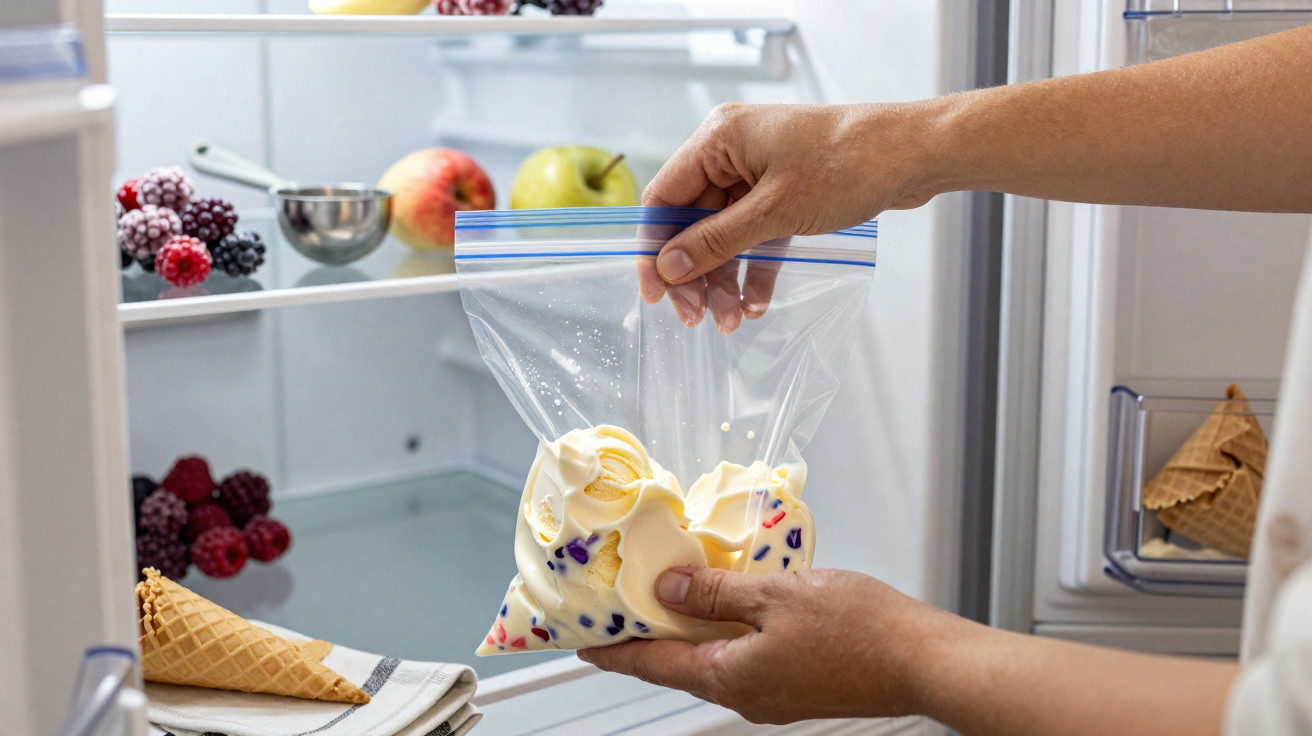
The technique is almost comically easy. Put the ice cream tub into a clean, sturdy zip freezer bag, remove as much air as practical and seal it. Nothing else is required: no specialist equipment and no chemistry experiment. It simply creates a plastic barrier between your dessert and the unforgiving microclimate inside the freezer.
The bag restricts two things: moisture loss and air exchange. Dry freezer air can no longer easily draw water from the ice cream’s surface. Likewise, warm kitchen air entering whenever the door opens does not hit the tub directly. The ice cream sits in its own small micro-zone, experiencing softer temperature changes and much less dehydration. People who use this approach regularly often say their ice cream remains creamy and easy to scoop for an additional three or even four weeks.
Think of a summer weekend. You buy an indulgent pint from a small local producer, enjoy two scoops and place the uncovered tub in your cluttered freezer. A week later, the lid is already frosted and the surface resembles an icy field. Now imagine that same pint stored in a freezer bag. The following weekend, you lift the lid to find a glossy surface that still appears almost freshly churned. That small distinction affects whether your second bite comes with a smile or a faint shrug. We have all had visitors, reached for dessert and quietly hoped the tub was not in that miserable frosty condition.
Some home testers have monitored the effect over several months using tubs side by side: one unprotected and one bagged. After 30 days, the exposed ice cream had visibly pulled away from the sides, with heavy frost on its lid. The bagged tub retained a comparatively smooth top, softer edges and clearly better flavour. No lab coat is needed to recognise the difference on your spoon.
The explanation is physical rather than mysterious. Freezer burn is essentially sublimation: frozen water bypasses melting, becoming vapour directly before freezing elsewhere as frost. When a tub is left exposed in cold, dry air, water molecules continue to escape. In time, the ice cream becomes more concentrated in sugars and fats, altering both its flavour and texture. A freezer bag provides another layer for that vapour to pass through.
That extra layer also reduces the impact of the most extreme temperature fluctuations. Your freezer will still vary when the door is opened or warm shopping is put inside, but the ice cream does not receive the full effect directly. It is rather like giving it a coat: not a heated jacket, but enough material to take the edge off the wind. This can mean the difference between tiny crystals that feel creamy and oversized crystals that crunch between your teeth.
How to bag ice cream - and the mistakes most people make
Begin with a freezer-grade zip bag that is slightly bigger than the tub. Put the tub inside upright, with its lid facing the zip closure. Carefully smooth the bag against the tub and use your hands to push surplus air towards the opening. Close the zip gradually as you squeeze out the air, much as you would seal a sous-vide bag without the machine.
If you want to give your ice cream extra protection, double-bag it or choose a reusable silicone freezer bag with thicker walls. Keep the bagged tub towards the back of the freezer, away from the door, where it will face fewer temperature shocks. When it is time to serve, open the bag, take out the tub, scoop promptly, replace the lid and put it back in its protective sleeve. Those 15 extra seconds are literally the difference between creamy and crunchy next week.
This is the point at which most people go wrong: they leave the tub out for too long while talking, serving or scrolling. The ice cream softens around the edges, then returns to the freezer and refreezes in unusual layers. Let’s be honest: nobody really manages this every day with perfect discipline, particularly in a busy home. Children leave the lid partly open. Someone forgets to reseal the bag. Or the tub ends up in the freezer door, exposed whenever anyone takes ice.
If that sounds familiar, a freezer bag is even more valuable. It accommodates these minor human mistakes. It cannot undo them, but it reduces the harm. Treat the bag as your ice cream’s “home base”. Scoop your serving, then return the tub to that base before wandering off to eat on the sofa. It is a tiny routine with a substantial payoff.
“Freezer burn isn’t a sign your freezer is too cold,” says one food scientist I spoke with. “It’s a sign the food was left exposed to air for too long. A freezer bag is like giving your ice cream another layer of skin.”
For a quick mental checklist, keep this simple framework in mind:
- Choose a thick freezer-grade bag rather than a thin sandwich bag.
- Remove most of the air before sealing, but do not crush the tub.
- Keep tubs at the back or in the middle of the freezer, never in the door.
- Keep each serving’s “out of freezer” time to a few minutes.
- Rotate your stock: finish older tubs first, especially those that have not been bagged.
Why this small freezer-bag habit means more than ice cream
There is something unexpectedly satisfying about opening the freezer and seeing a tub that looks as good as it did when you bought it. It is a modest promise fulfilled. Food that remains good for longer makes daily life feel slightly more manageable and less wasteful. As grocery prices continue to rise, avoiding half-ruined ice cream matters emotionally as well as financially.
One freezer bag will not turn your kitchen into a food laboratory. It can, however, discreetly prolong the life of the small treats you intended to enjoy slowly: the premium pistachio bought on impulse, the dairy-free pint your partner loves or the flavour that evokes childhood. You might find yourself purchasing better ice cream a little less often, confident that it will not let you down after three days.
At a deeper level, this small technique is about noticing the invisible forces at work inside your freezer: air, moisture and temperature changes. They are always present, altering your food while you sleep. When you put a tub into a freezer bag, you are doing more than “being clever in the kitchen”. You are quietly choosing to give your future self the good scoop rather than an icy compromise. It is the sort of small decision people enjoy sharing, often just after giving a friend a bowl and saying, with a touch of pride: “Try this. It’s been in there for weeks.”
| Key point | Detail | Benefit for the reader |
|---|---|---|
| Freezer bag as a barrier | Reduces air exchange and moisture loss around the tub | Ice cream remains creamy and flavoursome for weeks longer |
| Buffer against temperature swings | The bag lessens the effect of opening the door and warm air | Fewer large ice crystals and a better mouthfeel |
| Simple daily habit | Put the tub in a bag, press out the air and store it away from the door | An effortless way to improve every scoop without buying new gadgets |












Comments
No comments yet. Be the first to comment!
Leave a Comment