Between half-open jars, last night’s noodles and a mysterious container left over from two breakfasts ago, losing track is all too easy. Then a small, almost ridiculous object appears and changes the rules.
It was 7:13 p.m., that point when hunger begins making threats. I opened the fridge and met the familiar rush of cold air and guilt. A bag of spinach sagged as though it deserved an apology. Something had spilled across the top shelf days earlier, and nobody had owned up to it.
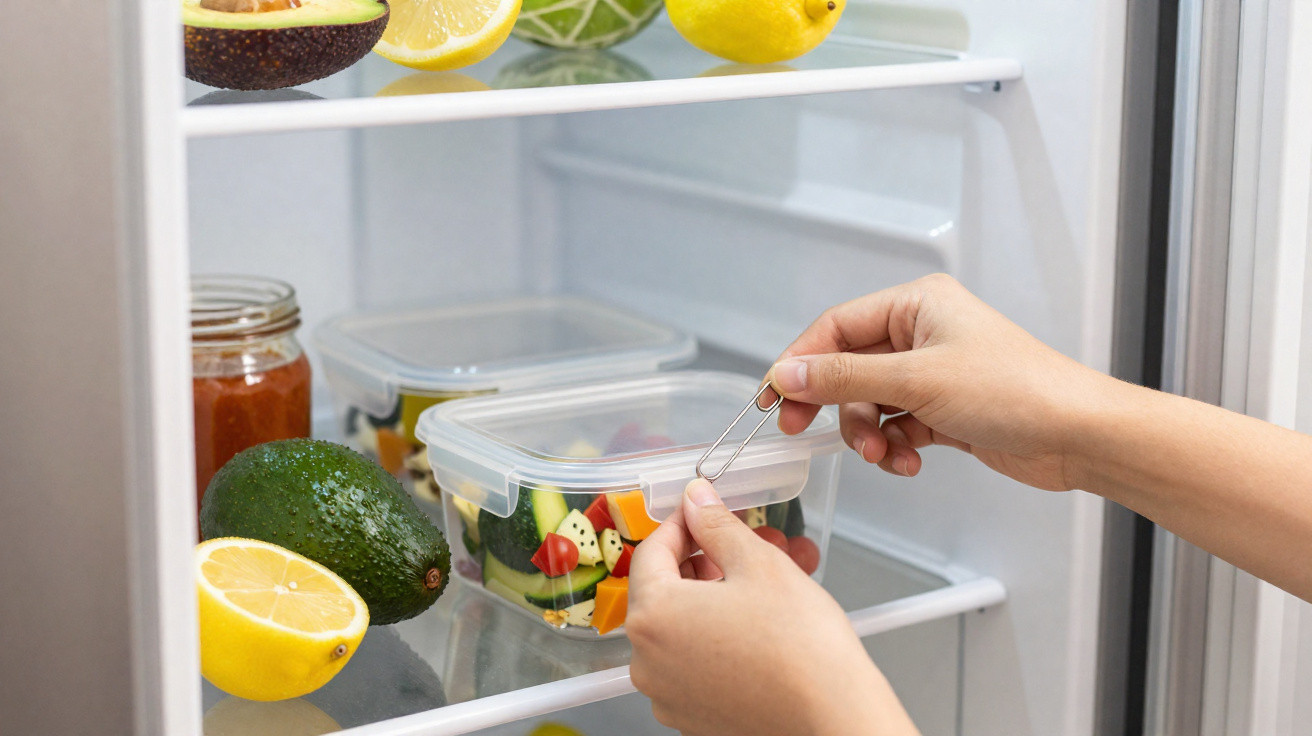
I reached for a yoghurt and spotted a lone paper clip gripping its lid, bright and determined. Earlier that week, my flatmate had put it on the container. “Eat this first,” she’d said, almost as a wink. I had no idea then that the clip would soon become a household rule. A tiny glint of wire changed the whole shelf.
Why the One Clip Rule works when apps and labels do not
The principle is wonderfully straightforward: treat one paper clip as a moving bookmark in your fridge. Whenever an item becomes a priority - because it is open, leftover or nearing its use-by date - place the clip on it. That is the One Clip Rule. That tiny flash of metal becomes a marker you cannot miss, even on your most frantic evening.
There is a quiet kind of drama in it. You open the door and find the clip resting on the hummus lid, wordlessly declaring that it should be the next thing you eat. The following day, it moves to the chicken curry you made after work. There is no app to launch, label to fill in or calendar alert to ignore. It is not sophisticated; it simply works at a glance.
In a world where estimates suggest households throw away a startling volume of food, a low-tech prompt can make a difference. The clip steers you away from something new and towards what is nearly forgotten. This is not about being rigid. It reduces the mental effort at mealtimes and lets your eyes make the decision.
The One Clip Rule in real kitchens
Mia, a primary school teacher in Leeds, started using the clip without any elaborate plan. One Monday, she attached it to a yoghurt, then later that week transferred it to a jar of roasted peppers. By Sunday, she had noticed something unexpected: the bin was less full. “I didn’t throw out a single cooked leftover,” she told me, surprised by her own fridge.
We have all pulled out a forlorn container and had an internal argument about its date. The clip avoids that debate. On a hectic Thursday, it helps you choose without holding a miniature courtroom in your mind. Once the marked food is finished, return the clip to its place on the front shelf, ready for the next candidate.
Over time, it becomes a small ritual with a disproportionately large impact. Everyone in the household starts to understand the Eat Me First signal without needing an explanation. Visitors notice it and understand the message. Children can look for the clip as if it were treasure. You do not need colour-coded storage boxes or a complete fridge overhaul; you need a cue that is impossible to overlook.
How to create the “One Clip” system
If possible, choose a large coloured paper clip. Keep it on the front edge of the middle shelf, or attach it to a magnet on the door, using the same place every time. Whenever you open or cook something that ought to be eaten within the next day or two, move the clip to its lid or the neck of its bag. It really is that simple: one clip, one priority.
Avoid marking items that have no urgency, such as unopened condiments. The clip is a spotlight rather than a prize. If you share your home, agree on a weekly reset - Sunday evening is a good option - so that the clip returns to neutral if everyone has forgotten it. Let’s be honest: nobody truly manages this every day. Think of it as a gentle tap on the shoulder, not a judgement of your value as a person.
A few early stumbles are entirely normal. You will forget to move it. You may disagree about whether the soup or berries deserve the marker. Laugh, shift the clip and eat something. The aim is to waste less food and feel calmer, not to achieve perfection.
“A low-friction cue beats an overbuilt system,” says home organizer Lauren K. “One clip sets a rule anyone can follow at 9 p.m. on a Wednesday.”
- Where to keep it: on the front shelf edge or a door magnet - always in the same place.
- What to mark: opened leftovers, cut fruit and vegetables, dairy nearing its date and partly used sauces.
- When to move it: after eating, or while doing a one-minute scan in the morning.
- Upgrade: if you wish, tuck a small sticky note with a date beneath the clip.
- House rule: the clip settles every tie - if it is marked, it goes on the plate first.
Beyond the clip: the change it creates
Once the clip becomes part of your fridge routine, other issues begin to ease. You start placing delicate foods near the front because that is where the clip belongs. You stack items more sensibly because a marked container needs a lid, not a plastic-wrap puzzle. You may even find yourself cooking with what you already have instead of what your feed suggested half an hour earlier.
It also brings a small dose of honesty. You see a tub of sauce and think, “If I don’t tag you tonight, you’re in trouble.” The clip puts your future self in the room. That is the peculiar magic of a bent piece of wire inside a cold box: it ends the negotiation and encourages action.
If you would like to experiment, try a few variations. Put the clip onto a bright magnet so that it stands out on the shelf. Keep a second clip in the drawer for holidays, when your fridge becomes a game of Tetris. Or bend it into a small hook and suspend a tube of tomato purée from a wire rack so it no longer vanishes. Small object, large ripple effect.
There is a quiet satisfaction in it too. The clip proves that not every answer requires an app or a major reset. Sometimes, it is simply a matter of choosing the next sensible bite. When the fridge light comes on and cold air spills out, the tiny flag tells you everything you need to know. Eat here. Start now.
| Key point | Detail | Benefit for the reader |
|---|---|---|
| One Clip Rule | Use one paper clip as a moving “eat first” marker | An instant visual decision aid that reduces stress |
| Where it lives | Front shelf edge or door magnet, in the same place each time | Consistency makes the cue automatic and difficult to miss |
| Bonus uses | Quick bag seal, improvised label holder, hook for tubes | More value from one inexpensive, flexible tool |








Comments
No comments yet. Be the first to comment!
Leave a Comment