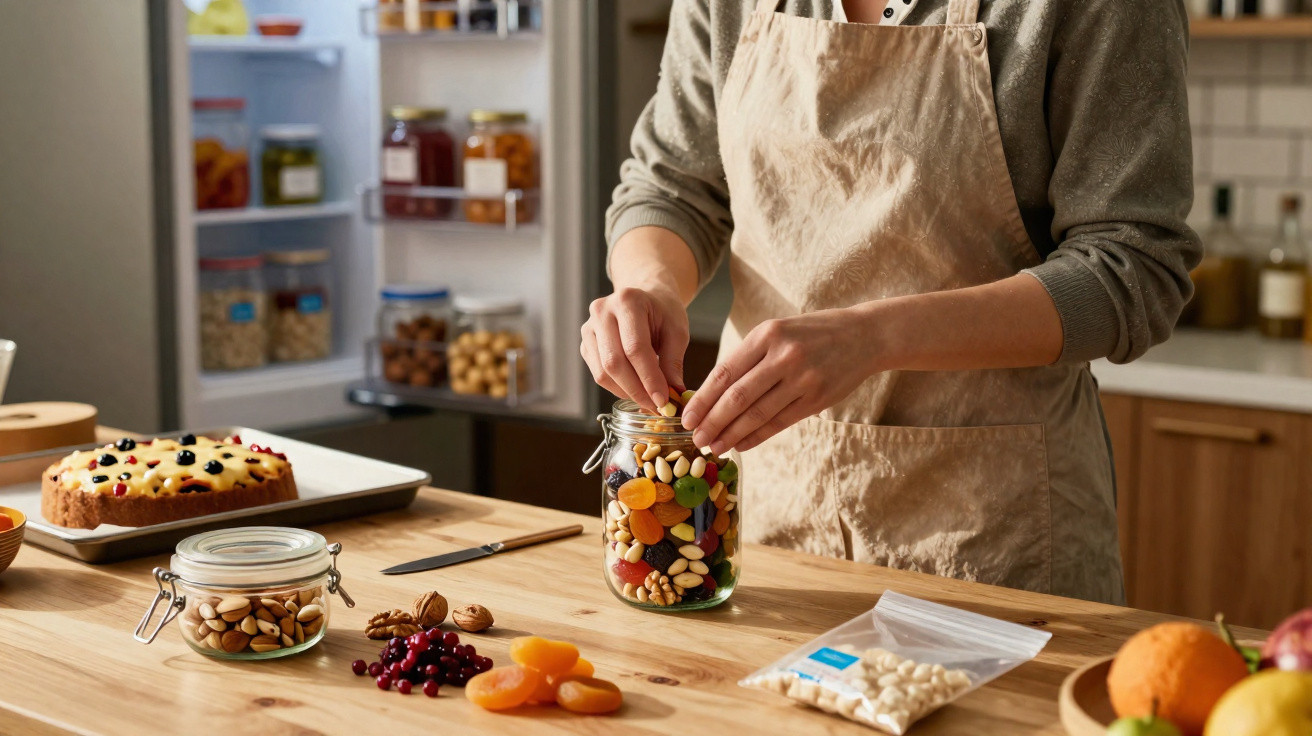
The giveaway is always the scent.
You take out the large festive jar of mixed nuts bought in an October sale, open it in early December, and immediately sense that something is not right. They are not rancid enough to bin at once, but they are not fresh enough to serve confidently to visitors either. There is simply a faint, cardboard-like, “has-been” smell that you cannot ignore.
Last year, I saw a very different approach in the kitchen of a London pastry chef. Her cupboards were packed with nuts, seeds and jewel-coloured dried fruit, but every ingredient tasted remarkably lively. Walnuts snapped rather than crumbled, while apricots remained plump and sharp even in January.
When I asked how she managed this during the frantic festive period, she laughed, opened a steel drawer the size of a suitcase and said: “The pantry rule. We all live by it.”
How your pantry quietly spoils holiday baking
Many people assume that nuts and dried fruits are shelf-stable, so they leave them in the cupboard for months. The problem is that a pantry experiences its own weather fluctuations. It may be cool and dry one week, then filled with steam from a Sunday roast and warmed by central heating the next. Over time, those small changes damage sensitive ingredients.
Chefs discuss this in much the same way as overcooked steak. It may not seem dramatic at first, but the difference is unmistakable when served. Walnuts lose their buttery character and become bitter. Pecans no longer have their crisp bite. Raisins shift from juicy to leathery before eventually becoming miserable, sugar-coated stones.
The difficult thing is that this decline happens gradually and almost invisibly. You do not spot it from one day to the next. Instead, you realise only when a treasured festive recipe tastes dull and nobody knows the reason. Usually, that is your pantry speaking.
Food scientists often cite a study showing that walnuts kept for only eight weeks at typical room temperature lost a substantial portion of their fresh flavour compounds. It was a short storage period in an ordinary home, with nothing extreme involved, yet the flavour still faded. In a professional kitchen, where flavour has financial value, that is a problem waiting to happen.
A pastry chef in Chicago once told me about a year when her gingerbread biscotti with pistachios and dried cherries simply stopped selling. The recipe, oven and staff had all remained the same. The sole difference was that dry goods storage had been relocated to a warmer corridor beside the dishwashers. The nuts became slightly stale and absorbed surrounding odours. Customers could not identify the problem, but they stopped returning for that biscuit.
The same thing can be seen at home. The spiced nut mix that once disappeared in a sitting now sits untouched in its bowl. Your aunt says the fruitcake “isn’t what it used to be.” Your memory is not misleading you: time, air and warmth are gradually removing the good qualities.
Chemically speaking, nuts are ticking time bombs. Their richness comes from oils high in unsaturated fats, which react readily with oxygen. The warmer the environment, the quicker this happens, changing a sweet nutty aroma into waxy, paint-like notes. Dried fruits have another problem: moisture combined with sugar. They take in humidity, dry out again, develop sugar crystals on their surface and lose their chewiness.
Light contributes too. Clear pantry jars may look beautiful on Instagram, but light accelerates oxidation and colour loss. Those luminous golden apricots can become dull after only a few weeks in a sunny kitchen, tasting “tired” long before they are technically unsafe to eat.
The encouraging part is that chefs do not have more time than anyone else. They simply use one straightforward pantry rule that keeps these small threats at bay before the holiday season begins.
The pantry rule for nuts and dried fruits: “Cool, dark, airtight - or it goes cold”
Ask five chefs how they keep nuts and dried fruits, and you will hear essentially the same advice: “Cool, dark, airtight - or it goes cold.” In kitchen language, “goes cold” means that if those three requirements cannot be met, the ingredient is moved into the fridge or freezer. There is no argument about it.
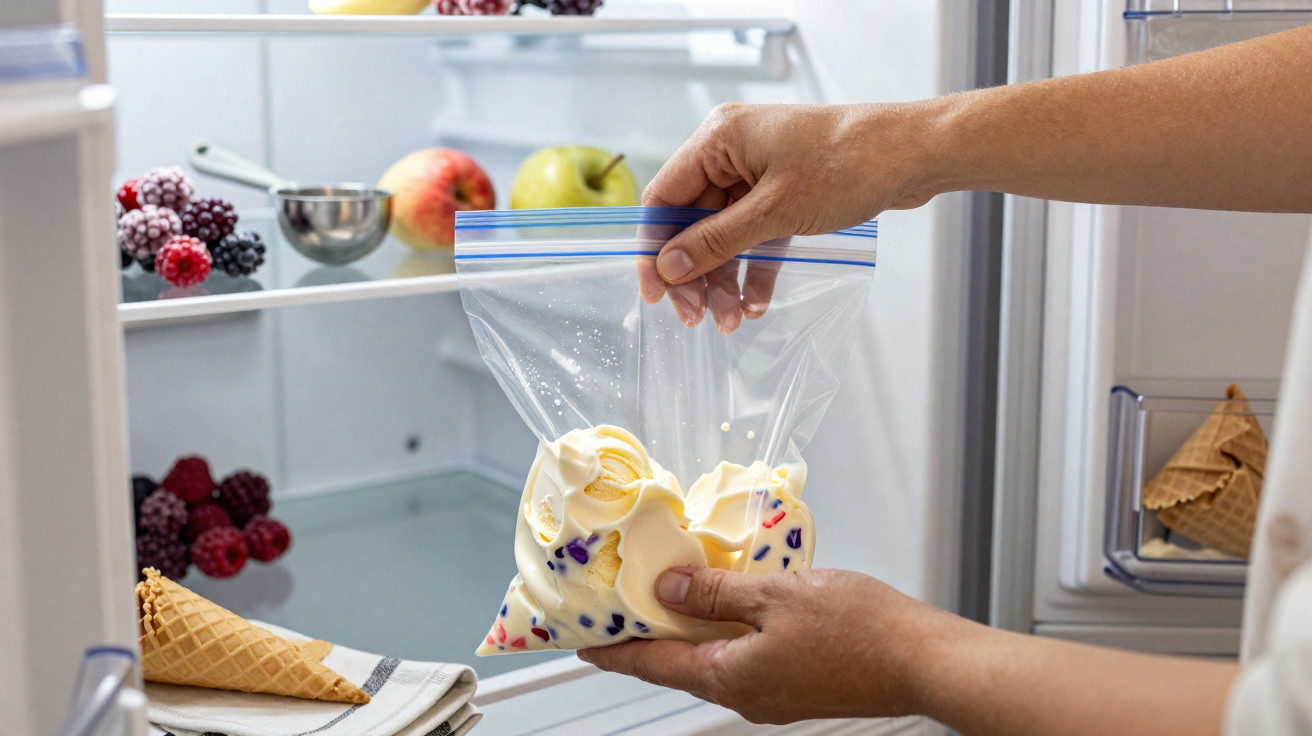
In practice, the system is surprisingly simple. Nuts and seeds are stored in airtight containers or robust freezer bags, with as much air pushed out as possible. Professional kitchens label and date them, and home kitchens should too. Large quantities intended for Christmas baking go straight onto a visible fridge shelf rather than disappearing at the back to be forgotten.
Dried fruits need almost identical care, though there is slightly more flexibility. They can stay in the pantry if the kitchen remains below roughly 20°C and does not become humid. When the heating goes on and radiators are working hard, many professionals put dried fruit in the fridge as well. The principle is easy: if the room feels warm to you, it is too warm for your nuts.
“Cool, dark, airtight” sounds self-evident in theory, but it conflicts with everyday life. We like attractive glass jars on exposed shelves, leave cupboard doors open while children hunt for snacks, and abandon shopping bags on top of the fridge. Let’s be honest: nobody truly manages this every day. Then we wonder why the Thanksgiving pecan pie tastes slightly flat.
One chef in New York told me that every November she creates a “holiday box”. It contains every nut, seed and dried fruit she expects to use from Thanksgiving through to New Year’s. Each item is portioned, labelled and tightly sealed. The entire box sits on its own fridge shelf like a seasonal treasure chest. Storage no longer requires thought; she simply cooks.
A gentler version works perfectly at home. Choose one cool drawer or box and transfer all nuts and dried fruits for baking into it. Decide whether your pantry is cool enough, or whether the fridge is better because you tend to heat the kitchen heavily. That single choice can quietly safeguard the mood of all your December baking.
“I treat nuts like dairy,” says Paris-based chef Léa Martin. “Would you leave fresh cream next to the stove for three months? Of course not. So why would you do it with something even more fragile?”
There is another, less spoken-about part of the pantry rule: rotation. Chefs are often meticulous about “first in, first out”. The older bag of walnuts is used before the new one. An opened packet of dried figs is placed at the front of the storage box, not hidden behind the latest shopping.
- Label and date every opened bag of nuts and dried fruit.
- Use nuts within 3 months when stored in the pantry, or 6–12 months in the fridge or freezer.
- Smell and taste a nut before adding it to batter or salad.
- Store dried fruits away from powerful odours, including onion, garlic and coffee.
- Make cool, dark, airtight your standard approach, using the fridge or freezer when the kitchen is warm.
One final understated tip from chefs: freeze nuts in the portions you use most often. Use 120 ml bags for banana bread and 240 ml bags for granola. It changes storage from a vague intention into a quick, manageable routine that actually works on a busy Wednesday evening.
What the pantry rule changes for your holiday table
Once you follow this straightforward pantry rule, festive cooking feels noticeably different. Familiar recipes can taste unexpectedly fresh. A small handful of properly stored toasted hazelnuts scattered over roasted Brussels sprouts can suddenly become the highlight. Even a simple trail mix served with drinks becomes something guests genuinely mention.
You will waste less, too. There are no more half-used bags of almonds that you “don’t trust anymore”, and no more sticky raisins that have somehow made their way to the rear of the cupboard. The quiet guilt of discarding ingredients before December has even begun starts to disappear. More fundamentally, your pantry stops looking like a graveyard of forgotten packets and becomes a flavour toolkit.
This matters on a personal level because holiday cooking is already full of emotion. We have all had the experience of bringing out an old family recipe, only to find that the result does not taste like the memory. Sometimes, time is the reason. Sometimes, it is simply nuts that have gone stale in a warm, bright cupboard.
Ultimately, the pantry rule is less about being “perfectly organized” than it is about respect. Respect for the farmers who produced those almonds and apricots. Respect for the money you paid. Respect for the effort you put into that one major baking day before relatives arrive. It is a small step that quietly improves everything else you make in the kitchen.
The next time you open a jar of pecans or a tub of dates, pause briefly. Pay attention to the scent. Check whether they still have that bright, almost green aroma, along with their bounce and shine. If they do not, it is not a personal failing. Your pantry simply needs a small, practical improvement - and one simple rule can bring holiday flavours closer to the picture you had in mind.
| Key point | Detail | Why it matters to the reader |
|---|---|---|
| “Cool, dark, airtight” rule | Keep nuts and dried fruits cool, away from light and in airtight containers | Preserves their flavours for more delicious festive recipes |
| Fridge and freezer as allies | Move supplies into cold storage once the kitchen is heated or when storing them for a long time | Prevents nuts becoming rancid and dried fruit drying out over several months |
| Rotation and portions | Label and date items, use older supplies first, and freeze small ready-to-use portions | Reduces waste and saves time during busy cooking periods |












Comments
No comments yet. Be the first to comment!
Leave a Comment