Anyone loading plates, glasses and baby bottles into the dishwasher expects hygiene. Yet researchers have found that virtually every domestic dishwasher harbours dense layers of microbes, including potentially disease-causing species. The positive news is that three targeted measures can reduce this contamination substantially.
An everyday appliance that can conceal germs
A dishwasher is generally considered far more hygienic than washing up by hand. With hot water, detergent tablets and rinse aid, its interior ought to be clinically clean. However, the evidence paints a different picture. An investigation of 24 household appliances found biofilms-durable layers of bacteria and fungi-on the rubber seals of every machine.
Yeasts from the Candida genus were particularly notable, appearing in every dishwasher examined. Bacterial groups including Pseudomonas and Escherichia, which may cause infections in people with weakened immune systems, were also identified. Healthy people will normally cope with these microbes without issue, but nobody wants a freshly cleaned mug sitting beside a microbial nest.
“A gleaming interior can be misleading: biofilms survive on seals, in the filter and in narrow crevices, even when exposed to high temperatures and detergents.”
Why dishwashers provide ideal conditions for microbes
The inside of a dishwasher presents extreme conditions that only specialised microorganisms can tolerate. These organisms can then establish resilient communities:
- Alternating cycles of very hot and cooler water
- Harsh detergents and a high pH level
- Salt, limescale and food residues
- Damp periods followed by extended drying times
The rubber door seal is especially vulnerable. It remains wet for a long time, collects dirt and has a rough surface to which biofilms can firmly attach. Studies have detected exceptionally high concentrations of microorganisms there, including so-called “black yeasts”, which can create dark deposits.
Our own usage habits are another contributing factor. To save money, many people now run their appliances almost exclusively on Eco or quick cycles at 30 to 45°C. While this is often enough for grease and coffee marks, it is considerably less effective against stubborn biofilms. The microbes survive, adapt and continue spreading.
What happens when you open the dishwasher door
Immediately after a wash cycle, the appliance is hot, humid and filled with steam. If you pull the door open sharply, you are met with a small cloud of vapour. Researchers suspect that spores and bacteria may be released into the kitchen air, much as they can be when a pan lid is removed abruptly.
Anything that stays constantly damp inside the appliance can quickly become a magnet for bacteria. Research on washing-up sponges and brushes demonstrates this too: when they dry poorly, a dense microbial film develops. The same principle applies to cutlery baskets, filters and hinges in a dishwasher.
“The longer moisture remains in the appliance, the more readily biofilms can form again-particularly on seals, in the filter and inside cavities.”
Three targeted steps for a much cleaner dishwasher
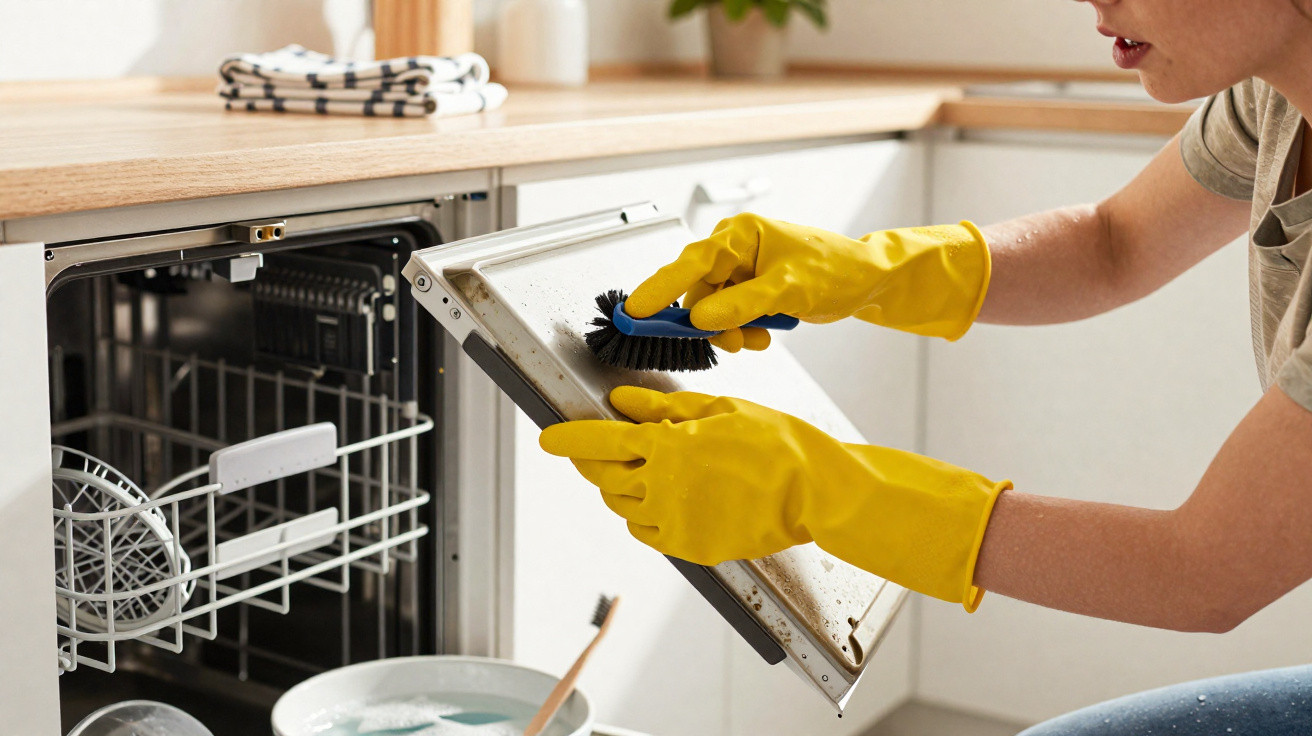
1. Scrub the door seal thoroughly
The rubber strip around the door is the most important place to start. Food debris, grease, limescale and moisture collect here, creating an ideal habitat for fungi and bacteria.
- Expose the entire seal, checking folds and corners as well.
- Scrub it carefully with an old toothbrush, hot water and a little white vinegar.
- For heavy grease deposits, add a little mild washing-up liquid or a small amount of black soap.
- Wipe with clean water, then finish by drying the seal with a dry cloth.
Vinegar lowers the pH locally. This disrupts many fungi adapted to alkaline environments, dissolves limescale and leaves the surface smoother again. If the rubber seals are particularly delicate, dilute the vinegar with extra water.
2. Maintain the filter and sump every week
The filter collects everything washed from plates: pasta remnants, grease residues and coffee grounds. If this material is left in place, it decays, smells unpleasant and feeds bacterial colonies.
- Remove the filter in accordance with the manufacturer’s instructions, usually by turning it a quarter turn.
- Rinse it thoroughly under very hot water, using a brush if necessary.
- Inspect the area beneath it: are there glass fragments, stones or pieces of bone?
- Wipe out the bottom of the machine with a cloth.
- Optionally, sprinkle a little bicarbonate of soda onto the wet filter and the base, leave it briefly, then run a short cycle.
Bicarbonate of soda absorbs odours and makes damp layers less likely to become established. It is not a replacement for detergent, but it can reduce microbial levels more noticeably.
3. Clear the spray arms and run an empty hot cycle
The spray arms distribute water and detergent. If their small nozzles become blocked, dead spots develop that are never properly cleaned. These are precisely the areas where microbes thrive.
- Remove the spray arms; instructions are usually included in the appliance manual.
- Rinse them under running water and clear limescale and food debris from the holes with a toothpick or thin brush.
- Once a month, run an empty wash cycle at a minimum of 60°C.
- Instead of a tablet, add six tablespoons of citric acid to the empty dishwasher, for example in the powder dispenser or on the base.
Citric acid removes limescale and deposits from pipes and metal components, leaving biofilms with fewer surfaces to cling to. Important: never combine it with chlorine cleaners, and always follow the appliance manufacturer’s guidance.
“Anyone who regularly gives their dishwasher a hot empty cycle removes the foundation for biofilms and also improves washing performance.”
How dangerous are the microbes found really?
Some of the bacteria and fungi identified in studies belong to groups that also play a role among patients in intensive care units. In everyday life, they rarely cause illness in healthy people. They can become problematic when:
- someone is severely immunocompromised, for example through chemotherapy or transplantation;
- young children or very elderly people live in the household;
- chronic lung disease is present;
- severe mould or fungal allergies exist.
In such households, a particularly consistent cleaning routine is worthwhile, including regular hot programmes and careful maintenance of the seals. Anyone who is uncertain can also boil sensitive items such as baby bottles or treat them in a separate steriliser.
A simple everyday tip: helping the dishwasher dry faster
One often overlooked action should be taken as soon as the programme ends. Many people leave the door shut until the machine has cooled down. This keeps the interior damp for a long time-ideal conditions for microorganisms.
- Open the door a small amount immediately after the programme has finished.
- Pull the cutlery drawer or basket out slightly so that steam can escape.
- If possible, leave a kitchen window on the vent setting.
By drying quickly, fungi and bacteria lose a key growth factor: standing moisture. If you have time, briefly wipe the most affected areas with a dry cloth.
When the dishwasher needs closer attention
Certain warning signs clearly indicate that your appliance needs an intensive clean:
- Black or dark deposits on the door seal
- A musty, rotten or “fungal” smell when opening the door
- A visible slimy film around the filter
- Glasses emerging cloudy, coated or spotted
If several of these signs occur, thoroughly clean all three areas-the seal, filter/base and spray arms-and run a hot programme with cleaner. Should the problems persist, consult the manual or contact customer service, particularly if the heating elements are heavily scaled or the pump is faulty.
How often each cleaning task makes sense
| Area | Recommended frequency |
|---|---|
| Clean the door seal thoroughly | Every 2–4 weeks |
| Clean the filter and sump | Once a week |
| Check and clean spray arms | Every 1–2 months |
| Empty cycle at 60°C or above | Every 4–6 weeks |
People who use their appliance very heavily, such as large families or shared households, can shorten these intervals slightly. For one-person households, longer gaps are often sufficient-but where the machine is used infrequently, a hot programme should be selected.
Why biofilms are so persistent
The term “biofilm” may sound abstract, but it describes something very tangible: a slimy layer of microorganisms that protect one another. Within this matrix, bacteria and fungi sit closely together, sharing nutrients and even resistance mechanisms.
This community is far more resilient than individual cells. Heat, detergents and water jets may reach the outer layers, but often fail to penetrate deeper areas. That is why a single hot wash cycle is rarely enough to remove an established biofilm completely. Only a combination of mechanical cleaning with a brush or cloth, chemical support from vinegar, citric acid or cleaner, and high temperatures makes a real difference.
“Anyone relying only on tablets and Eco programmes is mainly tackling loose dirt-biofilms survive and gradually build up again.”
Practical additions: what to avoid in everyday use
Certain habits unintentionally encourage microbial growth. A few adjustments can keep the dishwasher more hygienic in the long term:
- Do not leave heavily mouldy leftovers in the machine; discard them immediately.
- Scrape off larger food residues instead of simply allowing them to dry on.
- Do not keep dirty dishes in a closed dishwasher for days.
- Avoid using only quick or cold programmes all the time.
- Question cheap tablets that dissolve poorly, as their residues feed biofilms.
Combining these straightforward measures with the three targeted cleaning actions turns a hidden germ trap back into what a dishwasher should be: a reliable helper for clean, considerably more hygienic plates, cups and glasses.








Comments
No comments yet. Be the first to comment!
Leave a Comment