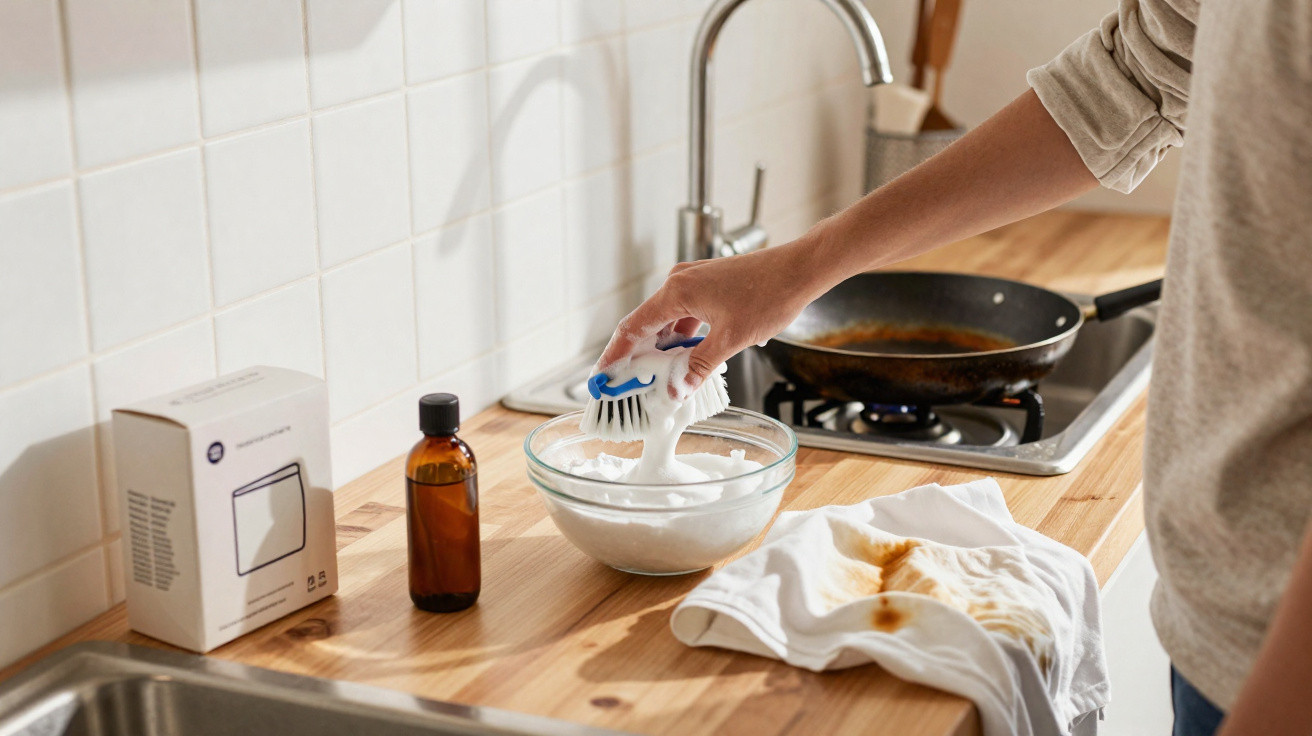
Many people automatically reach for harsh cleaning products, even though a far gentler, cheaper and often more effective alternative is already in the cupboard. In countless homes, the combination of bicarbonate of soda and hydrogen peroxide has proved to be a quiet expert at tackling stubborn stains, greyed grout and baked-on pans – provided a few key rules are followed.
Why bicarbonate of soda and hydrogen peroxide work so well together
Most people know bicarbonate of soda as a raising agent for baking. Around the home, however, this white all-rounder has another role: it provides mild abrasion without scratching surfaces and helps to neutralise odours.
Hydrogen peroxide is familiar to many people from the first-aid cupboard. At low concentrations, it acts as a mild disinfectant and bleaching agent. In everyday cleaning, it delivers precisely these benefits: it brightens surfaces and eliminates a large proportion of germs.
“When gently abrasive bicarbonate of soda meets bleaching hydrogen peroxide, the result is a mixture that loosens dirt, traps odours and disinfects at the same time.”
This is what makes the pairing so useful: bicarbonate of soda mechanically lifts deposits and stains, while hydrogen peroxide chemically tackles discolouration. It enables more intensive cleaning in many areas of the home without relying on extremely aggressive products.
How to make the mixture: a basic household recipe
For most uses, a quick paste or solution is all that is needed. This basic formula is a useful starting point:
- 2 parts bicarbonate of soda
- 1 part hydrogen peroxide (a 3% solution from a pharmacy or chemist)
- Optional: a splash of water if the mixture is too thick
Combine both ingredients in a glass bowl or ceramic container until they form a spreadable paste. Avoid metal containers, as hydrogen peroxide can react with metals.
Removing stains from clothes: fruit, dirt and greying
The mixture can produce noticeably better results than many ready-made cleaners, particularly on fruit stains from berries or grapes.
Step-by-step method for fresh fruit stains
- Rinse the fabric from the reverse with cold water to flush out some of the colour.
- Apply a few drops of hydrogen peroxide directly to the stain.
- Sprinkle bicarbonate of soda over it until the affected area is well covered.
- Leave it to work for around 30 minutes on coloured fabrics.
- Leave it on white laundry for up to 60 minutes.
- If the mark remains visible, work it in gently with a soft brush.
- Then machine-wash as usual.
Important: with delicate fabrics such as wool or silk, first test a hidden area to check that the colours remain stable. Depending on the dye, hydrogen peroxide may cause slight lightening.
Refreshing greyed white laundry
The combination may also help to remove the grey cast from white T-shirts, towels and bed linen. One possible method is:
- Fill a bowl with warm water.
- Stir in 2–3 tablespoons of bicarbonate of soda.
- Add about half a glass of hydrogen peroxide.
- Soak the textiles for 1–2 hours, then wash them normally.
This can lift many discolourations caused by sweat, deodorant or limescale far more effectively.
Tiles, grout and basins: bathroom cleaning without harsh fumes
Over time, limescale, soap residue and dirt settle into bathroom grout and porous surfaces. Cleaners with a high chlorine content can irritate the airways and have a strong smell. This is where the bicarbonate of soda and hydrogen peroxide mixture stands out as a comparatively mild option.
Brightening tiles and grout again
For wall and floor tiles in the bathroom, use the following method:
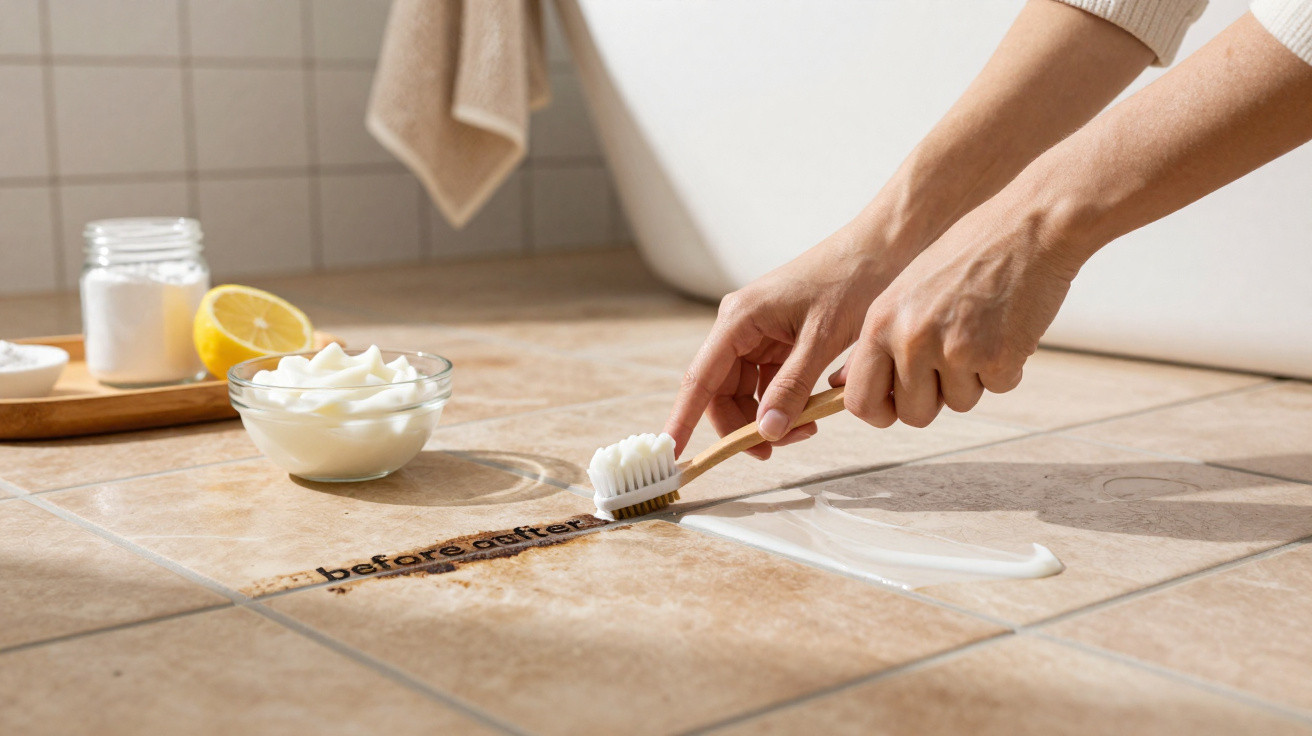
- Apply the bicarbonate of soda and hydrogen peroxide paste to grout lines and heavily soiled areas.
- Spread it using a soft cloth or an old toothbrush.
- Allow it to sit for 10–20 minutes, depending on the level of dirt.
- Rinse thoroughly with clean water.
- Wipe dry with a clean cloth to prevent fresh limescale marks.
“Discoloured grout in particular often regains visibly more brightness without damaging the underlying surface.”
With silicone sealant or coloured grout, it is worth carrying out a careful test first to make sure the material tolerates the mild bleaching action.
Hygienically clean basins, showers and toilets
The mixture can be spread easily over ceramic, enamel and acrylic surfaces with a soft sponge:
- Apply a thin layer of paste to dirty areas.
- Leave it to work for a few minutes.
- Rub in circular motions with a sponge.
- Rinse with plenty of water.
This can significantly reduce toothpaste residue, soap film and some urine marks, without leaving the typical chlorine smell in the air.
Reviving baked-on pans, trays and hobs
In the kitchen, ordinary washing-up liquid soon reaches its limits when grease has burnt on or dark rings have formed inside pots. The bicarbonate of soda and hydrogen peroxide mixture can offer these items a second chance.
Baking trays and oven dishes
The following approach has proved effective for heavily soiled trays:
- Dampen crusted areas with water.
- Sprinkle a layer of bicarbonate of soda over them.
- Drizzle hydrogen peroxide on top until everything is lightly moistened.
- Leave it to rest for 20–30 minutes.
- Scrub with a soft sponge or non-scratching brush.
- Rinse well with warm water.
The combination helps to loosen burnt-on grease residues, while bicarbonate of soda acts like a fine scouring powder that removes the softened deposits.
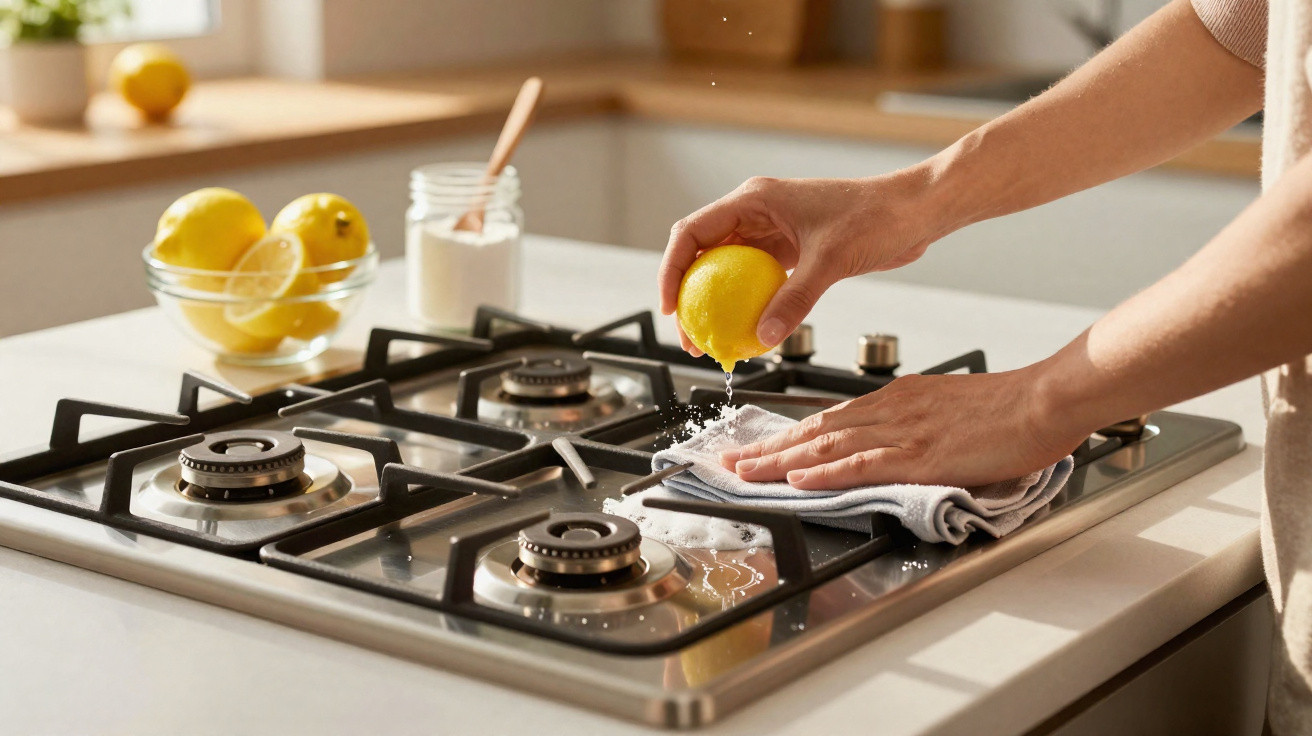
Pans, pots and the hob
For non-stick pans, always use the soft side of a sponge. A thin coating of the paste, left for a few minutes, is usually sufficient. Many stubborn marks can then be removed more easily.
On ceramic glass or induction hobs, rub only very gently to prevent scratches. Testing first in an inconspicuous area is sensible.
Where the mixture has limits and what risks to consider
Although the mixture is versatile, it is not a cure-all. Some materials are sensitive, while others require specialist cleaners.
| Suitable for | Use with caution | Better avoided |
|---|---|---|
| Ceramic, porcelain | Coloured textiles | Marble, natural stone |
| White laundry | Delicate synthetic fibres | Aluminium surfaces |
| Tiles, grout | Silicone sealant | Unsealed wood |
Hydrogen peroxide should never be used in high concentrations without expert knowledge. The standard 3% household solution is entirely sufficient. Stronger concentrations can irritate the skin and eyes.
When using the mixture on a new surface for the first time, it is best to test it on a small hidden spot. This helps to rule out colour bleaching or damage to the material’s structure.
Why many households are switching to simple household remedies
The return to traditional products such as bicarbonate of soda, vinegar and hydrogen peroxide has several reasons. Firstly, consumers can save money because a small selection can replace many specialist cleaners. Secondly, it reduces the number of different chemicals kept in the home.
Many people also value the fact that bicarbonate of soda is odourless and rinses away easily. Hydrogen peroxide breaks down over time into water and oxygen. As a result, it leaves fewer residues than some heavily perfumed cleaning products.
Practical additions and useful combinations
In some circumstances, the mixture’s effect can be supplemented rather than replaced. Limescale is one example: diluted citric acid is usually more effective against stubborn deposits on taps or shower screens, whereas bicarbonate of soda is particularly useful against grease and organic dirt.
A practical everyday approach is:
- For grease, burnt-on residue and odours: bicarbonate of soda with hydrogen peroxide.
- For limescale and water marks: citric acid or clear vinegar cleaner.
- For glass and mirrors: a mixture of water and a little alcohol or glass cleaner.
Clearly separating these roles produces better results in many homes than relying on one all-purpose cleaner.
Bicarbonate of soda and hydrogen peroxide remain a duo that can deliver a major effect with little effort – whether dealing with fruit stains on a favourite shirt, dark bathroom grout or crusted oven dishes after a Sunday roast. Anyone who tests carefully, wears gloves and avoids applying the mixture to delicate surfaces has a powerful tool for thorough yet comparatively gentle everyday cleaning.





Comments
No comments yet. Be the first to comment!
Leave a Comment