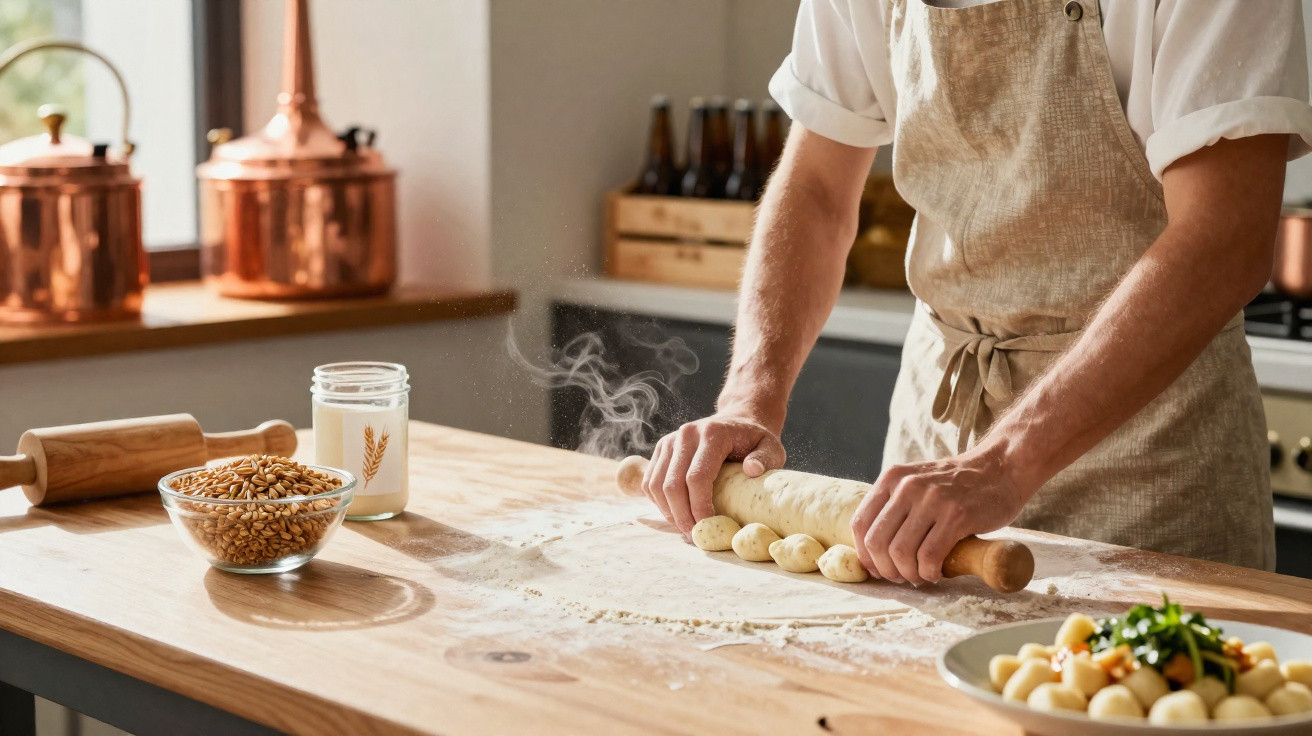
In France, two young entrepreneurs have turned an idea that initially seems almost absurd into reality: they use a by-product of beer production as an ingredient for pasta. The result is Gnocchi sold in the chilled aisles of organic supermarkets for €3.40 per pack – while also showing how food waste can be deliberately transformed into new products.
What previously ended up as waste in the brewery
Brewing beer primarily requires barley or other grains, water, hops and yeast. Once the brewing process is complete, a solid residue remains. This material is rich in fibre and protein, yet breweries generally regard it simply as a by-product.
Usually, the material continues its journey in agriculture, ending up in feed troughs for cows, pigs or chickens. Until now, it has played virtually no role in human food. That is precisely where the two entrepreneurs come in: they dry the grain residue, mill it into flour and incorporate it into a Gnocchi recipe.
“A conventional waste product from beer production becomes a marketable food with added value – without the need to grow new raw ingredients.”
Around twelve per cent of the dough for these new Gnocchi consists of this particular flour. Most of the recipe remains traditional: potatoes, wheat flour, water and a little salt. The base is therefore familiar, while the distinctive ingredient provides an additional benefit.
How waste becomes high-quality flour
Several stages are needed to take the brewery by-product from the brewing vessel to an organic shop shelf. Careful processing is required to make the residue edible and shelf-stable.
- Separation: Once brewing has finished, the solid grain residue is separated from the liquid beer.
- Drying: The still-moist material is gently dried to prevent it from spoiling.
- Milling: After drying, the material can be milled into flour in the same way as grain.
- Mixing: A small quantity of this specialist flour is blended into conventional Gnocchi dough.
At first glance, the twelve per cent share may appear small, but it is enough to alter both the nutritional profile and the flavour. At the same time, the texture remains close to that of familiar Gnocchi – an important factor in ensuring customers are not put off.
Flavour that does not taste like a compromise
The crucial question with products like these is: can you taste it? Reports from France suggest that flour made from brewery residue gives the Gnocchi a lightly roasted, almost nutty character. It does not create an overpowering beer flavour, but rather a subtle toasted note.
This detail may determine whether a sustainability concept becomes a long-term product. Many shoppers are open to new ingredients provided they do not reduce enjoyment. In the best case, the product even delivers a more interesting flavour than standard alternatives.
“Sustainability alone is not enough: an upcycled product only has a chance in the supermarket when its flavour, price and everyday practicality are right.”
The Gnocchi are available in French organic shops such as Biocoop at a price of €3.40 per pack. This places them within the usual range for comparable fresh organic pasta. The message to shoppers is clear: this is not a luxury gimmick, but a normally priced everyday product with an additional benefit.
More fibre, more protein: what the Gnocchi offer
The residue from beer production naturally contains substantial amounts of fibre and protein. When it is used as flour, some of these nutrients make their way into the Gnocchi. The precise nutrition table varies according to the recipe, but the overall direction is clear: the pasta becomes somewhat more wholesome without turning into fitness food.
Typical effects of this ingredient include:
- a higher fibre content, which may help people feel full for longer












Comments
No comments yet. Be the first to comment!
Leave a Comment