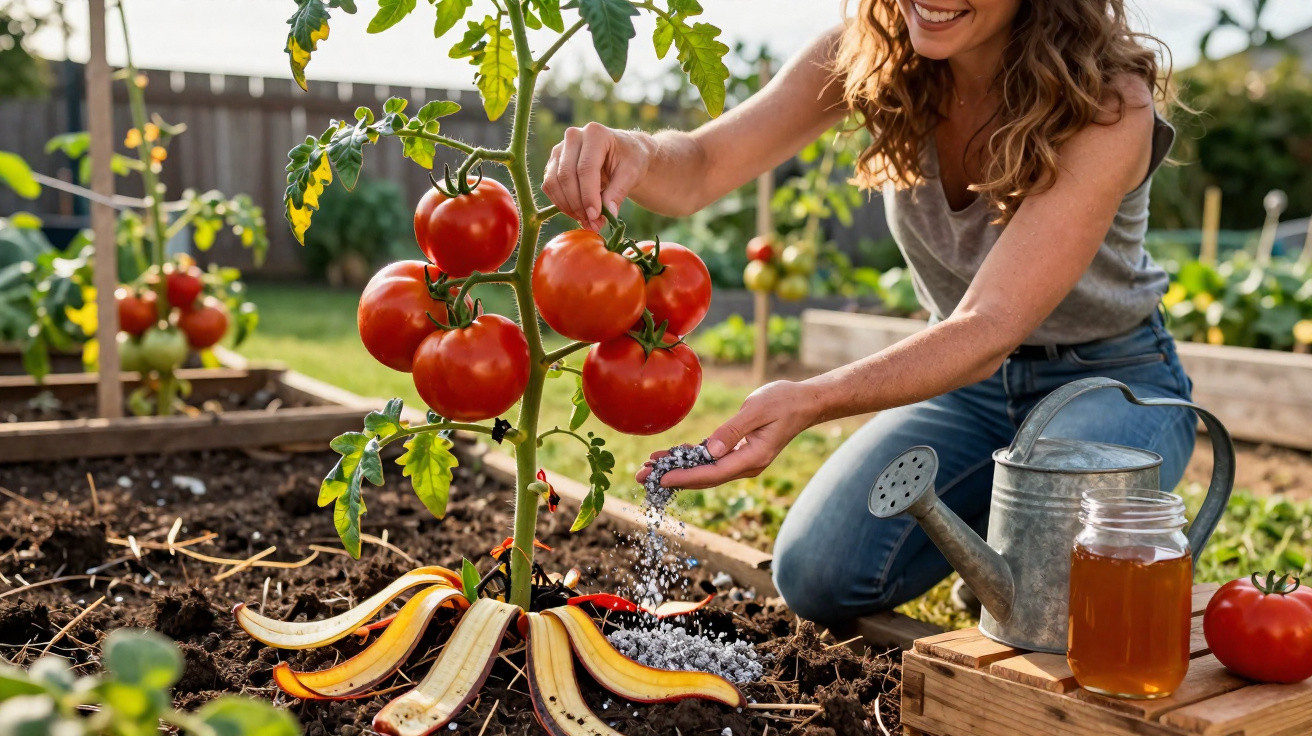
Two free kitchen leftovers can transform the situation completely within just a few weeks.
A thick jungle of tomato foliage but only a handful of tiny fruits: this scene frustrates countless amateur gardeners every year. The weather is usually not to blame; instead, these heavy-feeding vegetable plants are left hungry in the bed. Feeding them wisely – while making use of two overlooked waste products – can increase the harvest remarkably quickly.
Why many tomato plants produce leaves instead of fruit
Tomatoes are among the hungriest plants in the vegetable garden. Over many weeks, they require substantial quantities of nutrients to form flowers and fruit. Without a steady supply, plants can still look healthy but yield only a few disappointing tomatoes.
Four nutrients are particularly important for a plentiful crop:
- Potassium – helps produce firm, flavoursome fruit
- Magnesium – supports photosynthesis and metabolism
- Nitrogen – drives stem and leaf growth
- Phosphorus – strengthens roots and encourages flowering
Many commercially available garden fertilisers are heavily weighted towards nitrogen. The result is that the plant puts all its energy into foliage, growing huge leaves but barely any flowers and therefore little fruit. Anyone relying solely on these products may enjoy vigorous plants, yet still be puzzled by empty harvest bowls.
“What matters is not using as much fertiliser as possible, but achieving the right nutrient balance at the right time.”
This is where two free helpers come in. Found in almost every home, they provide tomatoes with precisely the minerals they need most during the fruiting stage.
The secret turbo boost: banana peels for fruiting plants
Banana peels would normally go into the food-waste bin. For tomatoes, however, they can be nearly as useful as a specialist fertiliser from the garden centre. This is because they contain plenty of potassium, as well as magnesium, phosphorus and some calcium – exactly the nutrients plants need for flowers and fruit.
How to place banana peels directly by the roots
Those growing tomatoes in a garden bed or raised bed can use banana peels as a simple soil booster:
- Cut the peel into small pieces measuring 1–2 cm with a knife.
- Make a shallow trench beside the stem, roughly 5–8 cm deep.
- Scatter in the peel pieces and cover them with soil.
- Water thoroughly afterwards.
The small pieces decompose quickly without producing an odour, releasing their minerals directly around the roots. This creates a kind of nutrient reserve that the plant can draw on gradually. Anyone eating bananas each week therefore has a permanent, free nutrient source throughout the summer.
Banana peel liquid feed: a gentle boost from the watering can
Anyone who prefers feeding with a watering can – for container or balcony tomatoes, for example – can make a straightforward liquid fertiliser from banana peels in no time:
- Chop up 1–2 banana peels.
- Put them into a container with 1–2 litres of water.
- Leave to steep for 24 hours, or no longer than 72 hours.
- Remove the peels and strain the liquid.
- Dilute it with clean water at roughly 1:1 before watering.
This “banana brew” provides a mild mineral mix that supports plants during the fruiting period. A small amount is entirely sufficient in pots, otherwise smells and fruit flies may become a problem. More can be used in a bed, but the same principle applies: frequent small doses are better than occasional “shock feeds”.
Wood ash: a free mineral mix from the fireplace
Anyone using a fireplace, stove or fire bowl often disposes of the ash without a second thought. Yet wood ash from untreated timber is a surprisingly powerful natural aid in the vegetable garden. It is rich in potassium and also supplies calcium and phosphorus – three key building blocks for healthy, sturdy tomato plants and resilient fruit.
Potassium from ash promotes the tomatoes’ moisture balance and flavour. Calcium can help reduce the dreaded blossom end rot, often known in home gardens as a black bottom on tomatoes. Phosphorus reinforces the roots, helping plants access water and nutrients even during dry spells.
“Wood ash is not a miracle cure, but it is a powerful ally – when used in the correct quantity.”
The right time to apply wood ash fertiliser
A suitable period for using it is during the peak tomato season, from around mid-July to early August. By then, plants already carry plenty of fruit, their nutrient requirements are highest, and the soil is generally warm and dry.
Gardeners can take the gentlest approach as follows:
- Use ash from untreated wood only – never varnished, pressure-treated or coated materials.
- Pass the ash through a sieve and remove larger wood fragments or nails.
- Spread around 20–30 grams per plant – approximately one level tablespoon – around the root area.
- Make sure none reaches leaves or stems, as ash can scorch them.
- Work it in lightly, then water.
In persistently dry weather, the application can be repeated once after about two weeks. Do not use more than this, as excessive ash makes soil alkaline and can block other nutrients.
The foundations matter: no XXL success without basic feeding
As impressive as banana peels and wood ash can be, they do not replace sound basic nutrition. Gardeners who prepare tomatoes properly from planting time will get far more from these free methods.
A tried-and-tested basic approach for strong tomato plants:
- Add a generous portion of mature compost to the planting hole.
- Mix in some sand or fine grit in heavy soil so roots can breathe more easily.
- Optionally work in a handful of well-rotted farmyard manure or slow-release organic fertiliser.
- Mulch the soil afterwards, using grass clippings or straw, for example, to retain moisture.
From June onwards, a regular liquid feed is worthwhile. At the start of the season, tomatoes respond very well to diluted nettle feed, as it mainly provides nitrogen and boosts growth. Once the first small fruits appear, the emphasis changes: banana peels, wood ash and comfrey leaf feed then take priority because they contribute more potassium.
Common mistakes – and how to avoid them
Not every tomato problem is caused by fertiliser. However, many difficulties become worse when nutrients are out of balance. Typical pitfalls include:
- Too much nitrogen: lush foliage, hardly any fruit, and greater susceptibility to fungal diseases.
- Permanently wet soil: roots “suffocate”, nutrients are washed away, and plants remain pale.
- Overfeeding with ash: the soil becomes too alkaline, making trace elements less available to plants.
- Poor air circulation: dense foliage dries slowly, giving fungi an easy opportunity.
Removing side shoots in good time, thinning leaves low down on the plant and watering only at soil level all considerably reduce plant stress. Combined with natural fertilisers, these practices greatly improve the chances of an even, flavoursome harvest.
How quickly will the effect appear?
Anyone starting to feed tomatoes with banana peels and wood ash now should see the first changes within two to four weeks. New flower trusses set more successfully, fruit grows more evenly and often ripens to a more intense colour.
Recovery takes longer in severely depleted soil. In this case, it pays to plan ahead in autumn: sow green manure, incorporate more compost and avoid planting tomatoes in the same bed every year. Together with these free kitchen and fireplace leftovers, this gradually creates a stable, heavily productive tomato crop.
What cautious gardeners should also consider
Alongside valuable minerals, wood ash also contains heavy metals. The amounts may be small, but they can accumulate in the soil. Those wishing to be especially cautious should use ash only on selected plants or choose other potassium-rich natural options, such as comfrey feed.
Banana peels are generally unproblematic, although they often carry residues from cultivation. Anyone wanting to be completely certain can buy organic bananas or use the peels only after composting them rather than placing them directly around roots.
The most effective results come from combining several measures intelligently: good basic feeding with compost, moderate use of nettle and comfrey feeds, targeted banana peel reserves and an occasional small amount of ash. Step by step, this creates exactly what tomatoes love – nutrient-rich, living soil that rewards them almost automatically with XXL harvests.















Comments
No comments yet. Be the first to comment!
Leave a Comment