By 10:37 a.m., the office buzz has become a muted wreck. The coffee cups are drained, active Slack channels have fallen silent, and half the team is gazing at their monitors as though they are tuned to static. You ate breakfast. You did “everything right”. Yet your mind feels wrapped in cotton wool, and your fingers seem slower across the keyboard.
At lunchtime, a colleague unscrews a small glass jar. Oatmeal. Not the miserable, sticky variety. It gives off the scent of cinnamon and toasted nuts. She eats it unhurriedly, carries on working, and somehow avoids the 3 p.m. slump altogether. No additional latte. No desperate trip for chocolate.
You look at her and wonder: what does she understand that you do not? It begins with oats – though not in the form most of us eat them.
The hidden issue with your usual bowl of oats
For many people, oatmeal is simply a base for sugar. Add a quick drizzle of honey, a generous handful of dried fruit and perhaps flavoured yoghurt, and breakfast has effectively become a dessert. It may be delicious, of course. But around an hour later, a subdued, dragging tiredness starts to set in.
The oats are not truly the issue. It is what we add to them. A meal made up largely of carbohydrates, with minimal protein and almost no healthy fat, sends blood sugar rising before it drops again. That is why you are “hungry again already” at 10 a.m., despite being convinced you had a substantial bowl.
There is a reason nutritionists often give our morning porridge routines a wary look.
A dietitian I spoke to described one client who ate a well-known instant oat sachet every morning. It was flavoured, sweet and creamy… while also being quietly packed with rapidly absorbed carbohydrates. She would eat at 7:30, feel fine until 9:15, then crash so severely that she began taking a second breakfast to work: a cereal bar, a latte, perhaps a muffin “to share”.
Once they reviewed her food diary, the pattern was difficult to ignore: spike, crash, snack. Spike, crash, snack again. Her afternoons were worse still, as she grazed continuously simply to stay alert during Zoom calls. She assumed the problem was a lack of willpower. In fact, her breakfast had been designed for immediate comfort rather than lasting concentration.
They did not redesign her entire diet. Instead, they only altered the way she prepared her oats.
Oats provide slow-release carbohydrates and plenty of soluble fibre, including beta-glucan, which supports a gradual release of energy. Yet that benefit can be undermined by covering them in sugar and overlooking the rest of the nutritional balance. Your body needs carbohydrates for fuel, protein for staying power and fats to slow digestion.
Plain oats made with water are like turning up to a major project meeting with only half the team. Pile on sweet toppings while leaving out protein, and blood sugar starts acting like a rollercoaster. You experience the peak, then deal with it later through yawning, brain fog and the search for snacks.
The real benefit appears when oatmeal becomes a full meal rather than a sugary comfort habit.
The oatmeal hack nutritionists swear by
The approach that nearly every nutritionist quietly comes back to is this: make your oats a “PFF bowl” - Protein, Fat, Fiber. Oats already supply the fibre. What changes the game is adding sufficient protein and healthy fat, so breakfast works as a slow-burning source of energy instead of a brief sugar surge.
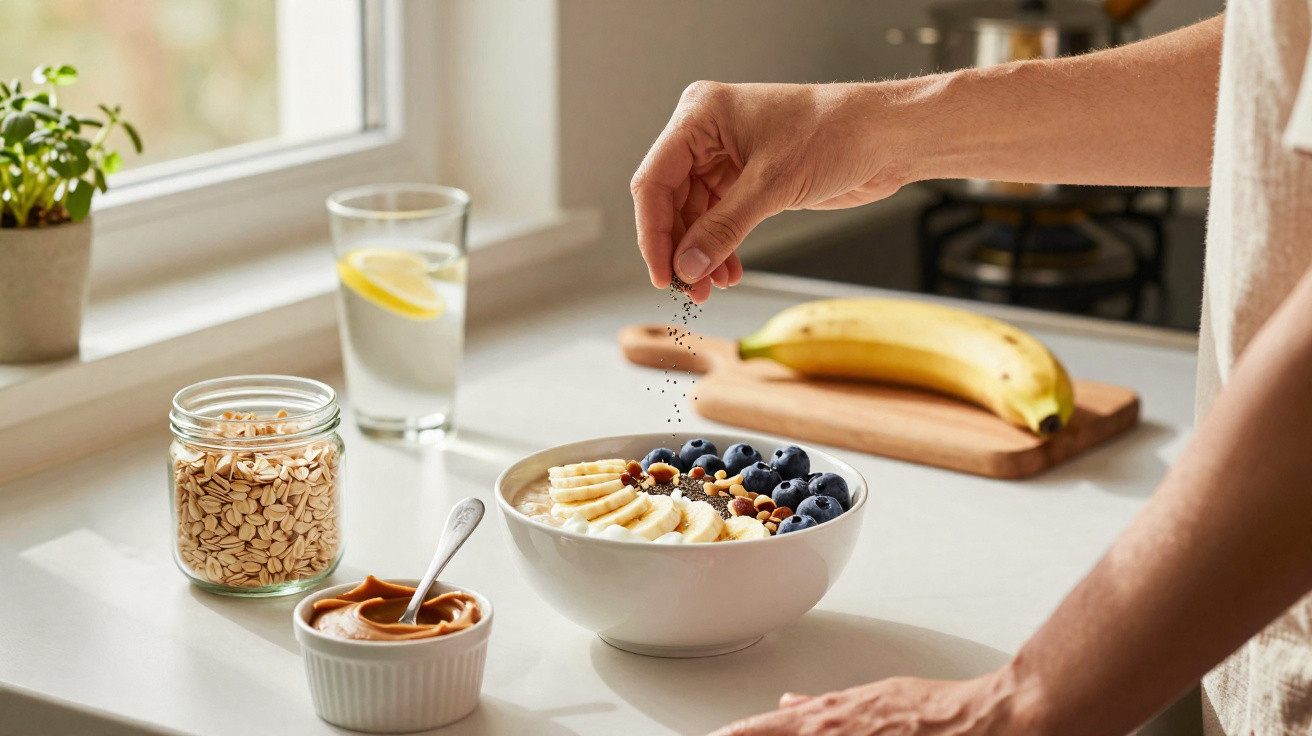
It can be very straightforward: half a cup of rolled oats, with Greek yoghurt or a scoop of protein powder mixed through. Add a spoonful of peanut or almond butter, a scattering of chia or flax seeds and perhaps a handful of berries for freshness. It is the same bowl and the same spoon, but it can create an entirely different morning.
The consistency changes slightly. Rather than tasting like “sweet mush”, it becomes richer and more satisfying. Your hunger pattern changes alongside it.
One nutritionist told me that she asks clients to try it as a small experiment. During week one, they eat their usual oats. In week two, they have PFF oats. Nothing else is altered. They simply note how they feel at 10 a.m., 1 p.m. and 4 p.m. That is all. There is no calorie counting and no need for perfection, only honest check-ins.
The resulting notes often read like diary entries: “Didn’t need second coffee.” “Realized it was 1 p.m. and I wasn’t starving.” “Didn’t snap at my kids after work.” Naturally, a bowl of oats did not solve their lives. But it did reduce the persistent background fatigue that makes everything feel more difficult.
On a blood sugar chart, the contrast would resemble a jagged mountain range versus a gentle slope. In everyday terms, it is the difference between merely getting through the day and being genuinely present in it.
How to make the ideal sustained-energy oatmeal bowl
Treat this oatmeal hack as an easy framework rather than a “perfect recipe”. Begin with 1/2 to 3/4 cup of rolled or steel-cut oats. Cook them in either water or milk, according to your preference. Then target roughly 15–25 grams of protein alongside a modest handful of healthy fats.
For example, stir plain Greek yoghurt into the oats once they are cooked, spoon nut butter over the top and scatter on some seeds. Alternatively, mix in unflavoured protein powder while the oats are warm, then finish with crushed walnuts and a few banana slices. The important point is that the toppings are not merely garnish. They make up your fuel system.
If that sounds like a lot, begin simply: add one protein source and one fat, then develop the bowl from there.
People often make a mistake by assuming “healthy oatmeal” means constant restriction. They have half a banana, no nuts, no creaminess and only hesitant spoonfuls of ingredients “to save calories”. Then they wonder why they are ravenous an hour later. Restriction is not the goal here. Stability is.
We have all had the experience of standing in front of a vending machine at 11 a.m., bargaining with ourselves over a chocolate bar we do not even particularly want. This hack aims to remove that entire discussion. Not by demanding more discipline, but by making a smarter choice earlier in the day.
Let’s be honest: nobody puts together the ideal bowl every day. On some mornings, you will forget the seeds. On others, you will pick up instant oats at your desk and make the best of it. That is real life. The overall direction matters more than an Instagram-worthy image.
“When you add enough protein and healthy fats to your oats, you’re not ‘being good’ - you’re giving your body a steady power source,” explains one registered dietitian. “Your focus, mood, and cravings all notice the difference, even if you don’t overthink the nutrition side.”
On busy mornings, a short mental checklist can be useful. It need not be elaborate; think of it as a quiet rule of thumb:
- Oats for fibre
- One substantial protein source (yoghurt, eggs, cottage cheese or protein powder)
- One healthy fat (nuts, seeds, nut butter or a drizzle of tahini)
- One “joy” topping (fruit, cinnamon or a few dark chocolate chips)
That final element matters more than many people acknowledge. A spoonful of excellent peanut butter or a hint of dark chocolate may be what turns this into a habit that lasts months rather than days.
Why this small oatmeal change affects your whole day
When breakfast begins to support you rather than work against you, subtle things start to change. The mid-morning coffee no longer feels essential. The 3 p.m. search for sugar becomes less intense. You may notice that you are making choices from a place of clarity instead of survival mode.
This is what nutritionists appreciate about the oatmeal hack: it is modest. You are not transforming your entire life; you are reshaping one daily ritual. But that ritual sits at the beginning of the day like a domino. When it falls into place more effectively, what follows can run a little more smoothly.
People often anticipate dramatic fireworks from healthy changes. More commonly, the real benefit is pleasingly uneventful. You simply… do not crash. You do not spend the afternoon bargaining with snacks. Your energy is steady and unremarkable - the sort that lets you be a person rather than a zombie counting down to bedtime.
Even though it seems small, that is the kind of quiet improvement worth discussing.
| Key point | Detail | Benefit for the reader |
|---|---|---|
| PFF bowl | Combines Protein, Fat and Fiber in every serving of oatmeal | Turns a sugary breakfast into long-lasting fuel |
| Simple toppings | Greek yoghurt, nut butter, seeds and a small serving of fruit | Easy to fit into busy mornings without added stress |
| Energy stability | A smoother blood sugar curve throughout the day | Fewer crashes, less snacking, improved focus and mood |
















Comments
No comments yet. Be the first to comment!
Leave a Comment