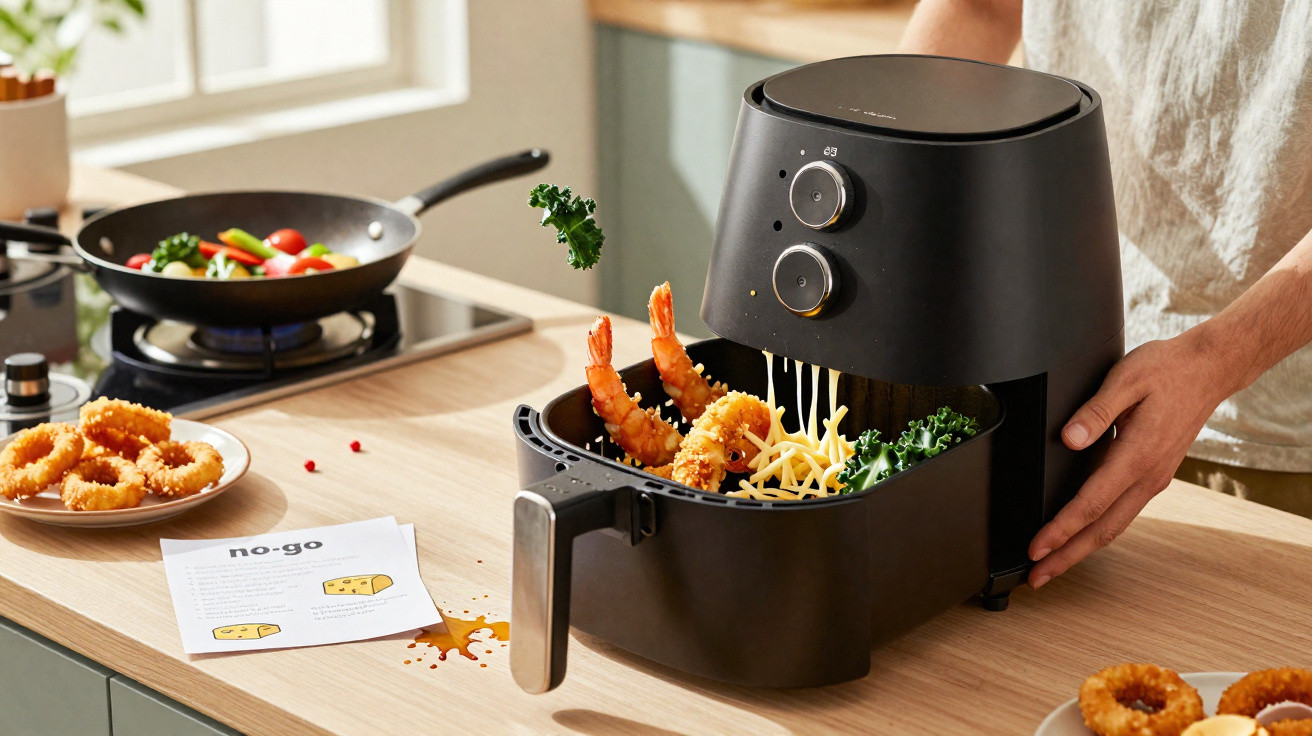
An air fryer has earned a place in many kitchens because it cooks food quickly while using very little oil. Even so, it is not suitable for every recipe. Certain ingredients may cook unevenly, create mess, damage the appliance’s coating or simply deliver poor results. Understanding these restrictions helps protect the air fryer and prevents food waste.
Why do some foods not work well in an air fryer?
An air fryer cooks food through the powerful circulation of hot air. This process is ideal for creating crisp exteriors, but it relies on air being able to move freely around the food.
As a result, very light ingredients, liquids and foods that need to cook submerged in water tend not to turn out well. They can also make a mess inside the appliance.
Which foods should be avoided in an air fryer?
Not every ingredient is entirely unsuitable for an air fryer, but some need a different cooking method to retain their flavour, texture and safety.
- Foods with wet batter, such as tempura or fish coated in a soft batter.
- Light leaves, including spinach and lettuce.
- Popcorn.
- Uncooked rice, pasta and other grains.
- Large amounts of unprotected cheese.
- Liquids such as soups and sauces.
Are there alternatives for preparing these foods?
Foods with wet batter are better deep-fried in oil or baked after being given a dry coating, such as breadcrumbs or panko. Soups, rice and pasta should still be made in pans, where there is enough liquid for them to cook properly.
Cheese can be used when it is part of a breaded recipe or placed inside a suitable container, preventing it from melting directly onto the air fryer basket.
- Do not overfill the basket.
- Use foods that are similar in size.
- Do not pour liquids directly into the basket.
- Choose dry breaded coatings.
- Clean the appliance after every use.
- Check the manual for guidance on specific foods.
Is it worth using an air fryer every day?
An air fryer remains one of the kitchen’s most versatile appliances, working especially well for vegetables, potatoes, meat, chicken, fish, cheese breads and a wide range of frozen foods. The key is to respect its limitations and select the most suitable cooking method for each recipe.
Knowing how each food behaves helps produce tastier dishes, keeps the appliance in good condition and reduces kitchen waste.








Comments
No comments yet. Be the first to comment!
Leave a Comment